
Saudi Embassy Concludes National Qur’an Contest With Tafsir in Focus
The five-day competition drew Qur’an memorisers from across Nigeria, with tafsir assessed alongside memorisation to place greater emphasis on understanding and applying the Qur’an.
By Abdullahi Yusuf
Ahmad Abubakar of Sokoto State and Shafaatu Jibril Ibrahim of Nasarawa State emerged overall winners as the second National Qur’anic Memorisation and Tafsir Competition ended in Abuja on Sunday.
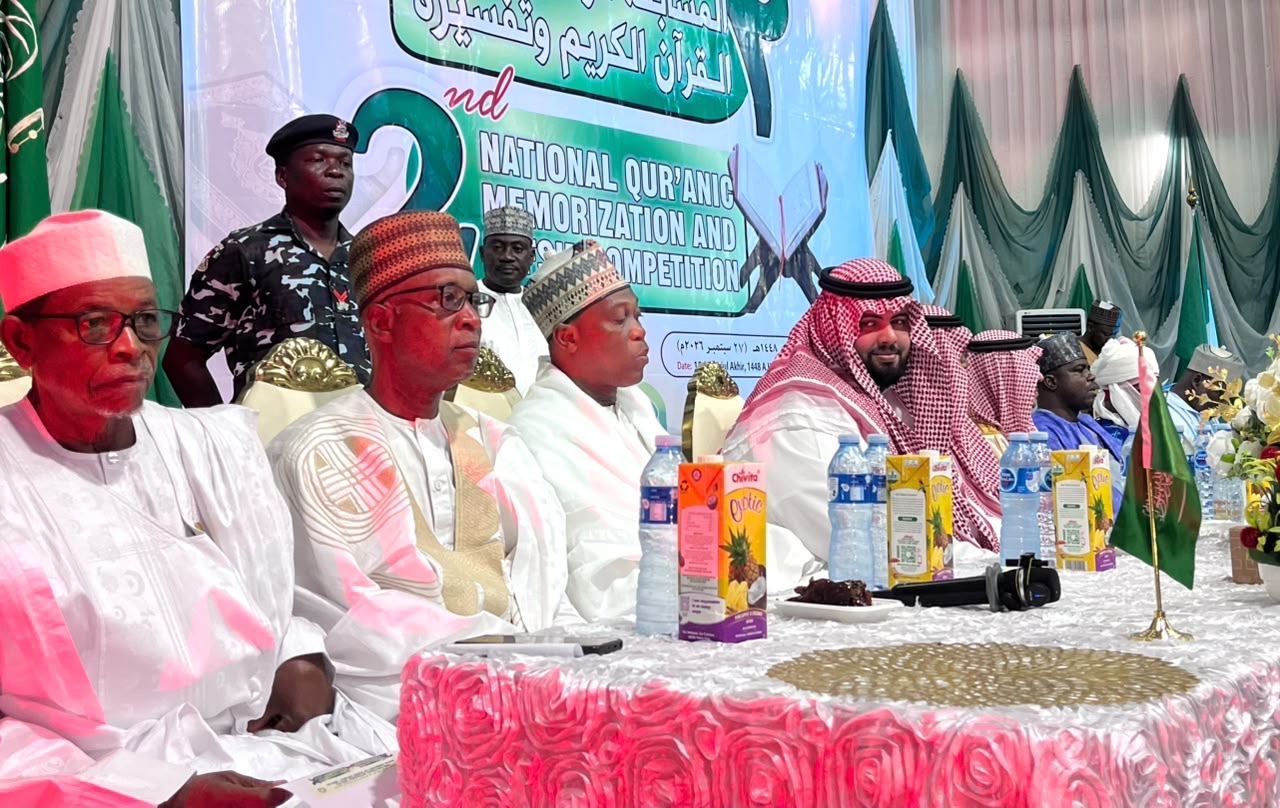
The competition, organised by the Cultural Attaché Office of the Royal Embassy of Saudi Arabia in Nigeria, drew 132 participants from 22 states over five days. It opened on September 23.
Contestants were tested on their ability to memorise and recite the Qur’an and on their understanding of its meanings. Three categories covered memorisation of 60, 40 and 20 hizbs, each with male and female divisions. Tafsir was assessed alongside memorisation.
The winners
20 Hizb, male: Jigawa first, Zamfara second, Kebbi third
20 Hizb, female: Kano first, Jigawa second, Zamfara third
40 Hizb, male: Sokoto first, Kaduna second, Kano third
40 Hizb, female: Zamfara first, Yobe second, Nasarawa third
60 Hizb, male: Sokoto first, Zamfara second, Yobe third
60 Hizb, female: Nasarawa first, Abuja second, Jigawa third
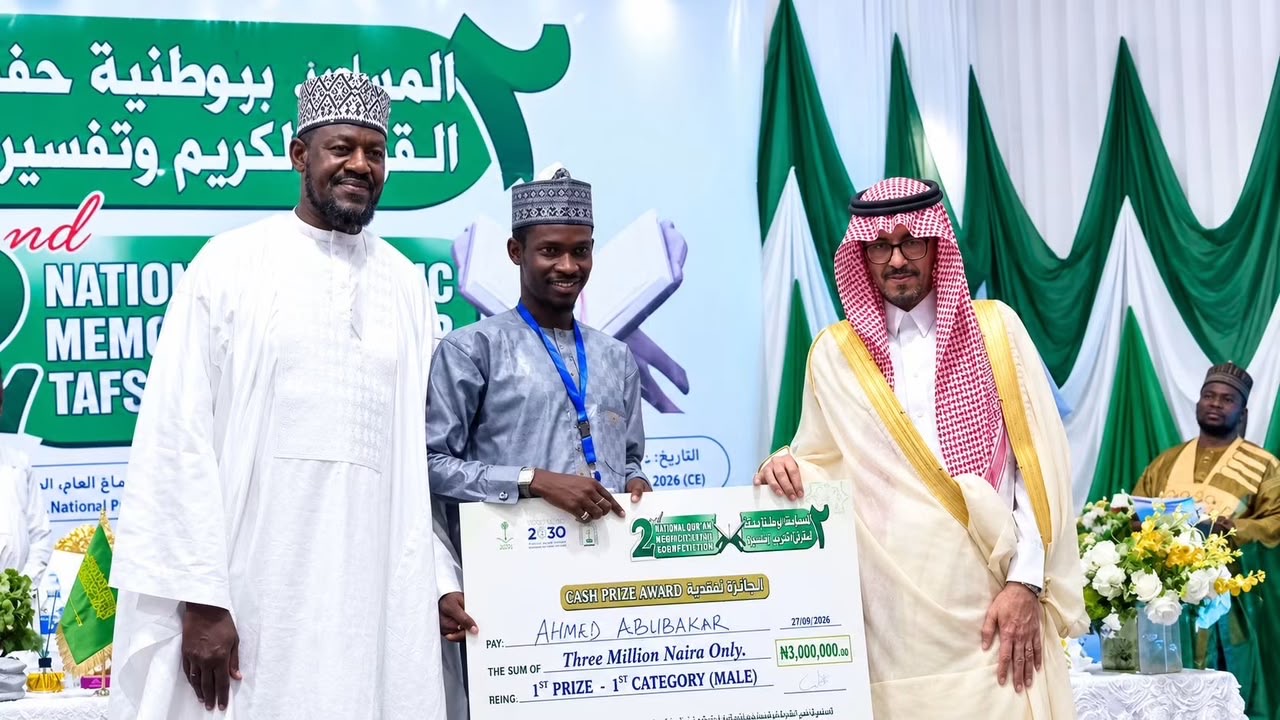
Ustaz Ahmad Abubakar of Sokoto State, the overall first-place male winner, credited his success to sustained dedication to memorising the Qur’an. He said his mother had been one of his strongest sources of encouragement and that his own passion continued to drive his preparation.
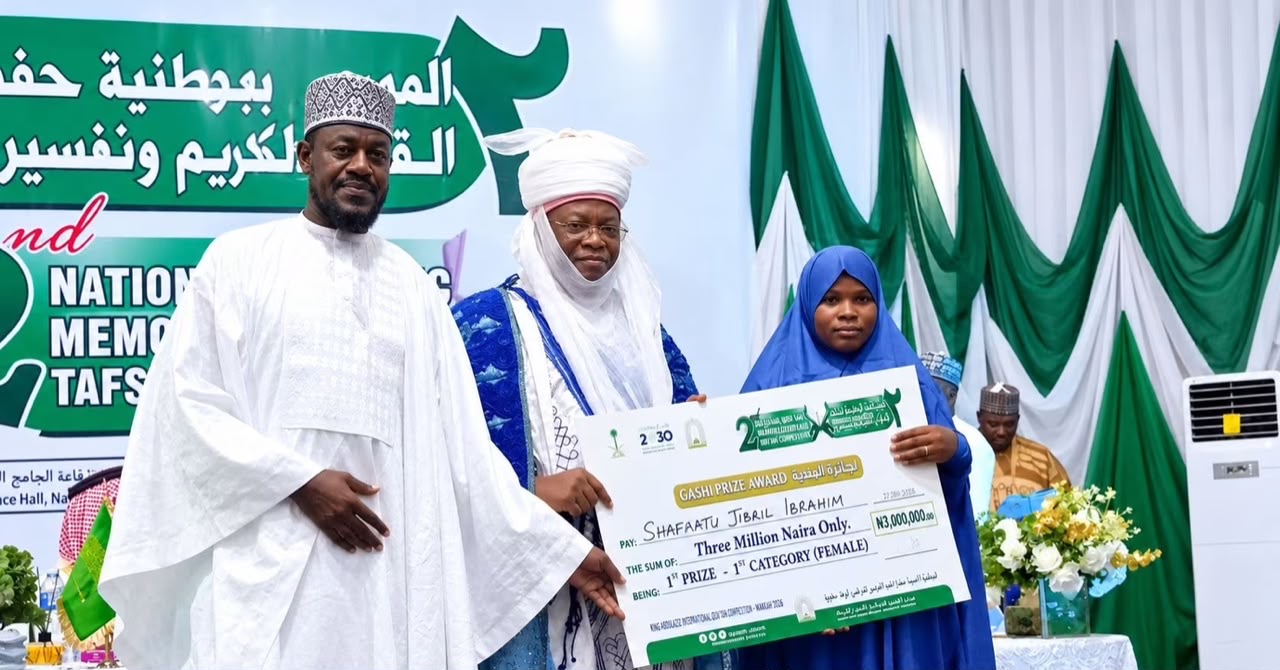
Mallama Shafa’atu Jibril Ibrahim of Nasarawa State, the overall first-place female winner, said the achievement carried a responsibility to encourage other Muslim girls to pursue Qur’anic learning. Competing alongside women from different parts of Nigeria, she added, had given her a greater appreciation of the effort young women were devoting to memorisation.
Sheikh Sufyan Abdullah, one of the organisers, told PEACE Magazine that Tafsir was a defining feature of the competition and was meant to address a gap in which some memorisers could recite large portions of the Qur’an without understanding its meaning.
“The wisdom behind it is that many of our Qur’an memorisers used to memorise the Holy Qur’an off head but they don’t knoweven the meaning of one word,” he said.
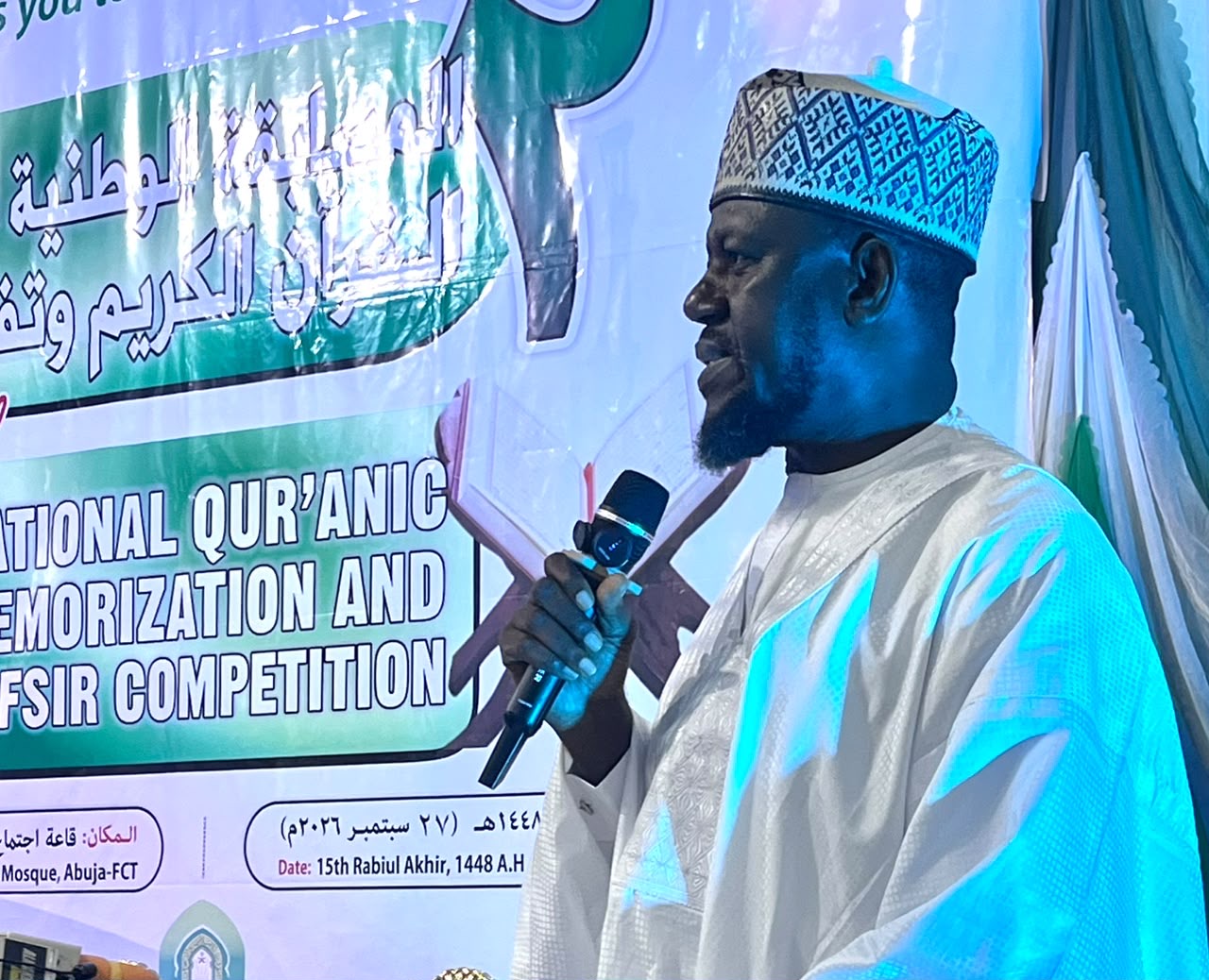
Abdullah said tafsir was compulsory in all categories, for male and female contestants alike, to encourage deeper understanding and application of the Qur’an. Organisers hope the approach will contribute to the character, conduct and intellectual development of young people.
He described the competition as one of the initiatives supported by Saudi Arabia’s King Salman bin Abdulaziz and Crown Prince Mohammed bin Salman, forming part of efforts to promote Qur’anic learning among Muslim communities. He said 22 states took part this year and expressed the hope that the remaining states would join subsequent editions.
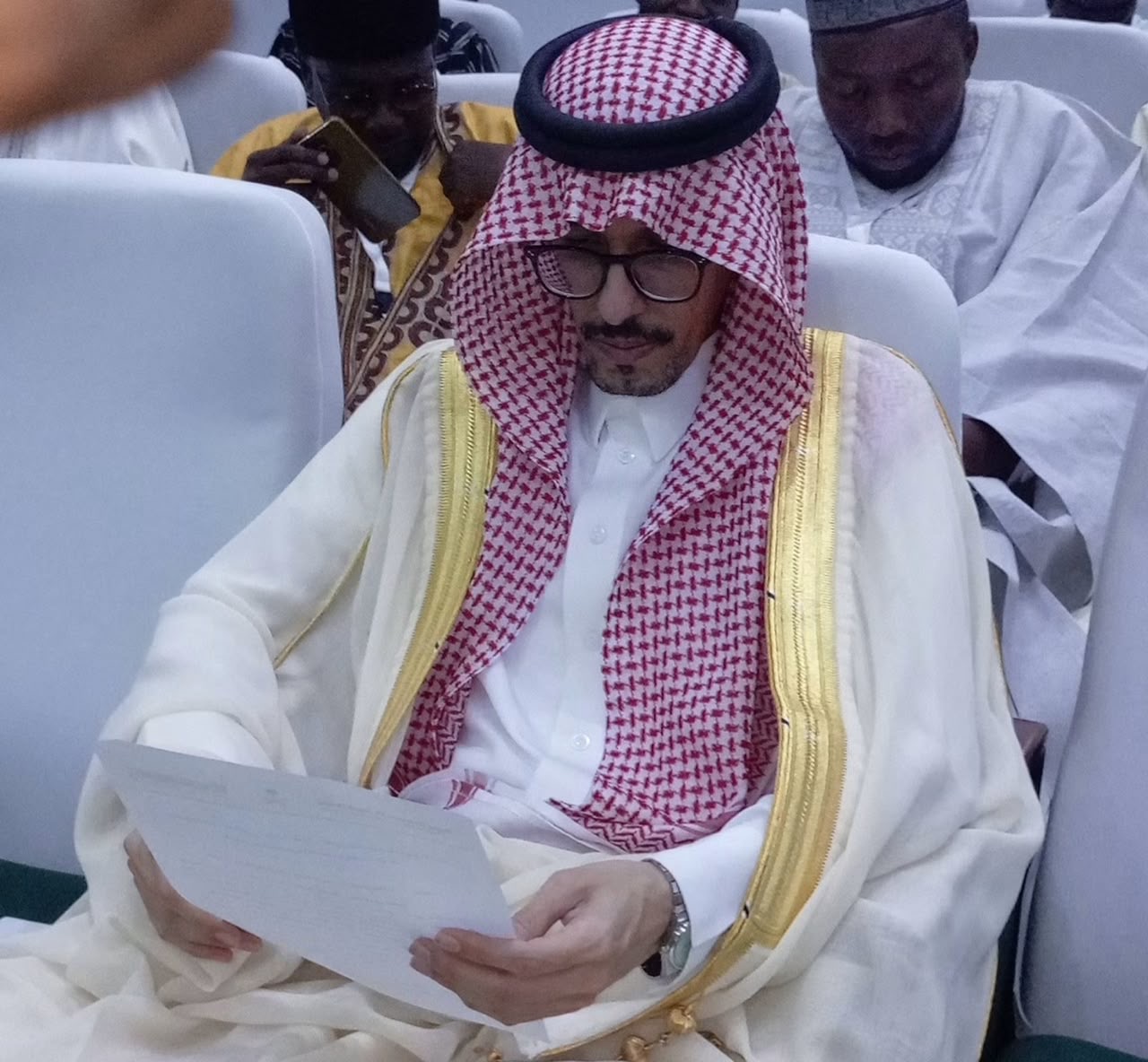
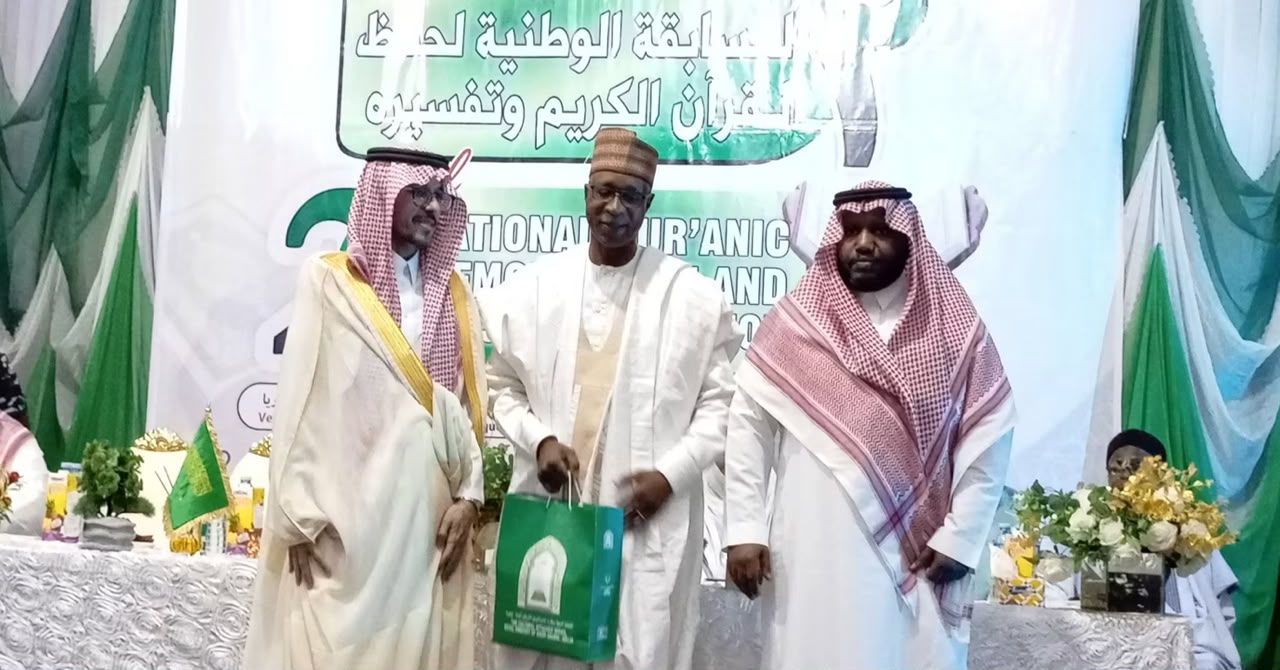
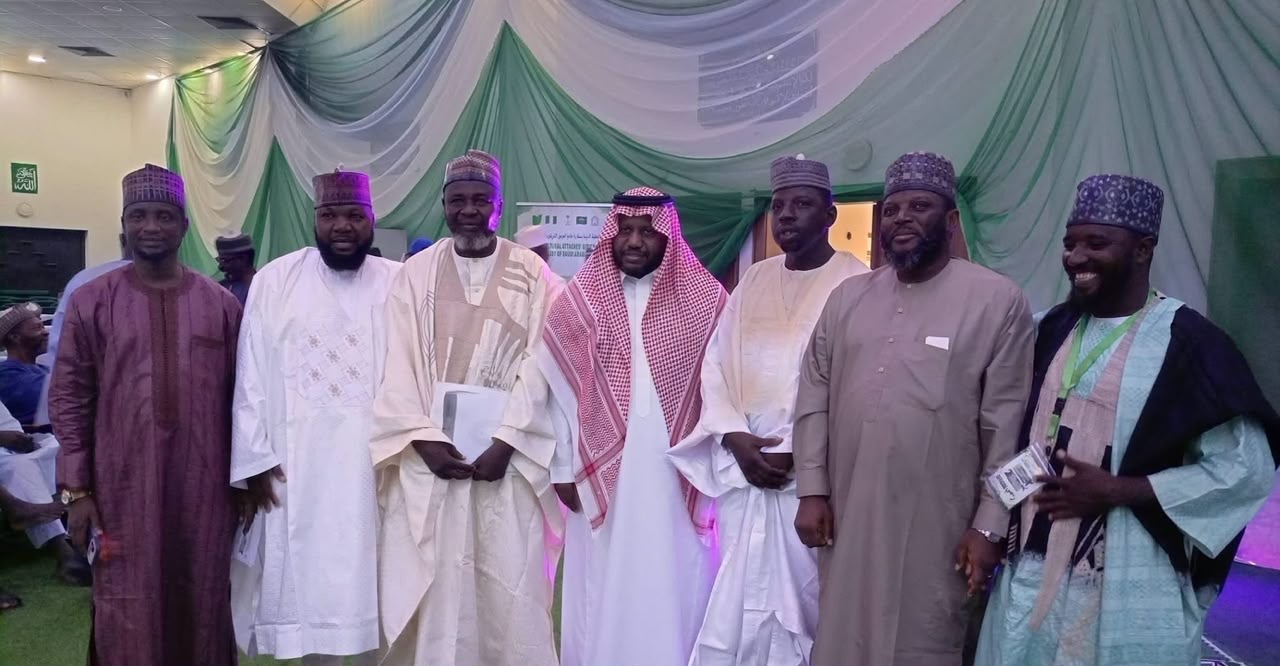
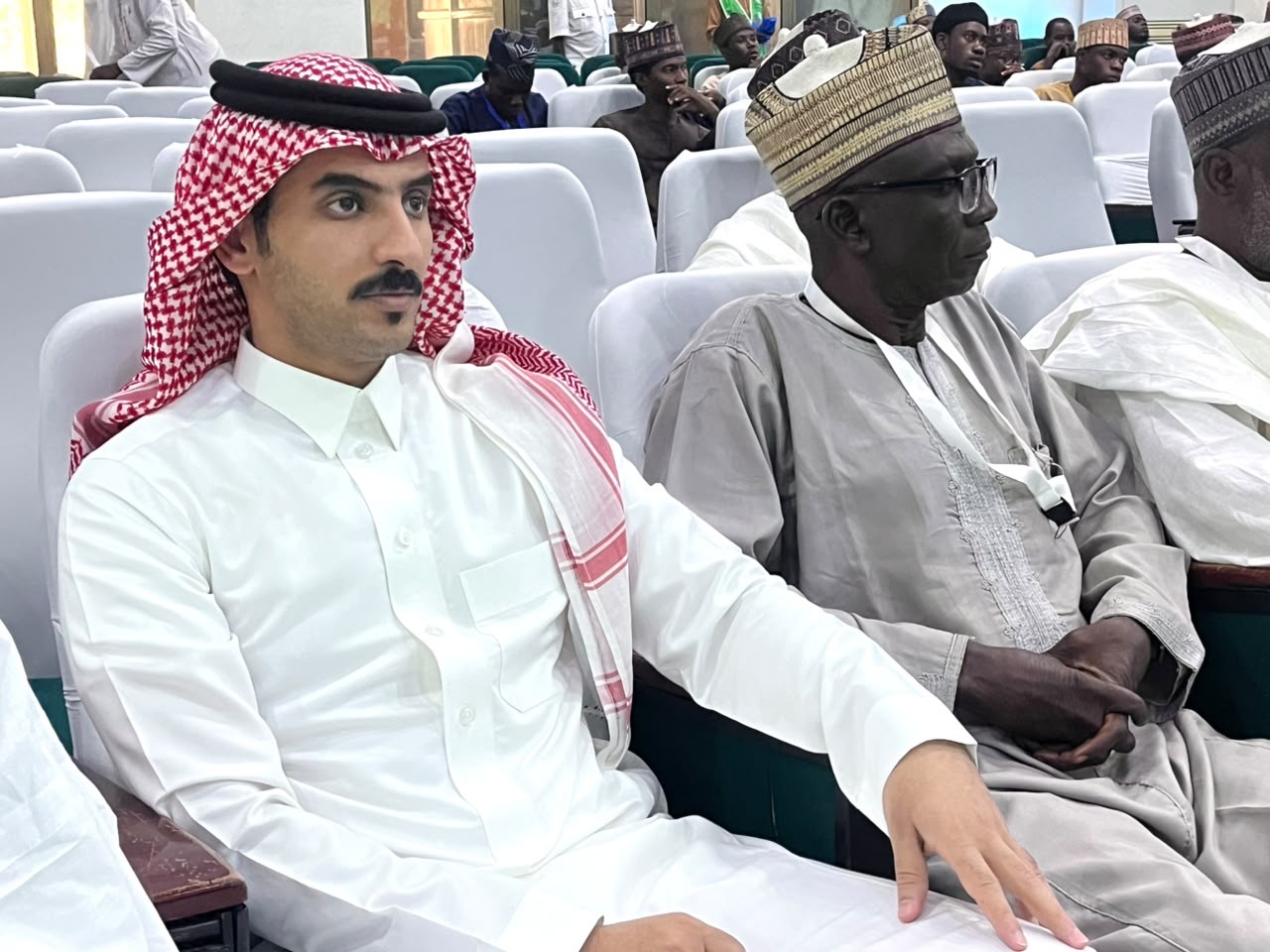
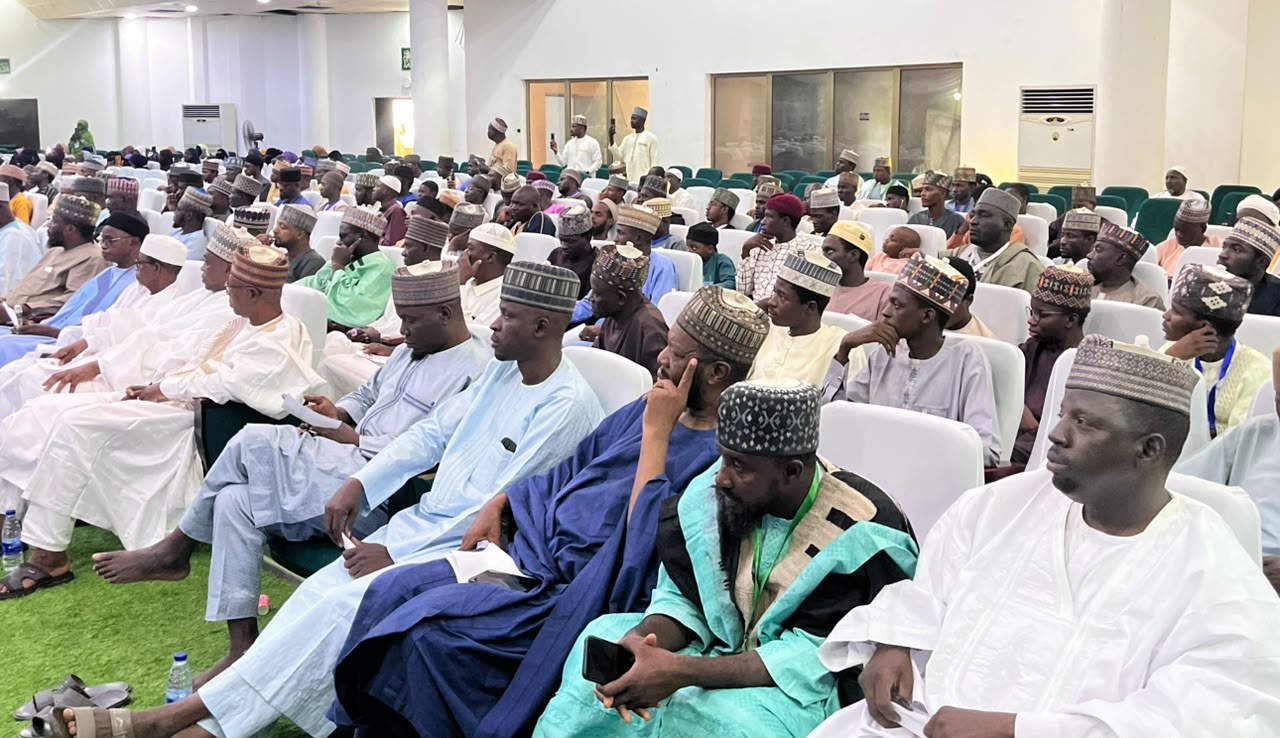
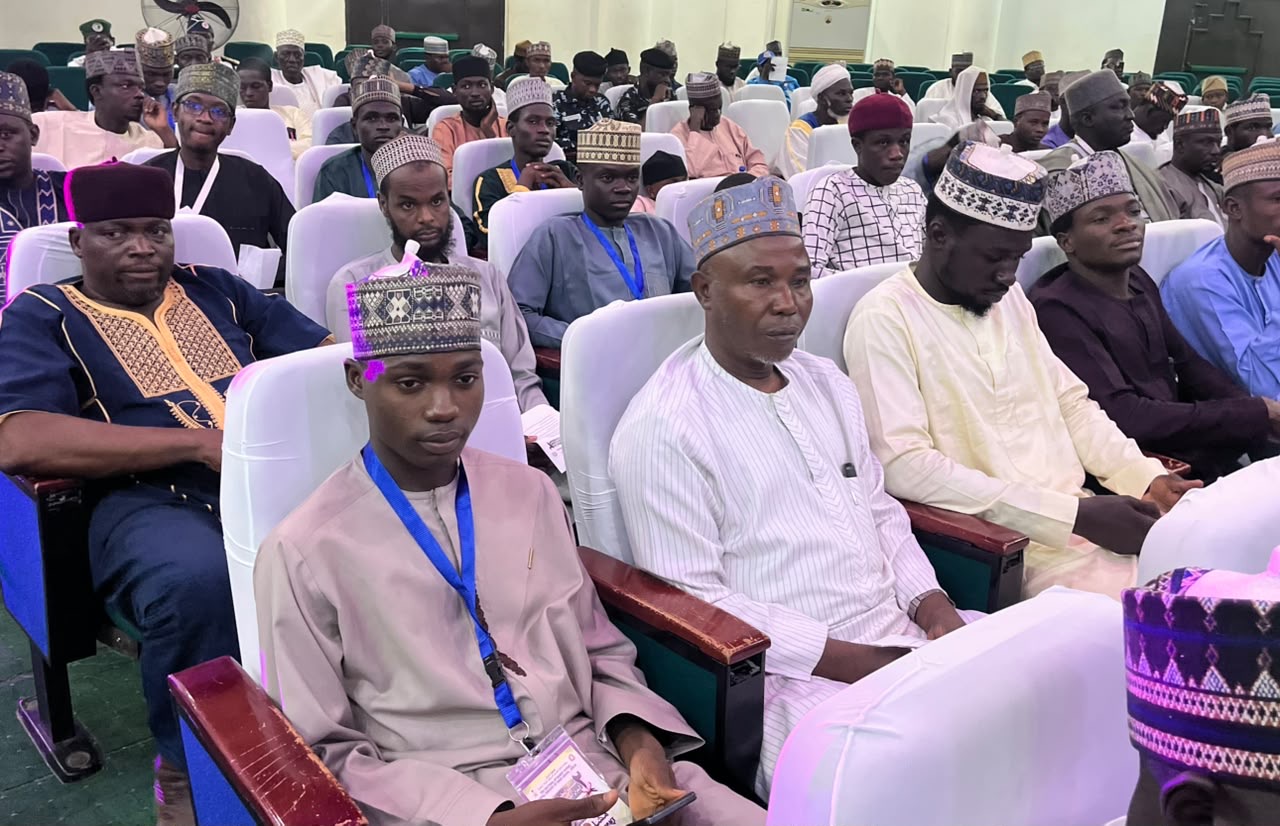
The ceremony, held at the National Mosque in Abuja, brought together Saudi diplomatic representatives, Islamic scholars, state musabagah coordinators, contestants, parents and other dignitaries.
Deputy Ambassador of Saudi Arabia to Nigeria, Ustaz AbdurRahman bin AbdulLateef Al-Tuwaem, told contestants the competition’s significance went beyond the prizes. Taking part was itself an achievement, he said, urging them to keep their relationship with the Qur’an and let its guidance shape their lives. He thanked the Cultural Attaché Office, teachers, parents and others who supported the contestants, and prayed for Allah’s blessings on the participants.
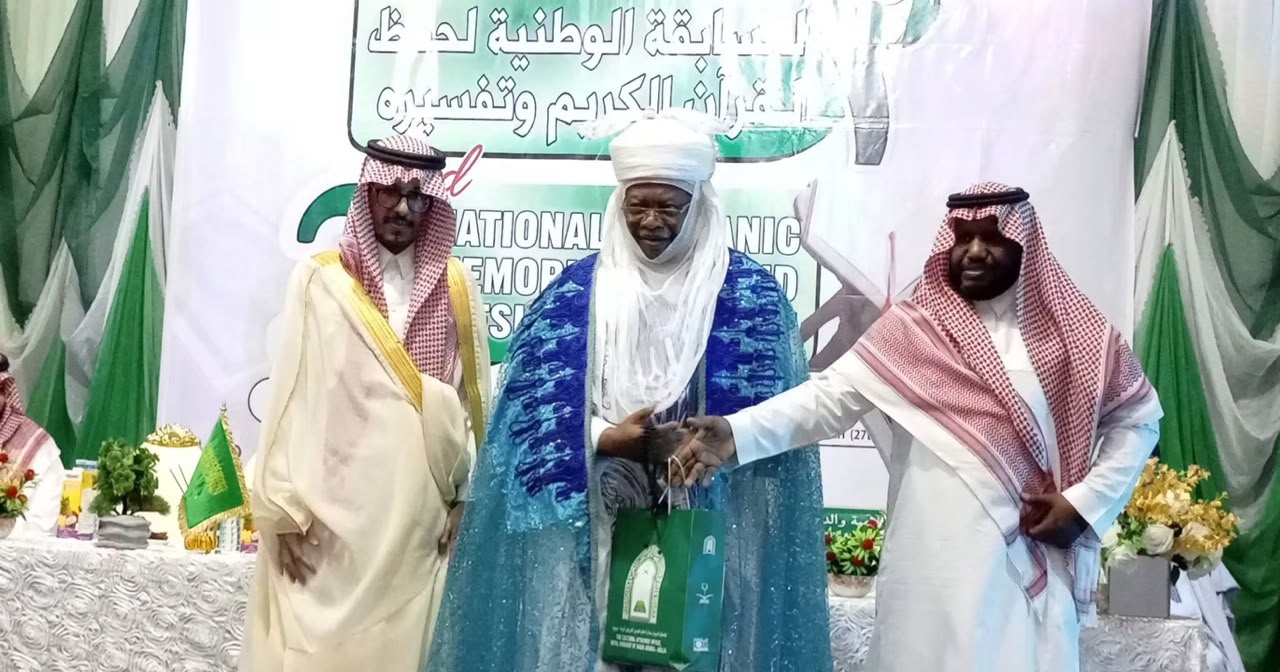
Oba Aliyu Kelvin Danesi II, the Aidonogie of South Ibie Kingdom and Chairman of the Edo State Musabaqah, said the competition gave young people an avenue to study the Qur’an beyond memorisation. Its value, he said, lay not only in committing verses to memory but in internalising their teachings and letting them influence conduct. He linked that emphasis to social challenges facing young people, arguing that Islamic values and moral education could promote responsible behaviour.
Alhaji Kamaldeen Akintunde, Secretary-General of the Ogun State Muslim Council and Secretary of the Forum of State Coordinators of Musabaqah, said the addition of tafsir had broadened the purpose of the competition.
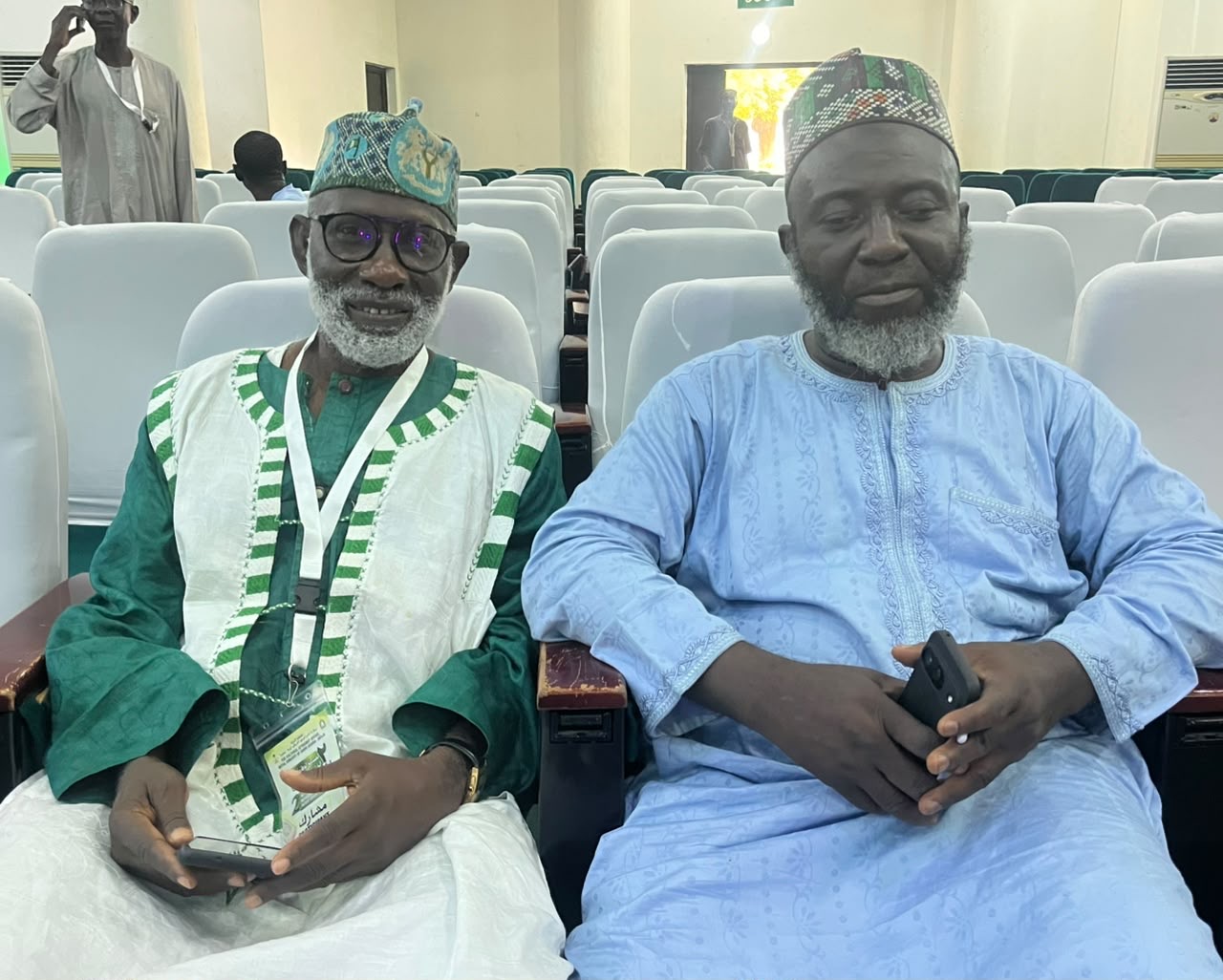
“This competition has the potential to encourage memorisers of the Holy Qur’an to go beyond just memorisation,” he said.
Akintunde said the benefits extended beyond prizes and monetary rewards. Ogun State did not win one of the major prizes, but he said the result would encourage its contestants and teachers to prepare harder for future editions.
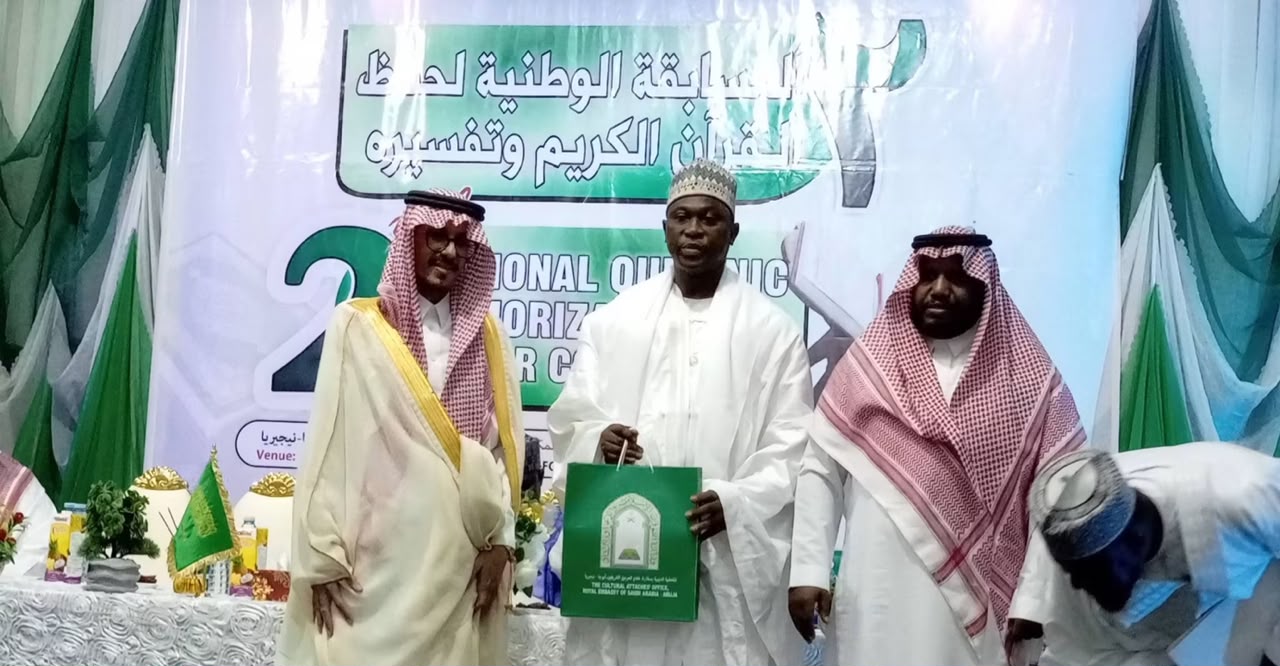
Dr Al-Hassan Yakub, Assistant Commissioner of Police and Chief Imam of the Nigeria Police Force, also stressed the need to translate Qur’anic knowledge into conduct. The programme’s significance went beyond recitation, he said, with understanding and application essential parts of the message. Applying the Qur’an’s teachings could promote peace, togetherness and understanding, and Nigeria would benefit when young people combined Qur’anic knowledge with the values derived from it, he added.
Senator Aliyu Magatakarda Wamakko, the Sarkin Yamman Sokoto and special guest of honour, urged contestants to keep revising the Qur’an and reflecting on its teachings. “The greatest honour is not simply memorising the Qur’an, but living by it,” he said.
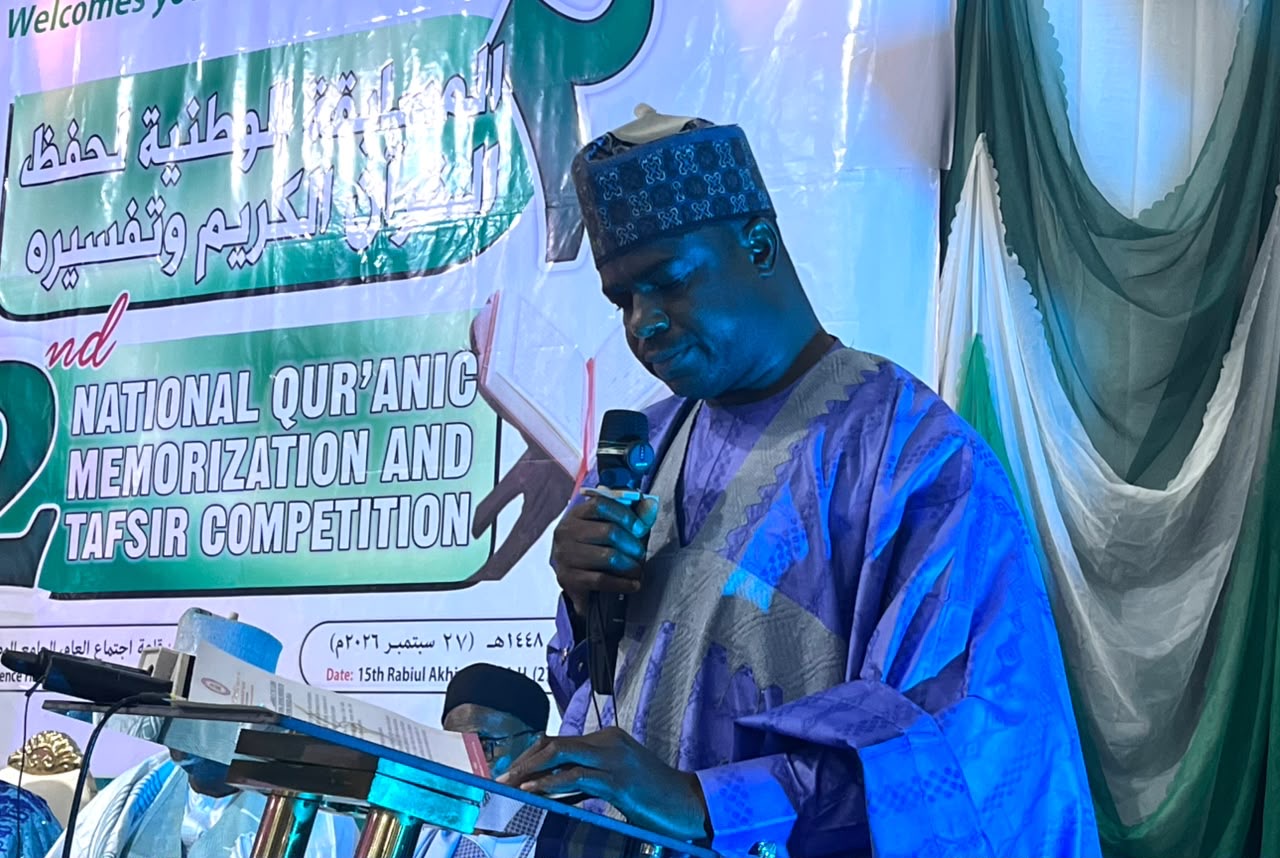
Competitions of this kind, he said, could help develop a generation whose relationship with the Qur’an showed in knowledge, integrity and service to humanity. He also prayed for continued friendship between Nigeria and Saudi Arabia, and for peace, unity and prosperity in Nigeria.
Ustaz Ibrahim Abdulgafar Adekola of Ogun State, who competed in the first category covering the complete Qur’an, was chosen to deliver the closing recitation. He also received an Umrah (the lesser pilgrimage to Makkah) for next year, subject to completing the tafsir requirement from where he stopped.
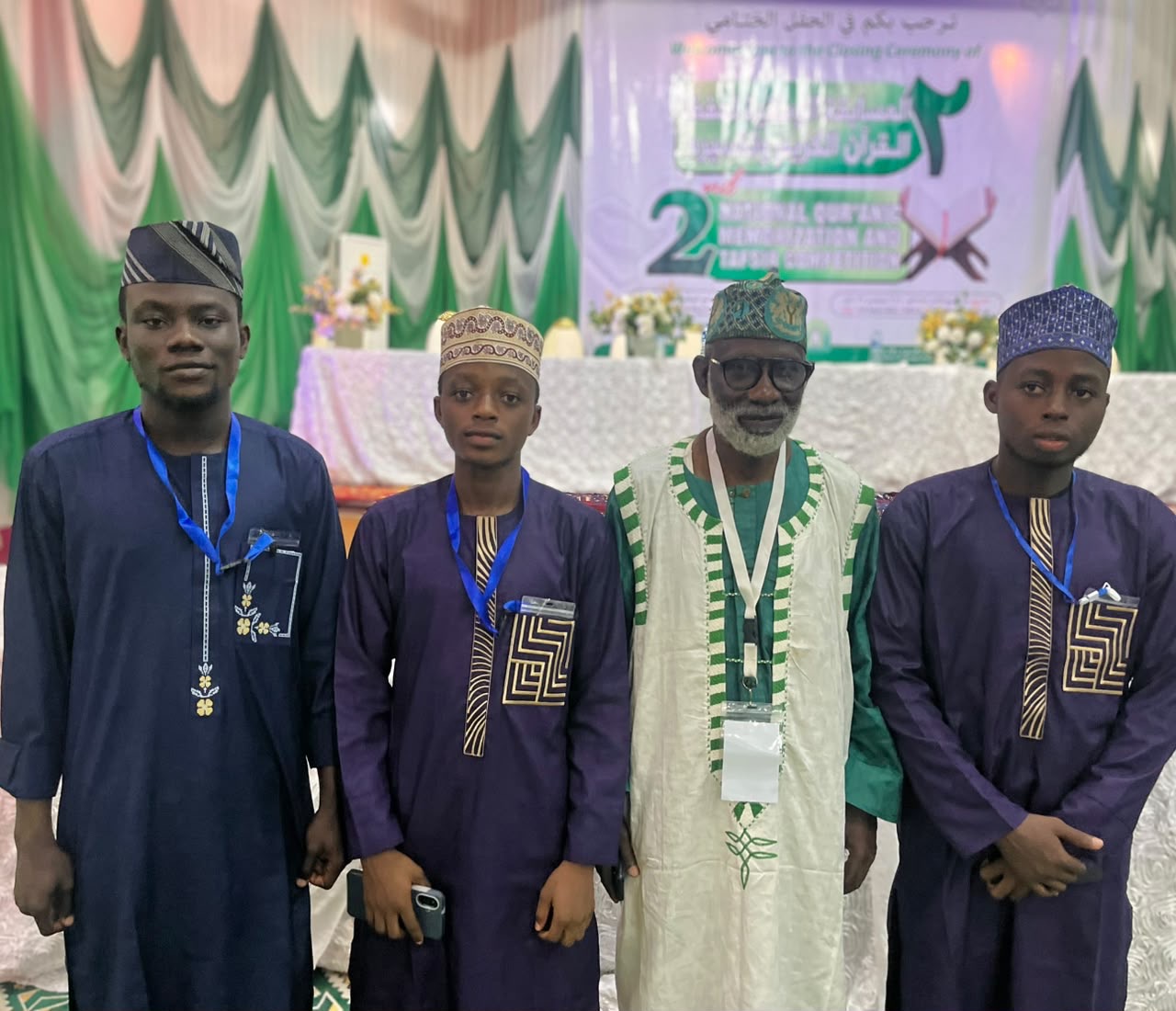
Adekola, who also took part in the inaugural edition, said he intensified his preparation after learning of this year’s competition only two to three weeks beforehand. The prize came unexpectedly and would be especially meaningful, he said, as it would be his first visit to Makkah. He urged other young people interested in Qur’anic competitions not to abandon their preparation, but to combine consistent study with prayer.
“My message to them is they should not give up at all. They should keep preparing and keep making dua” he said.
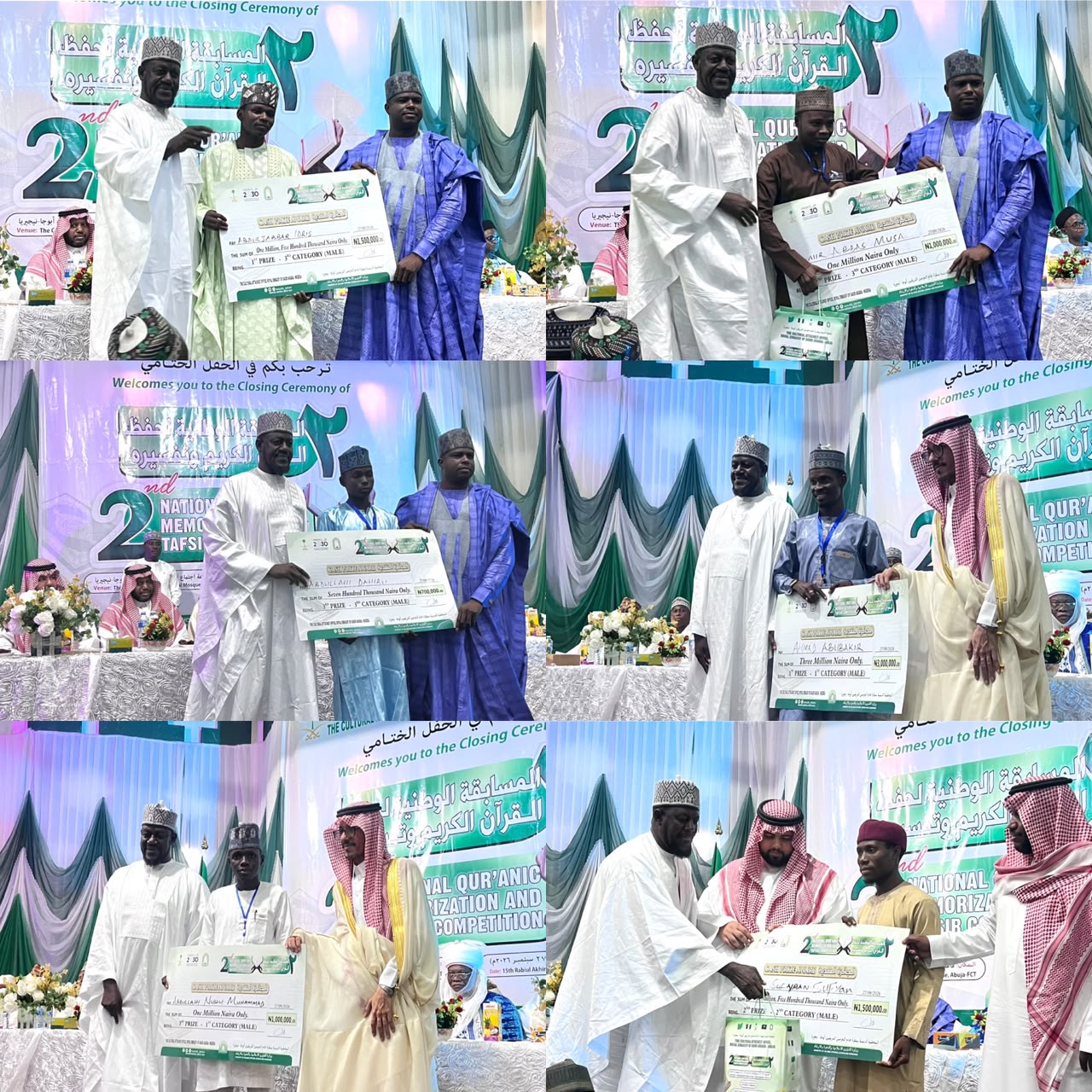
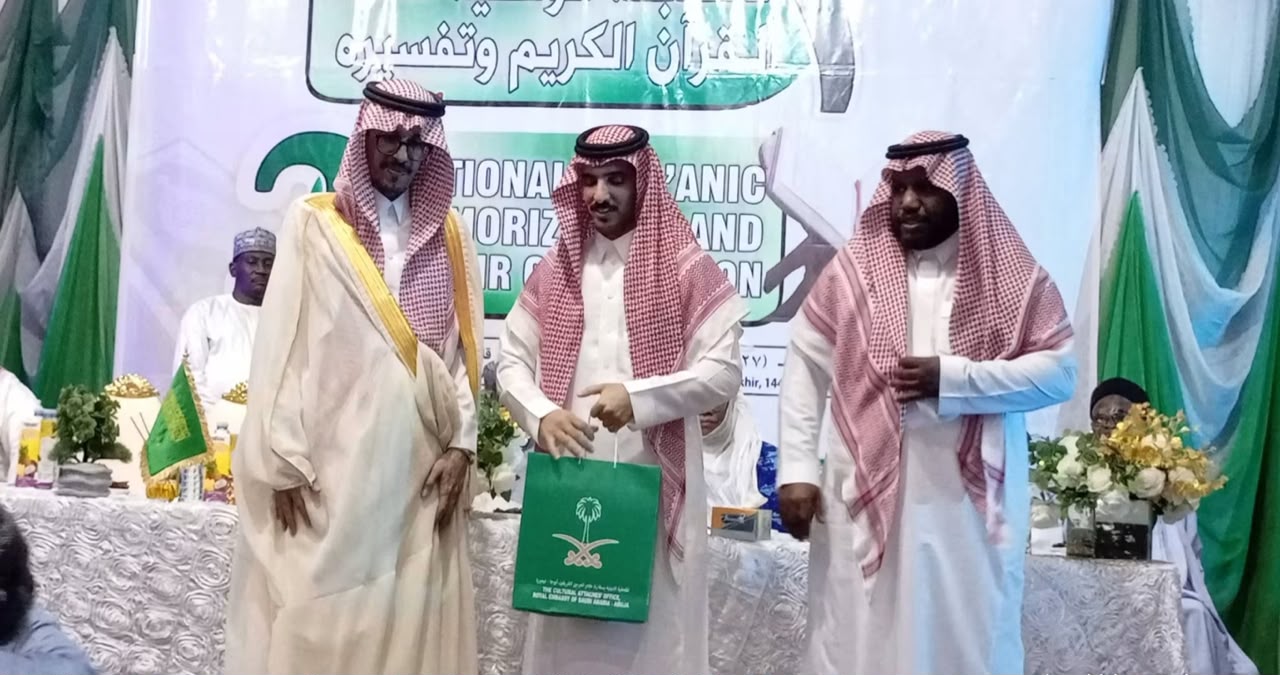
Faces at the ceremony:

SPONSORED

SPONSORED

SONSORED
