
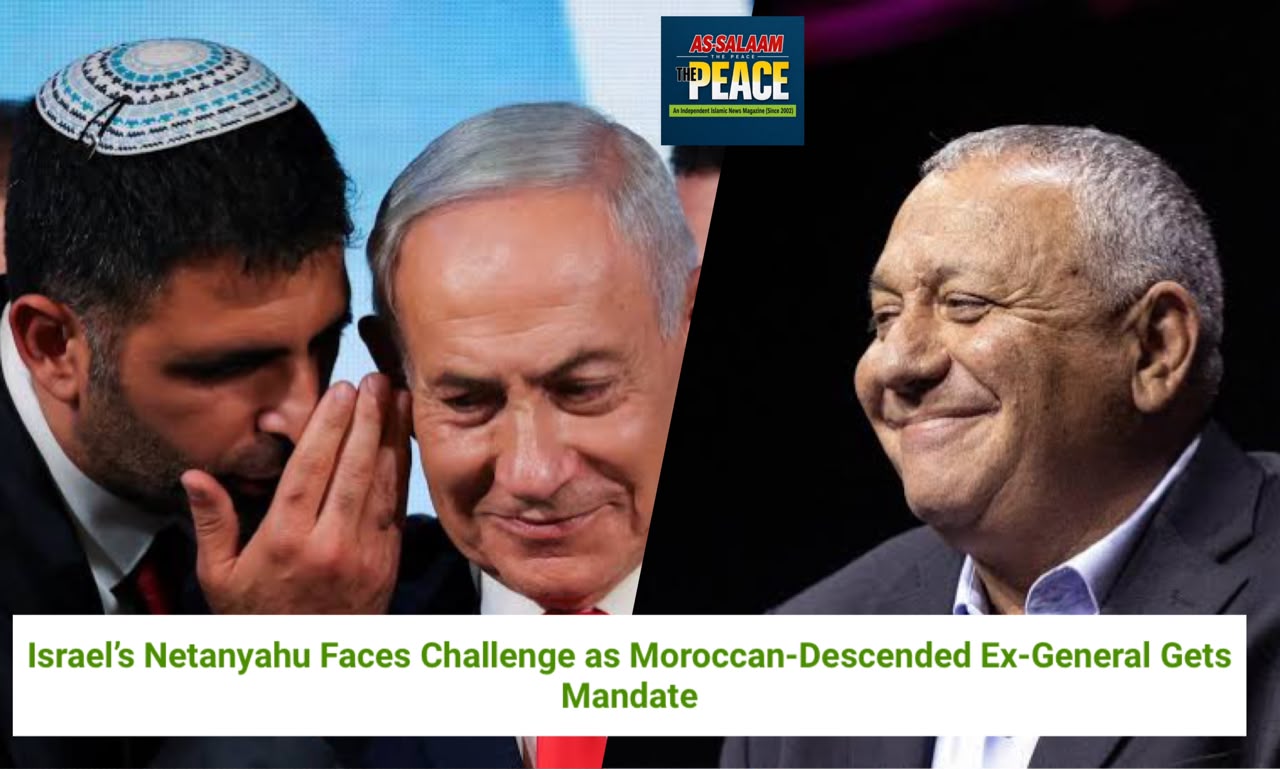
Israel’s Netanyahu Faces Challenge as Moroccan-Descended Ex-General Gets Mandate
Gadi Eisenkot has 28 days to assemble a governing coalition after winning the backing of more lawmakers than the incumbent prime minister, but the parliamentary arithmetic remains difficult.
By Abdullahi Yusuf
Former Israeli military chief Gadi Eisenkot has received the mandate to form the country’s next government, placing a politician of Moroccan Jewish heritage at the centre of an effort to end Benjamin Netanyahu’s long tenure as prime minister.
President Isaac Herzog formally handed Eisenkot the mandate on November 8, following an election that left neither Netanyahu’s bloc nor the opposition with the 61 seats required for a majority in the 120-member Knesset.
The appointment gives the leader of the Yashar party the first opportunity to negotiate a governing coalition, but does not guarantee that he will become prime minister.
Herzog said representatives of political factions holding 67 parliamentary seats had recommended Eisenkot for the task, while factions representing 46 lawmakers backed Netanyahu. A seven-member faction declined to recommend either candidate.
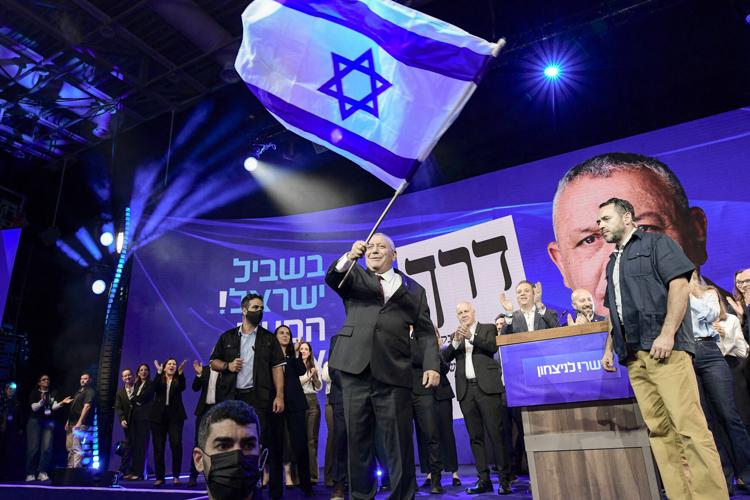
Although Netanyahu’s Likud remains the largest single party, Herzog said Eisenkot had received clearer support on the question of who was better placed to form the next government.
Moroccan roots and Israel’s ethnic divide
Born in 1960 in Tiberias, northern Israel, Eisenkot is the son of Moroccan Jewish immigrants. His father was born in Marrakesh, while his mother was born in Casablanca.
His family background has drawn attention during the political contest, particularly against the history of divisions between Mizrahi and Ashkenazi Jews in Israeli society.
Mizrahi Jews trace their family origins to the Middle East and North Africa, while Ashkenazi Jews have roots in Central and Eastern Europe. The distinction has historically been associated with inequalities in social standing, political influence and economic opportunity in Israel.
The issue resurfaced during the election campaign after Yinon Magal, a prominent television presenter and Netanyahu supporter, described Eisenkot as a “monkey” of Mizrahi-Moroccan heritage allegedly controlled by Ashkenazi elites.
The remarks provoked criticism and were interpreted by opponents as an attack on Eisenkot’s ethnic background. Magal later said he had used the expression to portray the politician as a frontman or puppet controlled by others, rather than to mock his ancestry.
Netanyahu also condemned the remarks.
The controversy brought questions of ethnic representation into the campaign. If Eisenkot becomes prime minister, he would make history as Israel’s first head of government from a Mizrahi background.
From military command to political opposition
Eisenkot spent 41 years in the Israeli military after joining the Golani Brigade in 1978. He rose through the ranks to become the 21st Chief of Staff of the Israel Defense Forces in 2015, serving until 2019.
He entered politics in 2022 and later joined Netanyahu’s emergency war cabinet following the October 7, 2023, Hamas-led attacks on Israel.
He left the government in June 2024 and became an increasingly prominent critic of Netanyahu’s handling of the war and the absence of a clear strategy for what would follow.
The conflict also brought personal loss: his son and two nephews were killed while fighting in Gaza.
His political challenge now rests on assembling a coalition from a deeply divided parliament.
Eisenkot’s four-party bloc holds 48 seats, compared with 53 held by Netanyahu’s wider bloc. Arab-led parties control the remaining 19 seats, making their position potentially decisive in negotiations.
Both Arab-led parties recommended Eisenkot for the mandate, but their support does not automatically translate into a governing coalition. Differences within Eisenkot’s own bloc over cooperation with Arab parties remain a major obstacle.
Other possible routes include cooperation with ultra-Orthodox parties or a broader unity arrangement involving Likud. Each option carries political and ideological difficulties.
A difficult path to the premiership
Israel’s newly elected 26th Knesset was sworn in on November 10, even as negotiations over the formation of a government continued.
Under Israel’s Basic Law, Eisenkot has 28 days from receiving the mandate to form a government, with the possibility of a further 14-day extension granted by the president.
If he fails, Herzog may give another lawmaker the opportunity to form a government, potentially returning the initiative to Netanyahu. If neither succeeds, the country could face another election.
Eisenkot has called for a broad national emergency government, arguing that Israel faces urgent security and political challenges requiring a change in leadership.
For now, his mandate represents an opportunity rather than a transfer of power. Whether he can turn the support expressed during the presidential consultations into a parliamentary majority will determine if Netanyahu’s tenure finally comes to an end.
SPONSORED
SPONSORED

SPONSORED

SPONSORED
