
COP31 Opens as UN Warns Existing Climate Pledges Leave World Facing 2.6°C Warming
The summit in Türkiye faces pressure to accelerate emissions cuts and close a widening climate finance gap as UN assessments expose the inadequacy of current commitments.
By Abdullahi Yusuf
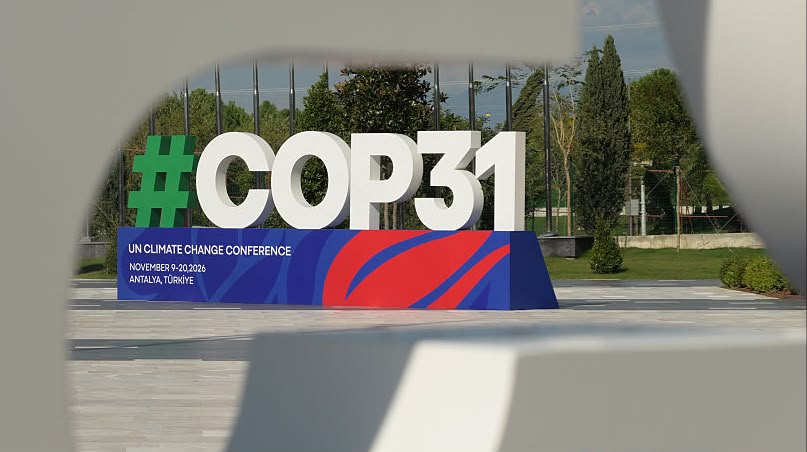
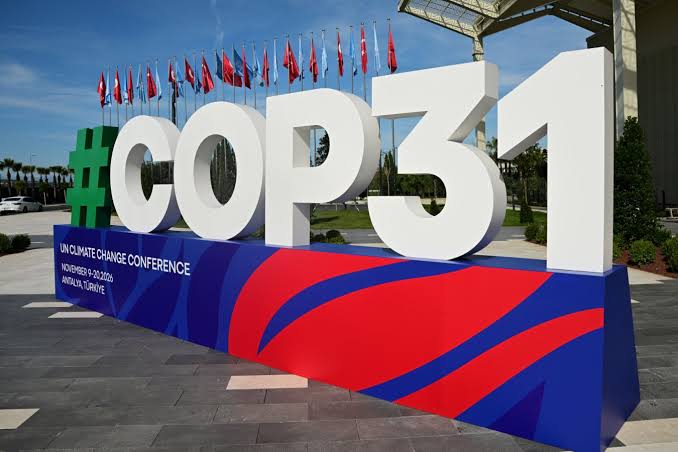
The 31st United Nations Climate Change Conference (COP31) has opened in Antalya, Türkiye, with world leaders facing renewed pressure to accelerate climate action as the latest UN assessments show that existing national commitments remain insufficient to limit global warming.
The summit, running from November 9 to 20, brings together governments, ministers, climate negotiators, scientists and civil society representatives to address emissions reductions, climate adaptation and financing for countries increasingly exposed to the effects of climate change.
Opening the conference on Monday, UN Climate Change Executive Secretary Simon Stiell urged governments to move faster, saying progress against global warming remained “nowhere near fast enough”.
The warning comes as the United Nations Environment Programme’s (UNEP) 2026 Emissions Gap Report projects that global temperatures could rise by approximately 2.6°C this century even if countries fully implement their existing climate pledges.
The projection highlights the widening gap between current national commitments and the Paris Agreement’s goal of limiting global warming to 1.5°C above pre-industrial levels. The report underscores the need for much deeper emissions cuts to bring the world closer to that target.
Climate finance gap puts developing countries under pressure
The challenge extends beyond cutting greenhouse gas emissions. Developing countries are also struggling to secure the resources needed to protect communities, infrastructure and livelihoods from increasingly severe climate impacts.
UNEP’s 2026 Adaptation Gap Report estimates that developing countries will require about $305 billion annually by 2035 to meet their climate adaptation needs.
However, international public adaptation finance from developed to developing countries stood at between $28.2 billion and $31.7 billion in 2024, leaving a substantial gap between available support and projected requirements.
The financing question is expected to remain a major point of contention at COP31, particularly for countries that contribute relatively little to global emissions but face disproportionate exposure to flooding, drought, extreme heat and other climate-related hazards.
Türkiye pushes electrification as a central climate target
Türkiye’s COP31 presidency is seeking to place implementation at the centre of this year’s negotiations, with a major focus on expanding electrification across the global economy.
A flagship proposal aims to increase electricity’s share of global final energy consumption from just over 20 per cent to 35 per cent by 2035, alongside targets for more energy-efficient buildings and greater circular use of materials.
The presidency argues that wider electrification across transport, buildings and industry could accelerate the transition away from direct fossil fuel use.
However, climate advocates have questioned whether electrification alone can deliver meaningful emissions reductions without ensuring that the additional electricity comes from low-carbon sources.
Türkiye’s Environment, Urbanisation and Climate Change Minister and COP31 President, Murat Kurum, has said the summit should deliver practical benefits in people’s daily lives, including more efficient buildings, cleaner public transport, affordable energy and new employment opportunities.
The presidency’s wider Action Agenda also covers clean energy, methane reduction, climate-resilient cities, green industrialisation, food security, ocean protection, youth participation and resilient health systems.
Fossil fuels, energy security and artificial intelligence complicate talks
The negotiations are unfolding amid geopolitical tensions and growing concerns about global energy security, which have renewed debate over countries’ dependence on oil, gas and coal.
Disruptions to energy supplies and rising fuel costs have encouraged some governments to seek additional fossil fuel sources, even as the deployment of renewable energy continues to expand.
Stiell has argued that renewable energy offers a route towards greater energy security, pointing to the economic costs of fossil fuel price volatility and the savings associated with clean energy investments.
The rapid expansion of artificial intelligence is adding another challenge, with growing demand for electricity from data centres and other digital infrastructure raising questions about how the technology can develop without increasing greenhouse gas emissions.
Türkiye is expected to seek support for principles guiding the sustainable development and deployment of artificial intelligence.
Australia’s Climate Change and Energy Minister, Chris Bowen, is chairing the negotiations under the summit’s arrangements, while Türkiye holds the conference presidency.
A high-level gathering of world leaders, known as the Antalya Leaders’ Summit, is scheduled for November 11 and 12, with the participation of heads of state and government.
As the two-week conference begins, the central test for governments will be whether they can translate existing climate commitments into measurable action, secure greater support for vulnerable countries and accelerate the transition to a lower-carbon global economy.
SPONSORED

SPONSORED

SPONSORED

SPONSORED
