
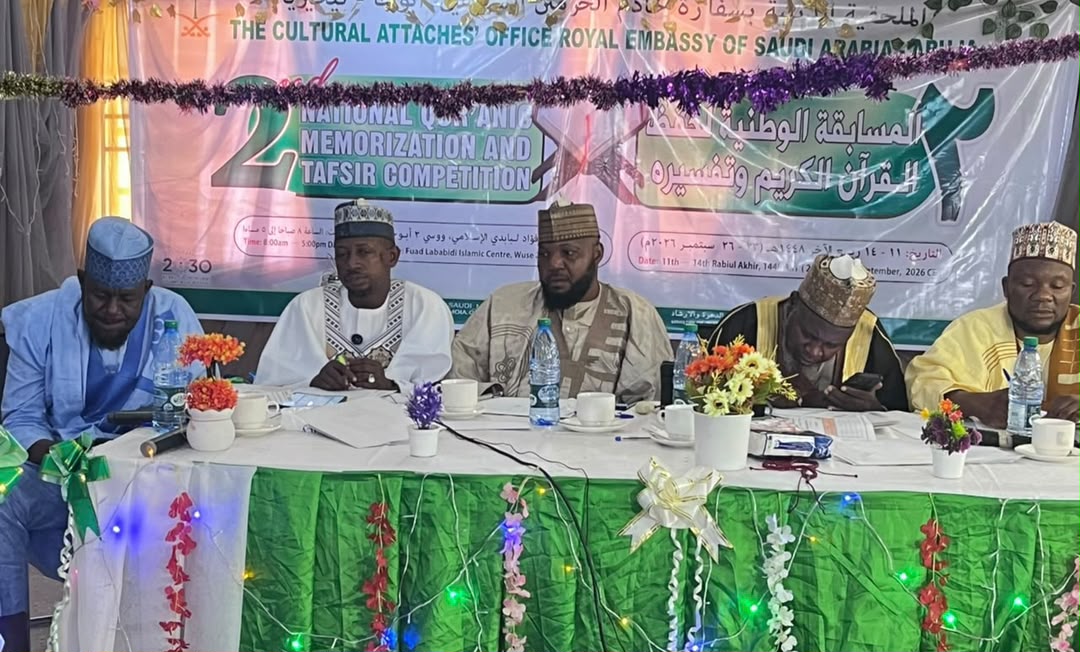
Saudi Embassy Opens Second National Qur’anic Memorisation Competition in Abuja
The 2026 competition brings together contestants from across Nigeria in three categories, with Tafsir introduced alongside Qur’anic memorisation for the second edition.
By Abdullahi Yusuf
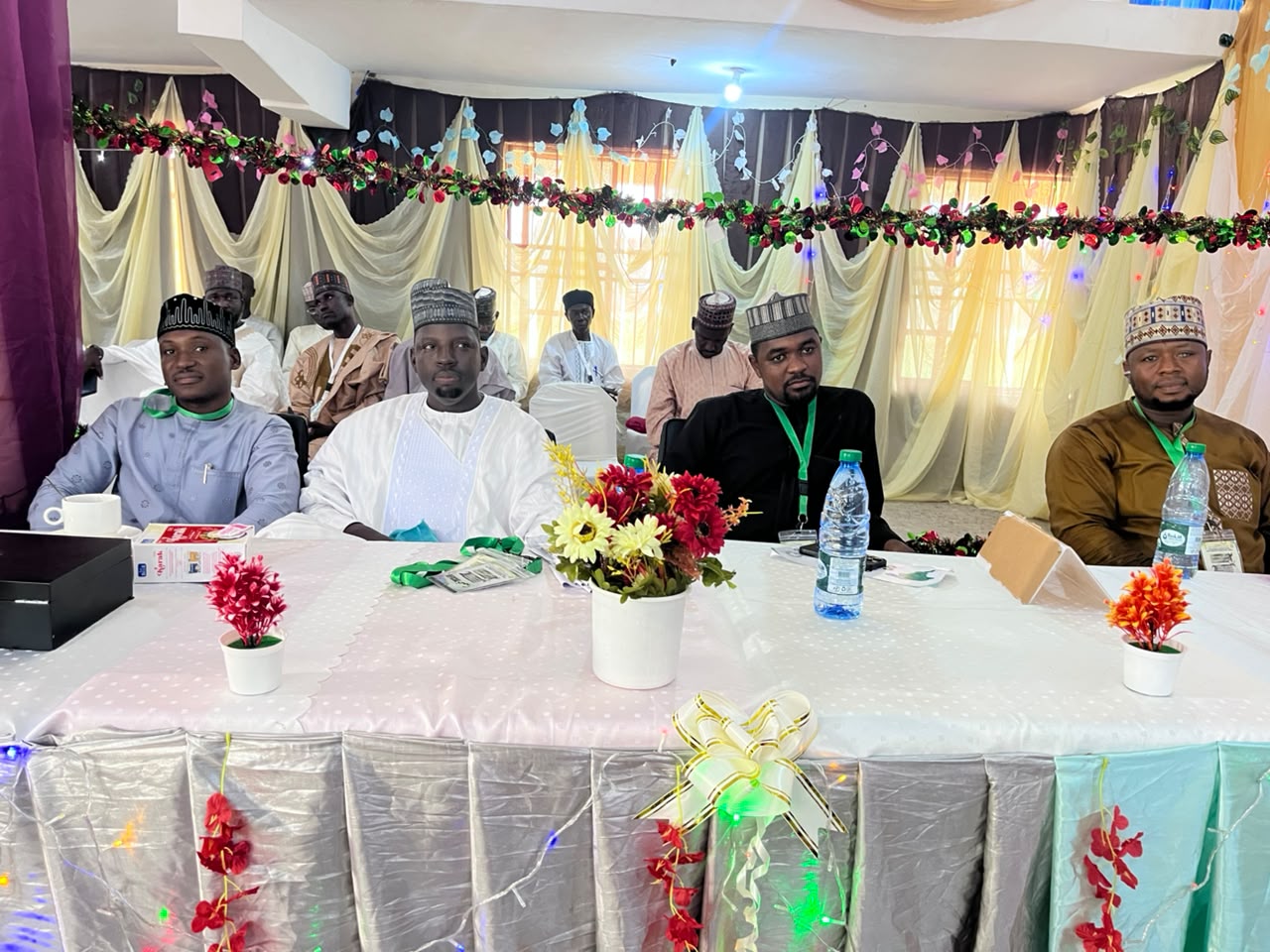
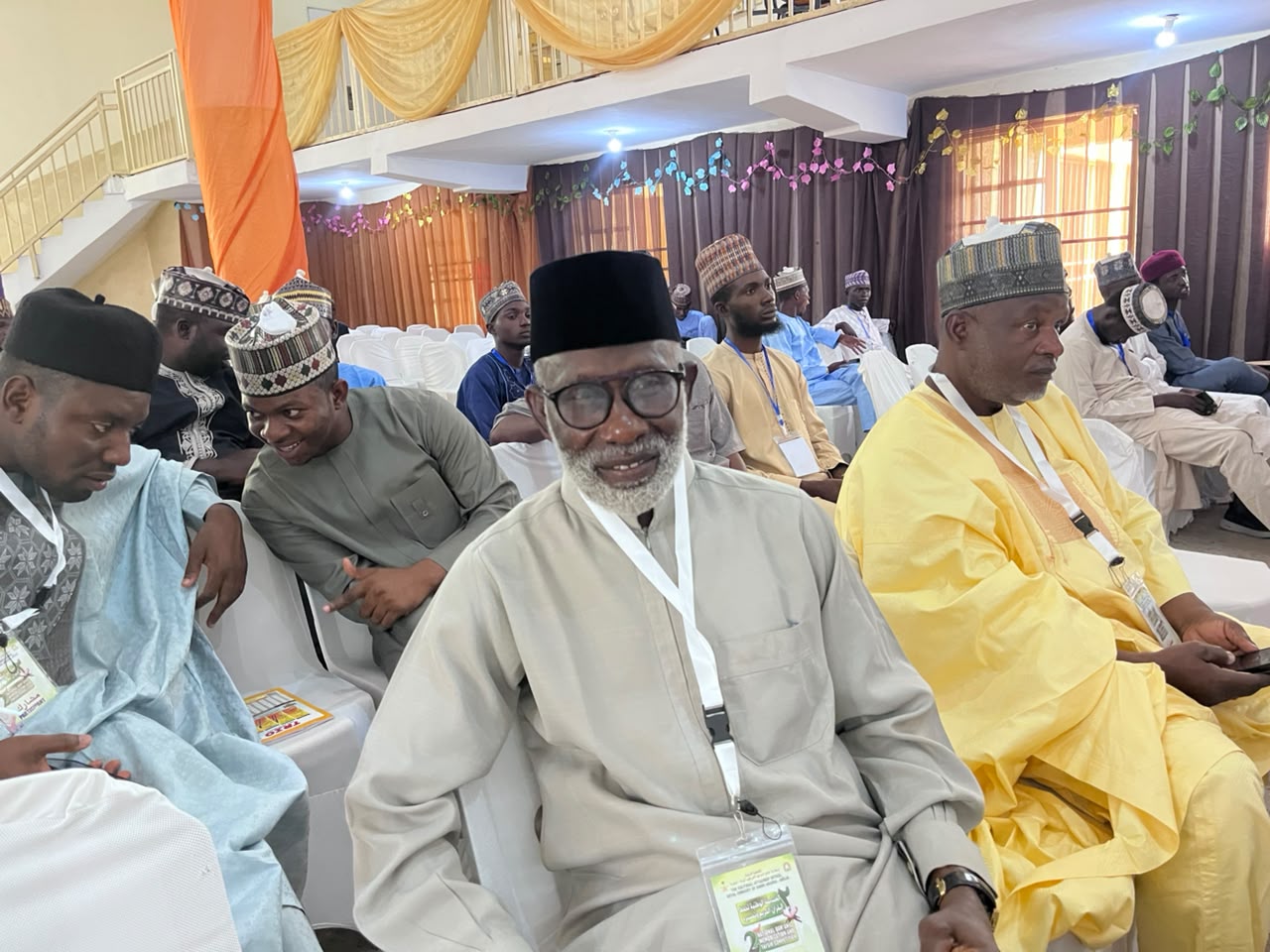
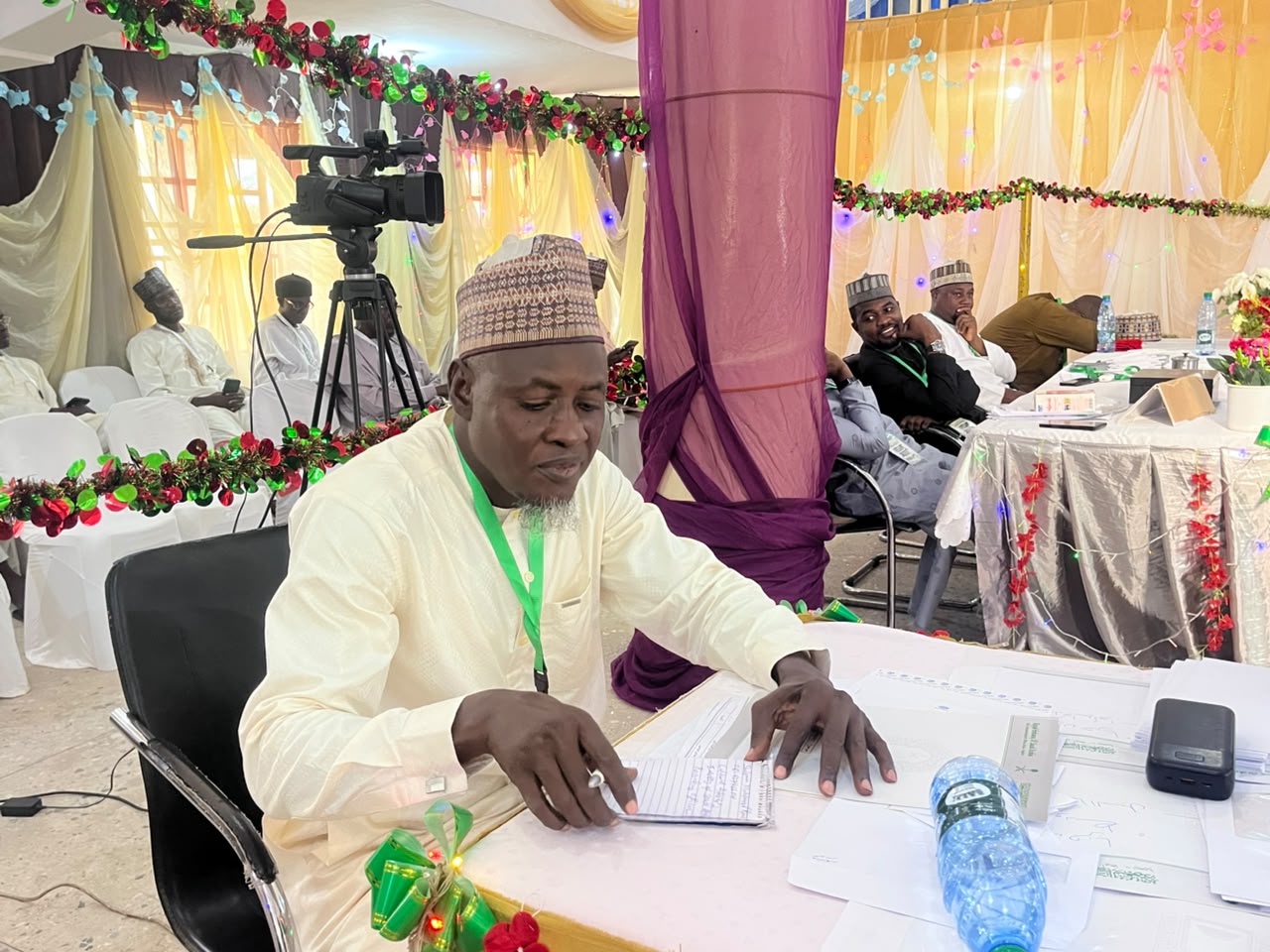
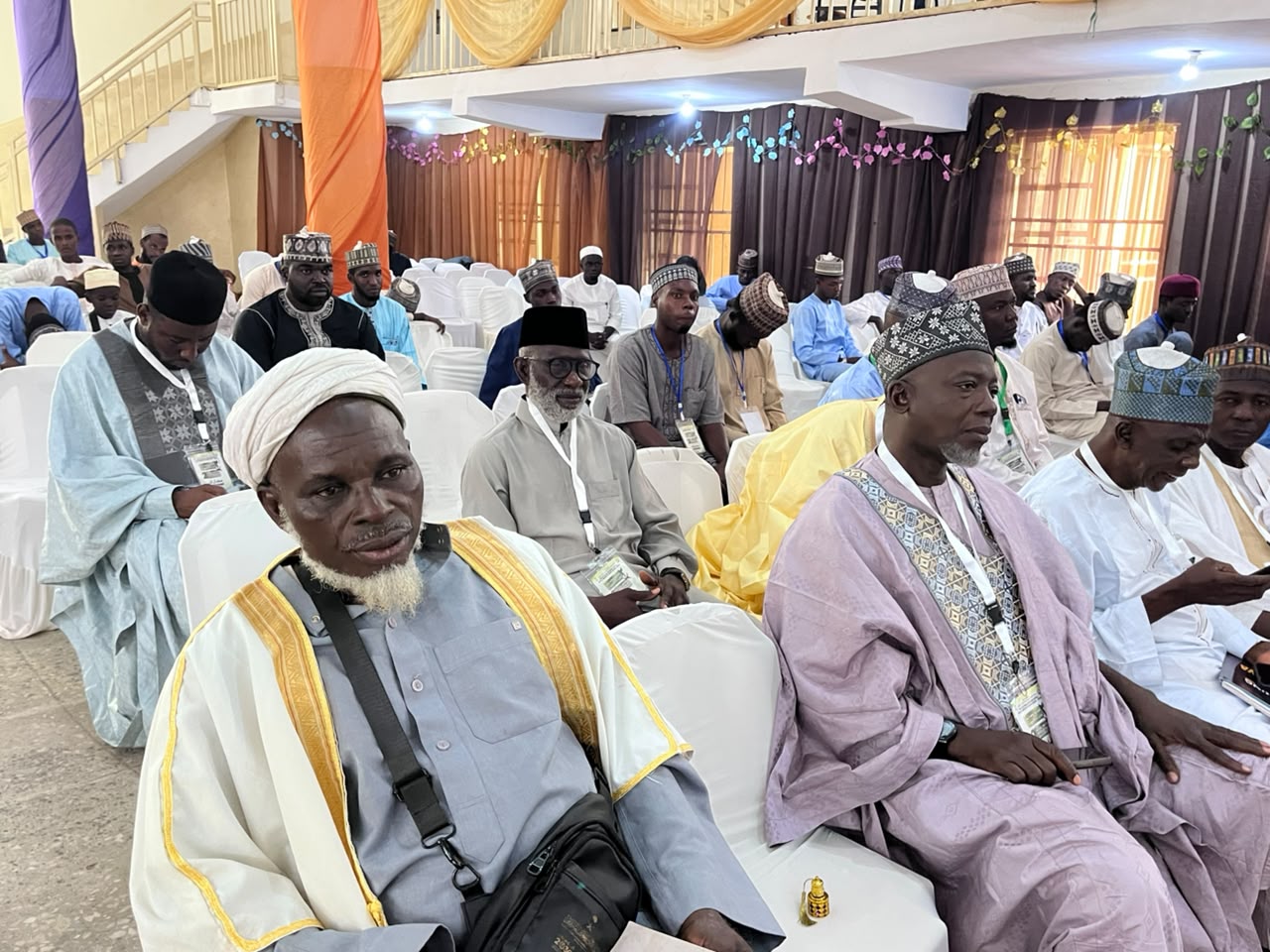
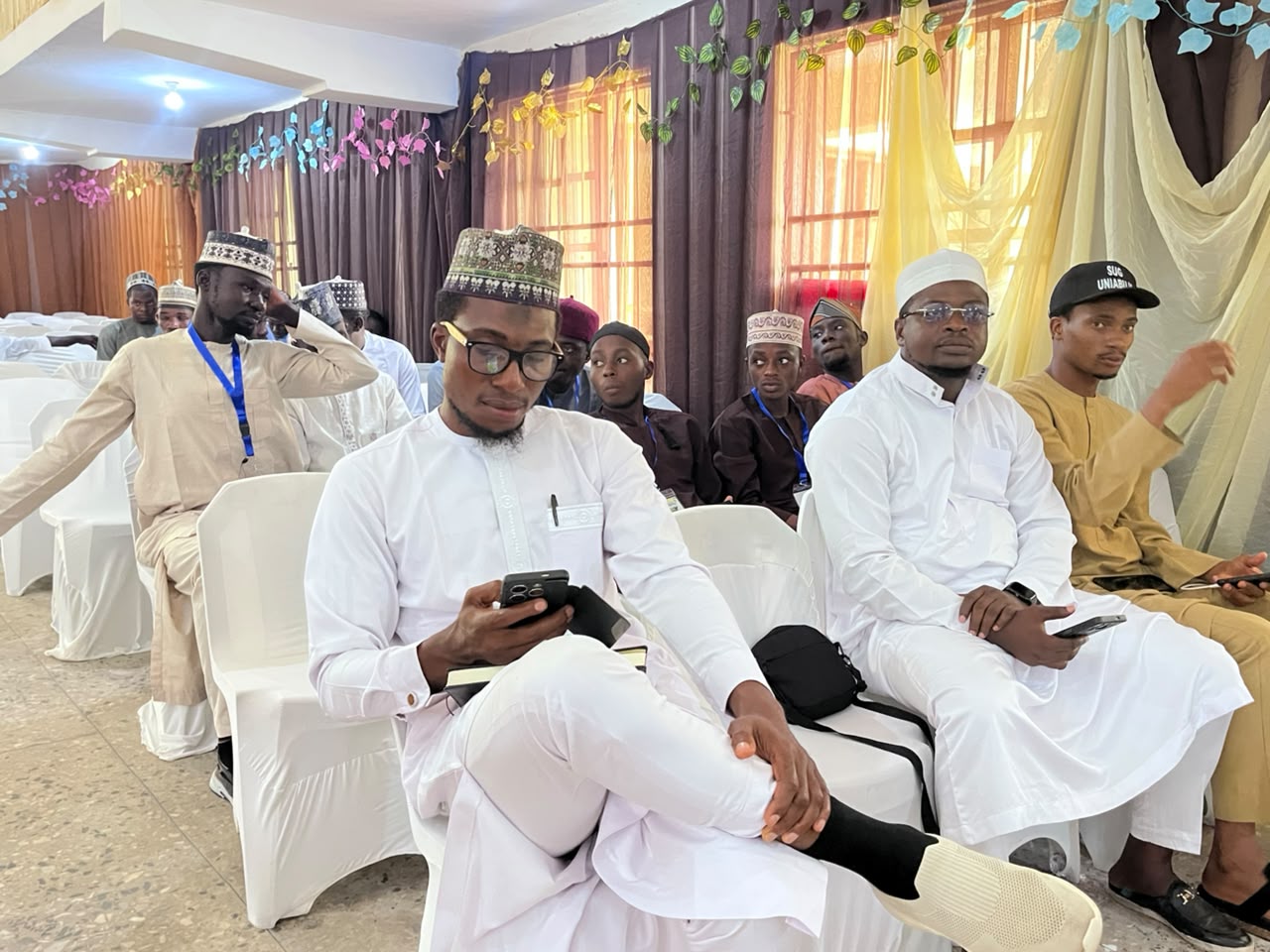
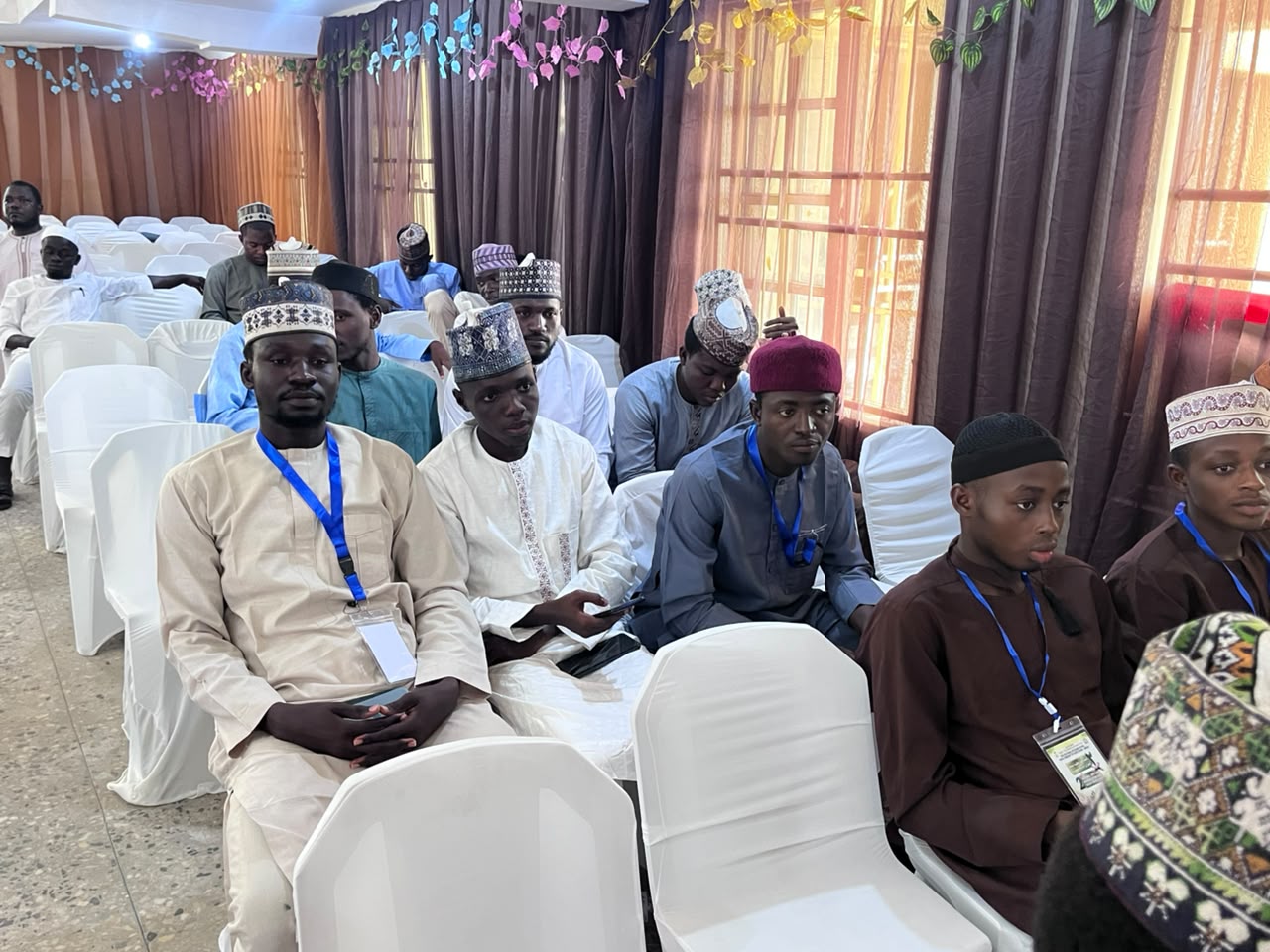
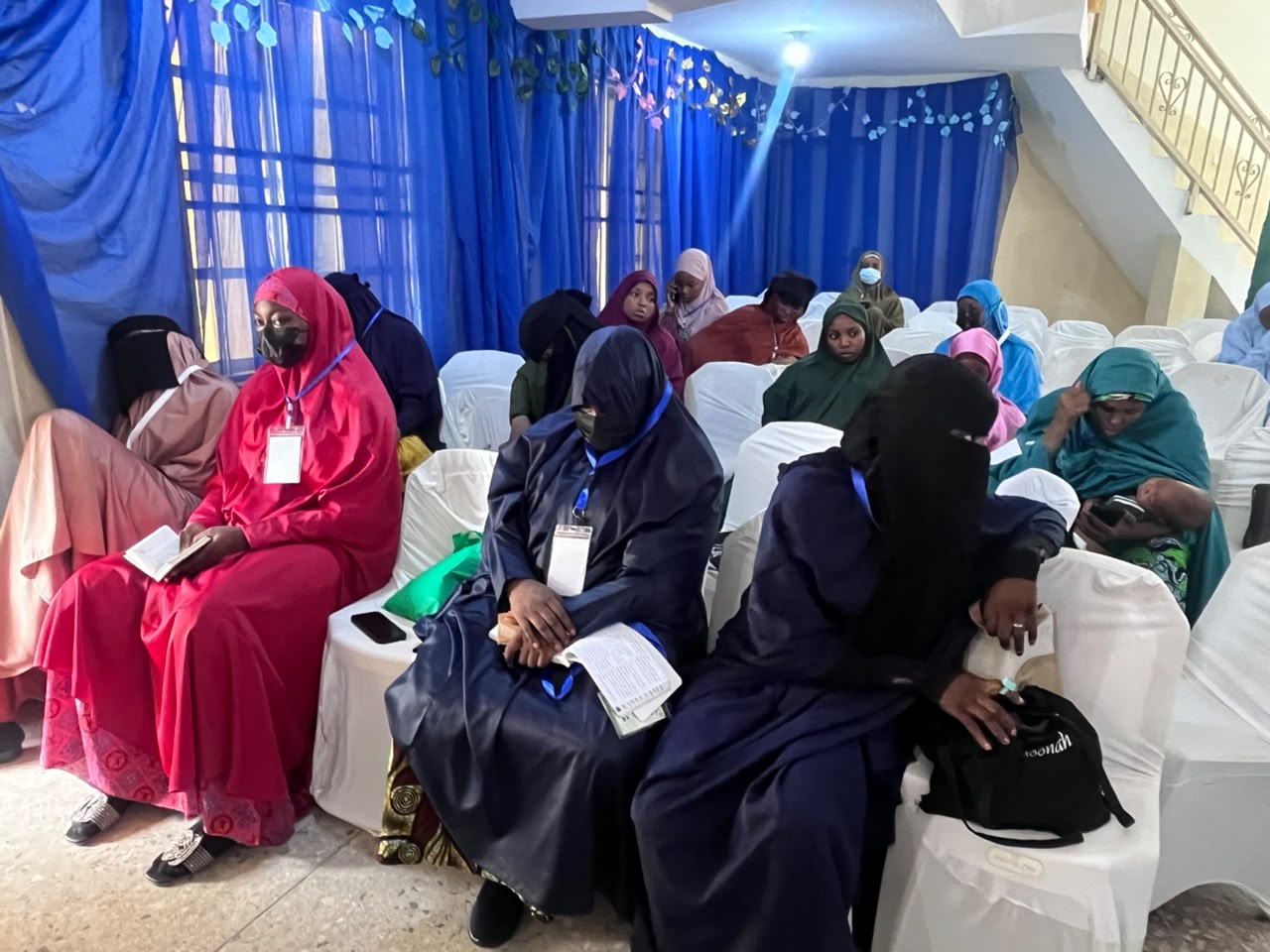
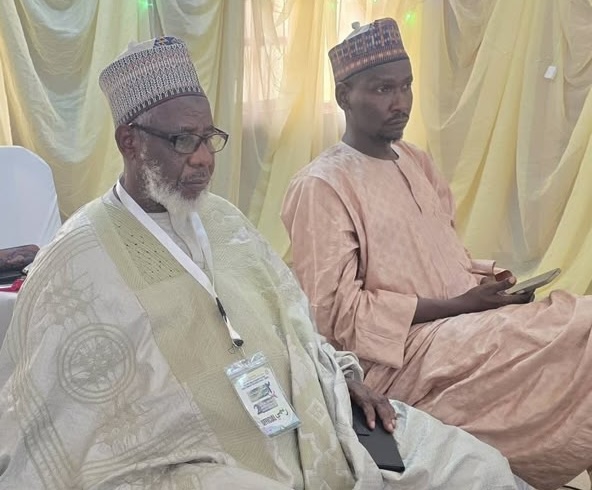
The second edition of the National Qur’anic Memorisation and Tafsir Competition organised by the Cultural Attaché Office of the Royal Embassy of Saudi Arabia in Nigeria opened in Abuja on Wednesday, bringing together Qur’an memorizers from different states for five days of competition.
The competition, earlier announced by the Embassy as part of its 2026 national Qur’anic programme, runs from Wednesday, September 23 to Sunday, September 27, corresponding to 11–15 Rabi’ al-Thani 1448 AH.
This year’s contest introduces a new element to the inaugural edition: contestants are assessed not only on their memorisation and recitation of the Qur’an but also on their understanding of its meanings through Tafsir.
The competition is divided into three categories. The first requires memorisation of 60 Hizb, covering the entire Qur’an, together with Tafsir from Muyassar fi Gharib al-Qur’an.
The second category covers 40 Hizb with Tafsir from Kalimat al-Qur’an by Mikhluuf, from Al-Fatihah to the section beginning with “Wa la tujadilu”.
The third requires memorisation of 20 Hizb with Tafsir from the same work, covering the specified portion from “Wa la tujadilu” to Surah An-Nas.
In an interview with PEACE Magazine, Alhaji Kamaldin Akintunde, State Coordinator of the National Qur’anic Recitation Competition and Secretary of the Forum of State Coordinators of the National Qur’anic Recitation Competition in Nigeria, said the competition was designed to go beyond testing memory and recitation.
“Quranic competition is not just a contest of memory. It’s not just a contest of voices. It’s a profound initiative aimed at encouraging the memorization of the words of Allah by the youth,” Akintunde said.
He said the 2026 edition had recorded improvements in organisation compared with the inaugural competition, while the introduction of Tafsir had added a new dimension to the contest.
According to him, requiring contestants to study Tafsir reinforces the principle that memorising the Qur’an should be accompanied by understanding and practical application of its teachings.
“You don’t just memorize Quran, you must also behave and interpret the words of Allah by your action, not by just memorization,” he said.
Akintunde said the approach could help instil discipline among young people, improve their interaction with others and encourage them to make constructive contributions to society.
He also pointed to the wider educational and social value of Qur’anic engagement, saying such programmes could help shield young people from juvenile delinquency, cybercrime and other social vices.
He commended the Royal Embassy of Saudi Arabia for supporting the competition, describing it as part of efforts to encourage responsible young people and contribute to building a stronger society.
Akintunde also cited the annual national Qur’anic recitation competition organised by Usman Danfodiyo University as another platform that has contributed to Nigeria’s performance at international Qur’anic competitions. He noted that a Nigerian female contestant had recently emerged among the top performers at an international competition in Saudi Arabia.
For the participating states, the introduction of Tafsir has also changed how contestants prepared for the second edition.
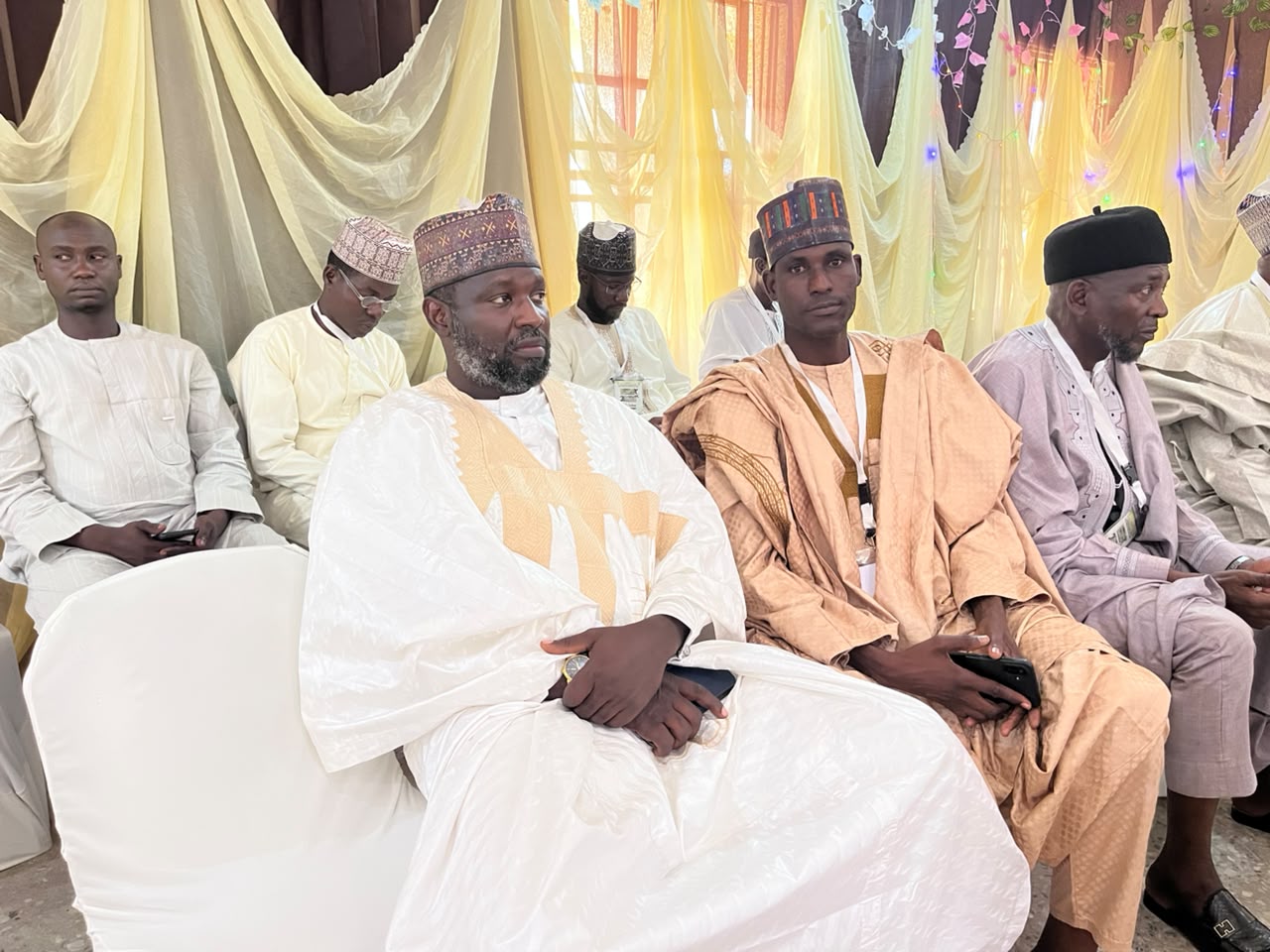
Mallam Umar Alaji Umar, Coordinator of the Borno State contingent, said the competition was well organised and had brought contestants from different parts of the country together in a spirit of unity.
“This is the second edition of this competition. I was there last year. The competition is well organised,” Umar said.
He said participants were committed to observing the rules and regulations of the contest, while noting that the inclusion of Tafsir had required state contingents to prepare differently from the previous edition.
“Last year, they told us that there is no Tafsir. Then when we came with our participants or with our contingent, we found it difficult to compete with some states that had already memorised” the Tafsir requirements, he said.
Umar said the experience prompted Borno State to prepare its contestants ahead of this year’s competition, adding that the contingent arrived in Abuja ready for the revised format.
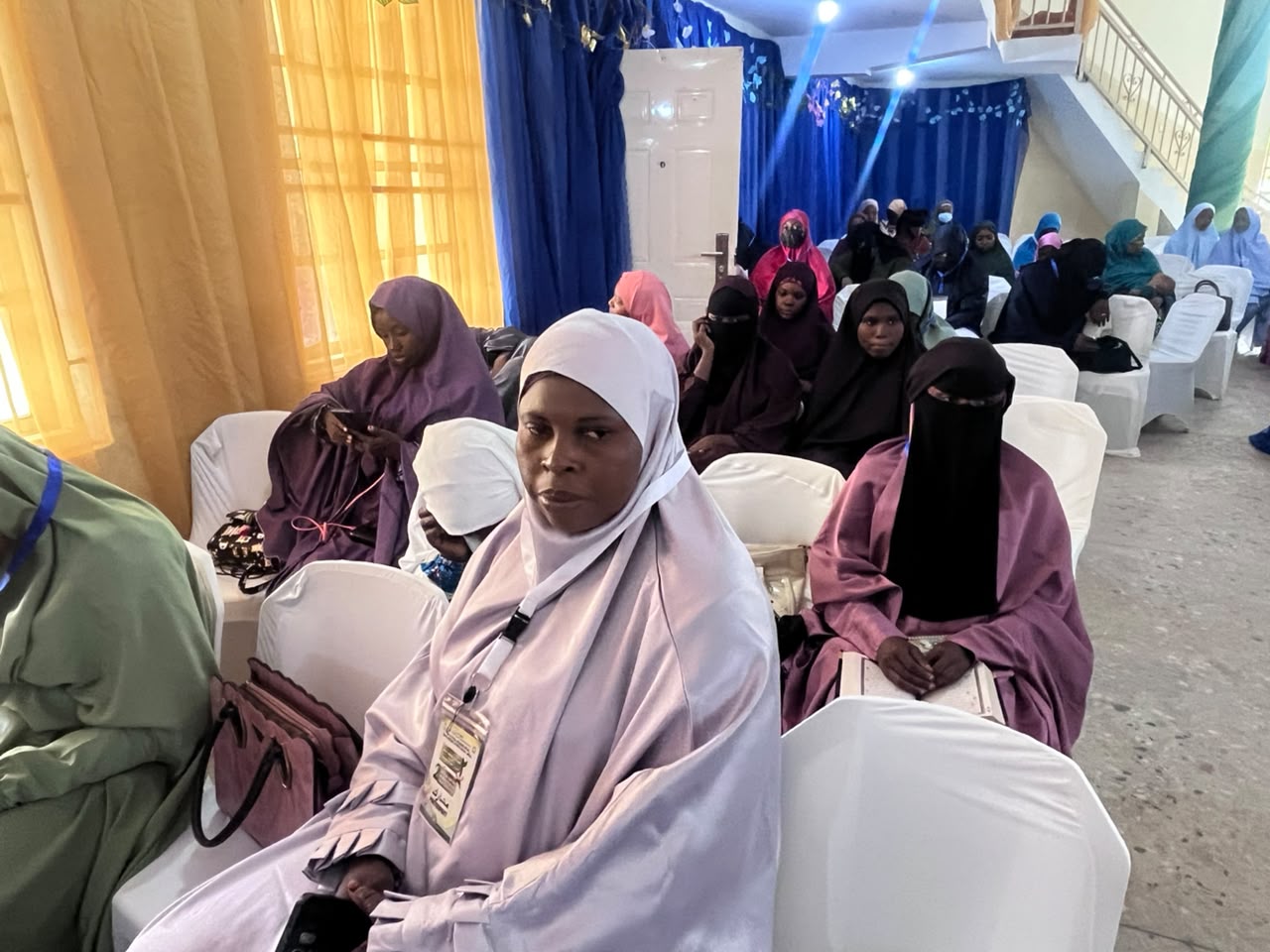
Mallama Rashida Abdulkadir, the Bauchi State female participant coordinator, returned to the competition this year in a different role after participating as a contestant in the inaugural edition.
She said the change had given her a useful perspective on how the competition had developed between the two editions.
Abdulkadir described the inclusion of Tafsir as a positive addition, saying it had encouraged students to intensify their studies and prepare more thoroughly.
She said the difference was noticeable in both the level of participation and the contestants’ approach to answering Tafsir questions.
According to her, contestants appeared better prepared this year, suggesting that experience from the inaugural edition had encouraged more students to devote greater effort to their studies and aspire to participate.
For one of the contestants, the competition has also highlighted the importance of understanding the language of the Qur’an.
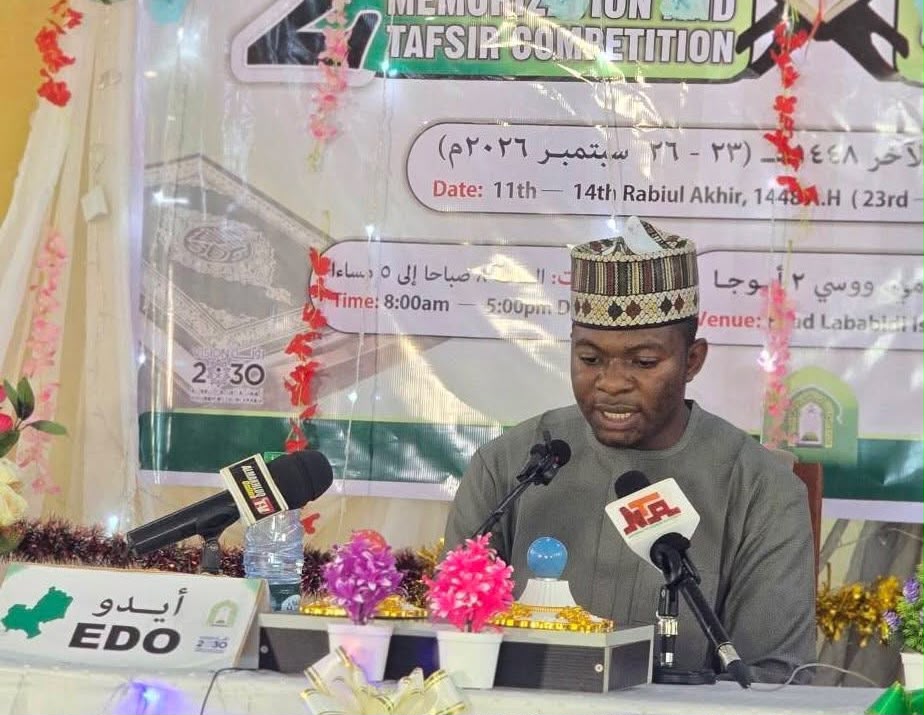
Ustaz AbdulMajid Idris Tahir, an Edo State contestant in the third category, said his study of Arabic had significantly supported his Qur’anic recitation and understanding.
He explained that proficiency in Arabic had helped him grasp the meanings of Qur’anic verses more deeply and strengthened his engagement with Qur’anic studies.
Tahir added that his knowledge of Arabic had also enabled him to study Islamic books independently, allowing him to seek information himself before approaching scholars for further explanation or clarification.
With the competition now underway, contestants from the participating states are being assessed under the revised format combining Qur’anic memorisation with Tafsir.
More photos:
SPONSORED

SPONSORED

SONSORED
