
Time and Relativity
“The angels and the Spirit ascend to Him in a day whose measure is fifty thousand years.” Qur’an 70:4.
By Abdullahi Yusuf
Adapted from Sheikh Ahmed Mohammed A. Wal’s Islam & Science
Many scientists once assumed that most of the fundamental laws governing the physical universe had been discovered. In the 20th century, however, the discovery of quantum mechanics and, especially, Albert Einstein’s theories changed and revolutionised our understanding of matter, energy, space and time.
A second point is that the concept of time is not as simple as ordinary human experience might suggest. Until the development of modern physics, time was commonly understood as a uniform measure that could simply be read from a clock.
In chapter 70:4 of the Holy Qur’an however, “The angels and the Spirit ascend to Him in a day whose measure is fifty thousand years.” It is declared that the Spirit and Angels travel a distance which in human terms take 50,000 years in a day. This may invite reflection on whether the experience or measurement of time can differ between different realms of existence.
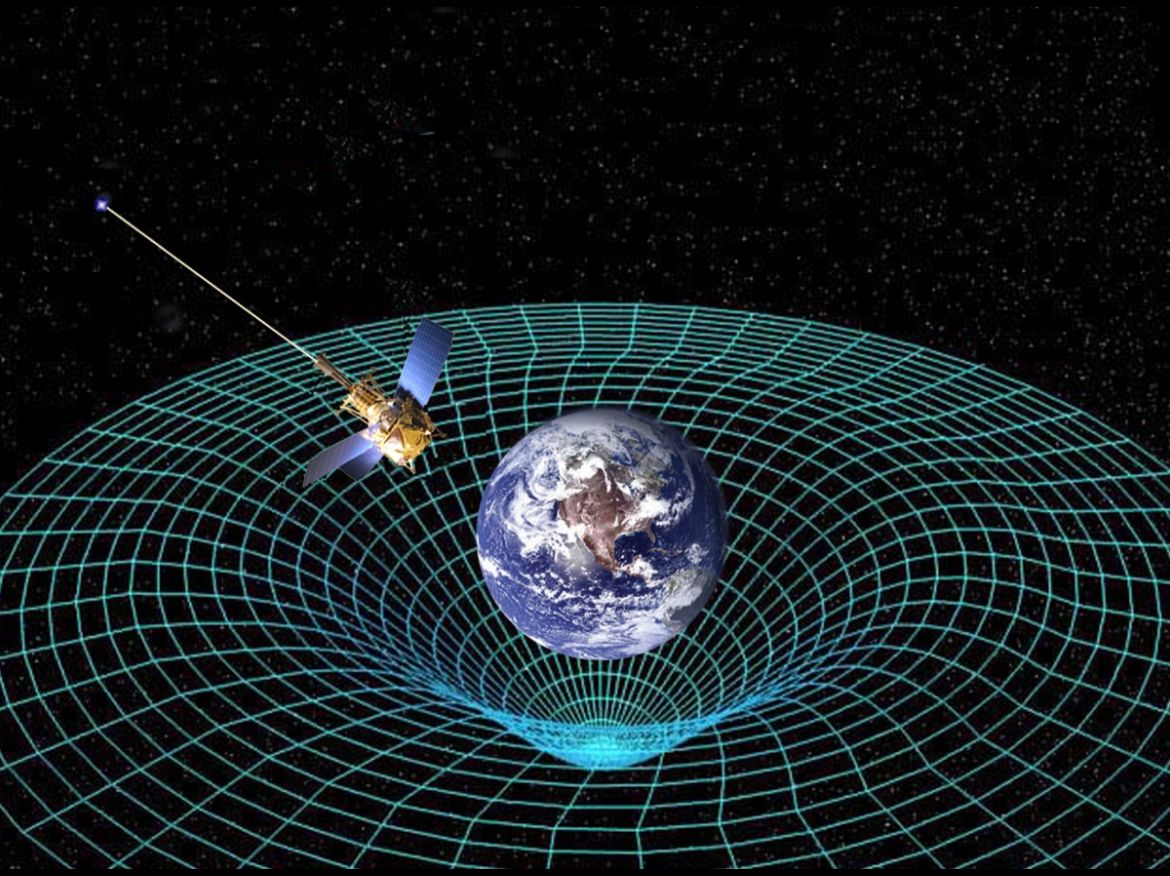
Einstein’s theory of relativity revolutionised our understanding of space, time, motion, mass and energy. His special theory of relativity showed that measurements of time and space depend on the observer’s state of motion.

In terms of ordinary human reckoning, 50,000 years would amount to approximately 18.25 million days when calculated using a 365-day year.
The speed of light in a vacuum is approximately 186,282 miles per second, or about 300,000 kilometres per second. Relativity therefore shows that the measurement of time is connected to the physical conditions of an observer, particularly motion and gravity.
The Qur’an also states that Allah created the heavens and the earth in six days. In this verse, the Qur’an uses “day” in a context whose measure differs dramatically from the ordinary human reckoning of a day.
Einstein and Hendrik Lorentz both made important contributions to the development of the physics underlying modern relativity, in which the speed of light in a vacuum is approximately 300,000 kilometres per second. The Qur’an describes the angels as belonging to the unseen realm. Their nature and mode of movement therefore cannot be measured by the physical methods used to study material objects.
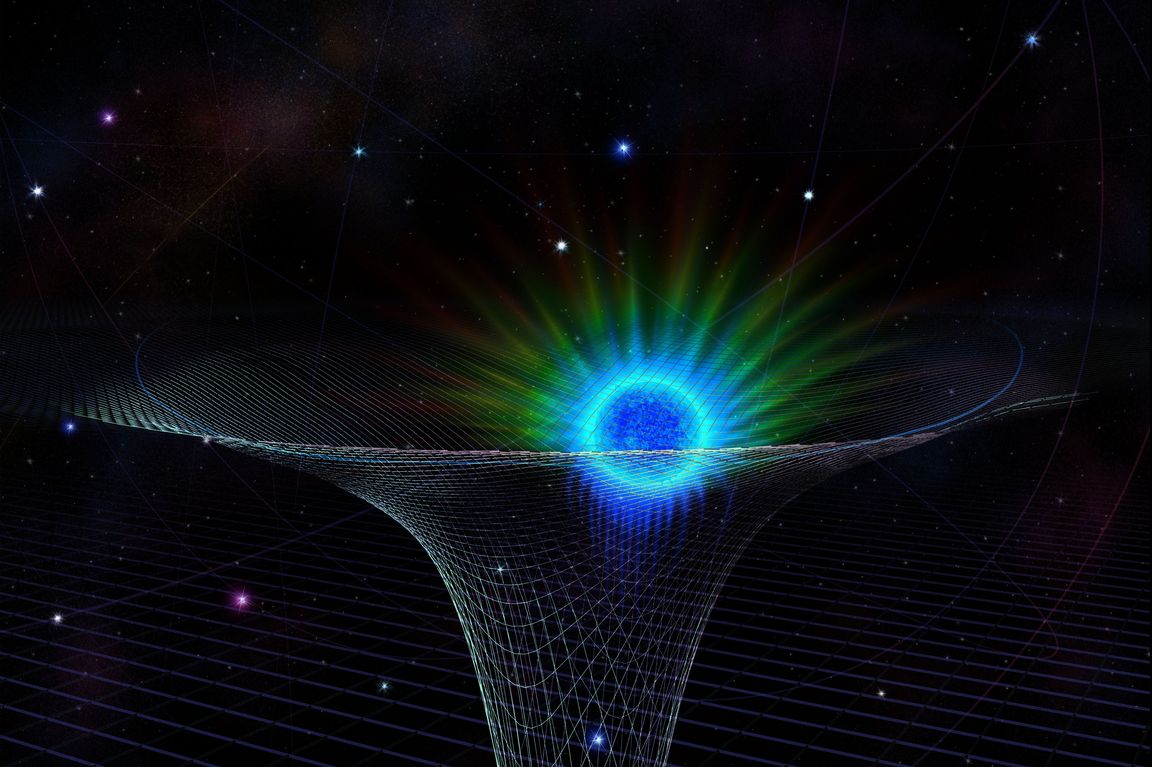
Modern physics places fundamental limits on the behaviour of material objects, but those laws cannot be used to calculate the movement of beings described in revelation as belonging to the unseen. The Qur’an does not give us a measurable velocity for the angels or the Spirit.
For believers, the Qur’anic descriptions of different measures of time provide another profound reason to reflect on the depth and wisdom of the revelation. Other Qur’anic verses that refer to differing measures of time include Qur’an 22:47 and Qur’an 32:5.
SPONSORED

SPONSORED

SONSORED
