
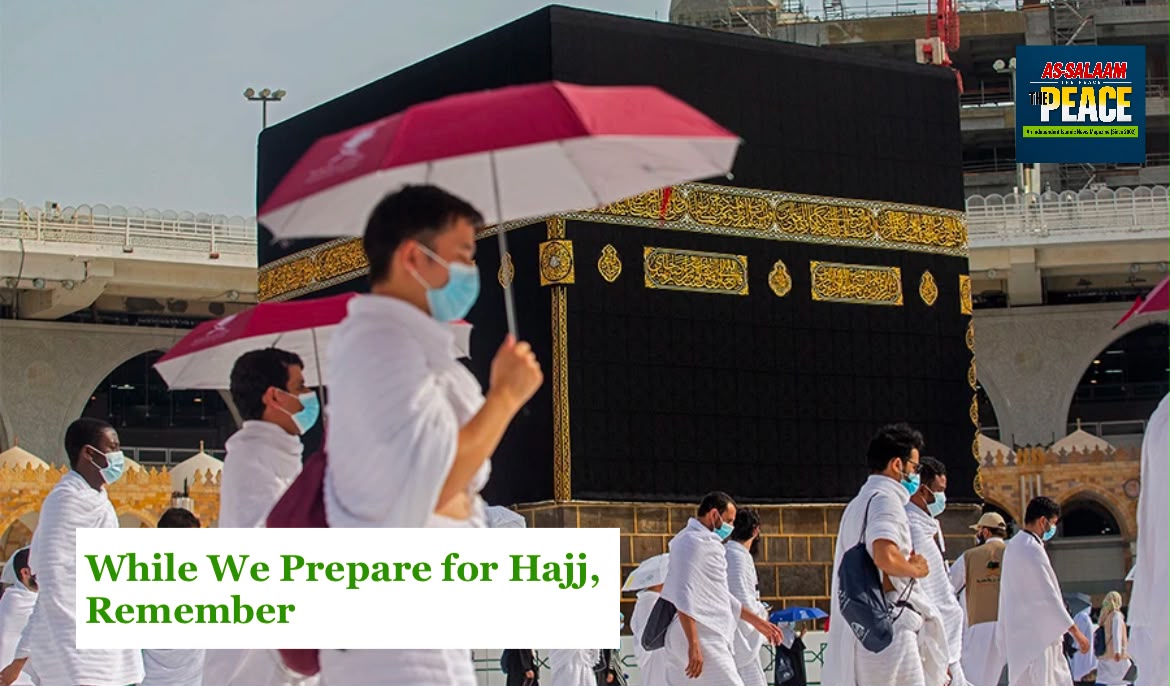
While We Prepare for Hajj, Remember
The Pilgrim as an Amanah
By Hibbatu Hassan
Every year, thousands of Muslims save, pray and make sacrifices for the opportunity to perform Hajj. For some, it is a dream they have carried in their hearts for decades. Others wait until old age before they can afford the journey. When the opportunity finally comes, they set out with hope, faith and the expectation that those entrusted with their welfare will not let them down.
Some have never boarded an aeroplane. Some have never travelled beyond their immediate surroundings and have never seen a high rise building in their lives. They may not know what to expect at an airport, how to find their accommodation in a foreign country or whom to approach when something goes wrong. This may be the first time they are seeing a large number of people and then comes the confusion of seeing them of different skin colours. Many pilgrims depend almost entirely on the officials assigned to guide them and reassure them.
Pilgrims are an amanah who might have traveled for Hajj not because they want to but because they want to settle a religious injunction. Those entrusted with their welfare must never forget this. As we prepare for another Hajj, everyone involved in the administration and care of pilgrims must pause and reflect on the weight of this responsibility. From officials at the national and state levels to tour operators and adhoc staff who accompany pilgrims and attend to them in Saudi Arabia, they must remember that their duty goes beyond performing official functions. They are dealing with human beings who have fully paid for their services, people who have set out of their homes believing they are under the watchful eyes of their Lord Almighty. Fear Allah in the discharge of duties for which you are paid.
Whether at the state or national levels, public service is a covenant, and serving pilgrims carries an extrasignificance. These are people for whose reason you are employed in the Hajj system. You are paid to serve them therefore be careful how you treat them.
Pilgrims do not demand much. Give them the services they paid for among which are good food, good accommodation and transport -give them the right information at the right time, listen to them when they complain. Treat the elderly, the weak and the less educated with patience. When a pilgrim is confused or frightened, offer help and do not make the person feel like a burden. But as easy as this might seem, sometimes pilgrim officials abscond and leave pilgrims to their own devices.
An official position is like that of a servant and his employer. No one ignores or humiliates his master – thepilgrim is your master. A pilgrim who does not understand a procedure needs an explanation, not ridicule. An elderly pilgrim who walks slowly needs patience, not irritation. Someone who has lost a document needs direction and reassurance, not blame before assistance.
As an official some pilgrims behavior may seem weird to you because you have handled Hajj operations for years, but what is familiar to you may be completely new to the pilgrim standing before you.Therefore a pilgrim who cannot locate a bus should not be seen as a disruption to a schedule, that person may be frightened of being stranded in a strange place and is trying to locate faces he or she is familiar with.Understand this and guide the pilgrim patiently instead. A missing pilgrim is not just another administrative problem, he needs empathy. A pilgrim who repeatedly asks questions and seemingly refuses to understand may not be deliberately being difficult. The person may simply be confused. He is a human being whose safety and dignity deserves attention.
It is easy to become absorbed in schedules, flights, accommodation arrangements, transport and other official duties. These things matter, but officials must never become so occupied with the work that they do that they forget the people behind it.Where there is a problem, officials should communicate honestly rather than make promises they cannot keep. Where mistakes occur, the priority should be to address them responsibly. Instead, sometimes pilgrims are abandoned without any update causing confusion and panic which could have been avoided with simple clarification.
We must remember that many pilgrims are unfamiliar with the environment, the language and the systems they encounter. Some may struggle to explain their difficulties. Others may not know whom to approach. They need officials who are approachable, patient and willing to help. Do not make the journey harder for the very people you are appointed to serve.
The trust placed in pilgrim officials must be reflected in their conduct. Guide them on their personal security. Pilgrims carry passports, visas, Nusuk cards, money and other valuables. They need to know how to keep these safe and what to do if anything goes missing. We read yearly how one pilgrim is scammed and so on, how rigorously do officials warn them about scams. How often are they reminded that not everyone who offers assistance has good intentions? Instead of making scammed pilgrims a matter of statistics, how much do they know to avoid handing over money or documents to strangers.
We often hear officials preaching patience, sacrifice, humility and how good character are virtues pilgrims should demonstrate during Hajj. How much the officials themselves practice these virtues determines compliance.
How can they expect pilgrims to be patient if they are harsh to them? How can we ask pilgrims to obey instructions if those giving the instructions are careless or disrespectful? How can we speak about the spiritual significance of Hajj while neglecting the dignity of the people who have come to perform it? Some officialstreat pilgrims differently based on their social standing, connections or financial circumstances. Every pilgrim deserves dignity and fair treatment.
Fear of Allah should guide pilgrim workers when there is no supervisor nearby, no camera recording their actions and no complaint likely to reach their superiors.The true test of responsibility is often found in how we treat people who are vulnerable, confused or unable to defend themselves.
So, as the world prepares for another Hajj, let every pilgrim official remember, Hajj will come and go and pilgrims will eventually return to their homes. But the way you treated them should remain a matter of conscience.
Dear pilgrims officials, your responsibility is more than a job. It is an opportunity to serve human beings, above all the guests of Ar Rahman, at a deeply important moment in their lives. It is a responsibility for which youmust answer before Allah. They may forget how you treated them, but He the Master will still hold you accountable.
Hassan writes from FCE, Yola @hibbihas@hotmail.co.uk
SPONSORED

SPONSORED

SONSORED
