
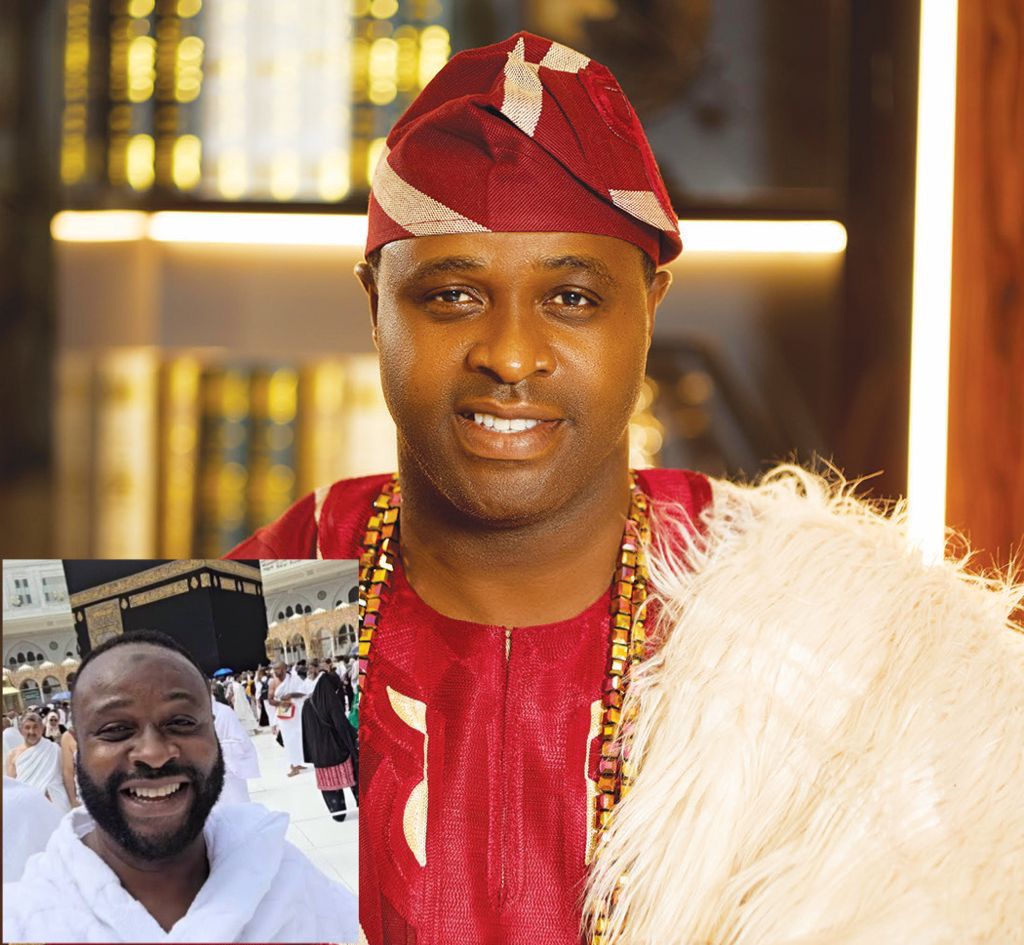
Femi Adebayo: Why I Still Prostrate Before Yoruba Obas as a Muslim
The Nollywood actor explains how he navigates Yoruba traditions while practising Islam, saying cultural respect and religious worship should not be confused
By Abdullahi Yusuf
Nollywood actor and filmmaker Femi Adebayo has opened up about the tension between Yoruba cultural traditions and his Islamic faith, explaining how he personally navigates one of the customs most often associated with respect for elders and traditional rulers, prostration.
Speaking on the VJ Adams Live podcast, the actor acknowledged that his cultural identity and religious beliefs can sometimes pull in different directions, particularly over the Yoruba practice of prostrating before parents, elders and traditional rulers.
In Yoruba culture, prostration or bowing is widely recognised as a gesture of respect, particularly among men when greeting elders and traditional authorities. Adebayo, however, distinguished between the Yoruba cultural practice and what he understands as sujood in Islam, which he described as an act of worship directed to Allah.
“Islam says your chest should touch the ground and your head should touch the ground only for your Almighty, which is Allah. And Yoruba says you should prostrate for your father,” he said.
Rather than describing the issue as a choice between his religion and his heritage, Adebayo said he has developed his own way of navigating the cultural expectation.
He explained that he distinguishes between the supreme position he accords Allah and the respect he shows his parents and traditional authorities, saying he uses what he described as “common sense” to reconcile the two.
“Now I see my father and my mother as mini gods. I see the Almighty as a super God,” he said, explaining that he would reserve full prostration for Allah while using a bow as a gesture of respect towards his parents.
Adebayo also addressed situations involving Yoruba traditional rulers, where prostration is often part of customary protocol.
He said that when he visits a traditional palace and sees people observing the practice, he does not necessarily regard participating in the custom as an abandonment of his faith.
“If I go to a Yoruba land and I feel that okay, everybody prostrate, I believe my own God will permit me to prostrate at that time,” he said.
“So I would not say, ‘Oh, I’m a Muslim, I cannot prostrate.’ I will at that time because I believe my God sees the reason I’m prostrating.”
His comments have opened another chapter in a longstanding conversation among Yoruba Muslims about where cultural courtesy ends and religious observance begins.
For Adebayo, the distinction rests largely on intention. He presented his approach as a personal way of reconciling his Muslim faith with Yoruba cultural expectations.
The issue is particularly significant in Yoruba society, where traditional etiquette remains deeply woven into social relationships. Gestures of greeting can communicate age, status, respect and submission to social hierarchy, while Islamic practice attaches particular religious significance to physical prostration.
Adebayo’s remarks therefore touch on a question that extends beyond the actor himself: how should Muslims whose cultures contain practices predating Islam navigate traditions that remain socially important while remaining faithful to their religious convictions?
The actor did not present his position as a religious ruling. Instead, he spoke from personal experience, acknowledging that there can be contradictions between cultural expectations and religious convictions, particularly for people deeply immersed in their cultural traditions.
His position has since generated discussion online, with attention focused on whether an act performed as cultural respect can be separated from the religious meaning attached to physical prostration.
The debate also illustrates the wider challenge faced by many Nigerians whose identities are shaped simultaneously by religion, culture and family traditions.
SPONSORED

SPONSORED
