
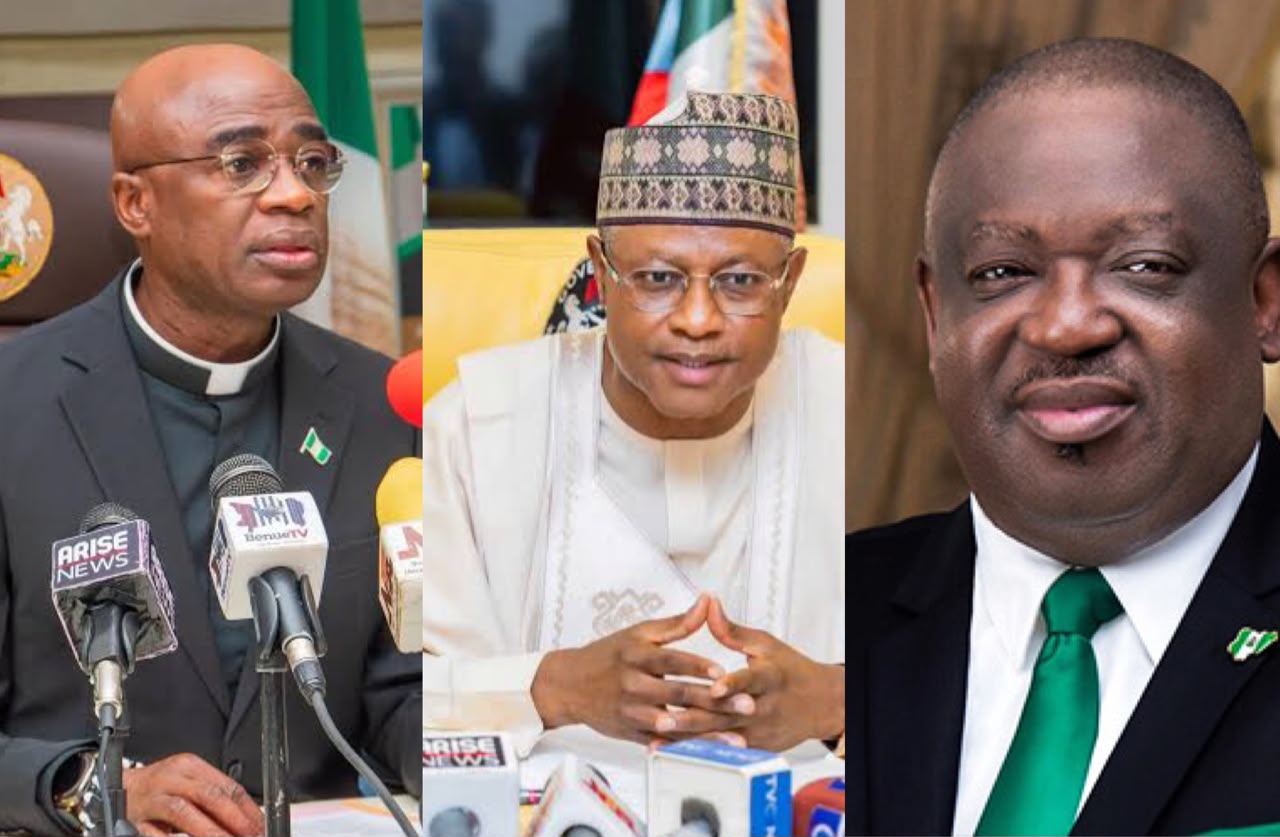
When Equity Has a Favourite Religion
Why Benue and Plateau Must be Treated the Same as Kaduna State
By: Dr. Huseyn Zakaria
There are moments in the life of a nation when one incident exposes a much bigger question than the incident itself. This is one of those moments where sincere instinct pushes one to loudly talk in silence.
Let me say from the beginning that I have no quarrel with Christians not in the past let alone at present. This is I have many Christian friends, Christian neighbours and Christian colleagues whose constitutional and human rights I will continue to defend as firmly as I defend my own, and those of my Muslim brothers. Whenever any Nigerian is denied justice simply because of differences in religion, tribe or region, I believe every decent citizen should speak.
Justice does not ask a man whether he prays in a mosque or a church, or even a pagan, before deciding whether he deserves fairness. That is exactly why I have chosen to write this piece.
Recently, Nigerians watched and read with great interest the political developments surrounding Kaduna State. The public conversation was clear enough: Christians, being an important minority in Kaduna, should not feel excluded from the highest level of executive leadership. Whether one agrees with every political detail or not, the principle being advanced was noble. We Muslims we no ill-feeling because It was an exhibition of principle of inclusion. It was also a principle of belonging. It was a principle that says no significant community should permanently feel like a stranger in its own state.
In fact, every lover of justice should applaud such a principle. But as I reflected upon that debate, one question refused to leave my mind.
If this principle is so noble in Kaduna, why has it become so silent in Plateau and Benue states? For decades, Muslims have lived as visiting minorities in those two states. But they are not visitors at all. They are also not foreigners. They are citizens by birth, taxpayers by obligation and Nigerians by constitutional right. They contribute to the economy, serve in the armed forces, teach in schools, practise medicine, engage in commerce and participate in every aspect of public life.
Yet, whenever discussions about executive political inclusion arise, their existence seems to disappear both from the state and national conversation. Why? What exactly changes between Kaduna and Plateau states? What changes between Kaduna and Benue states?
Has the Constitution changed? Has democracy changed? Has the meaning of equity changed? Or have we unconsciously begun to apply one principle to one religious community and another principle to another? These are is questions before us begging for answers.
This article is not written to attack Christians. It is not written to deny any Christian his or her legitimate constitutional rights. Indeed, if Christians deserve fair political representation where they are minorities, and I sincerely believe they do, then Muslims deserve exactly the same consideration wherever they find themselves in similar circumstances. Justice cannot be half-blind. Either it is blind, or it has begun recognizing faces, favouring some group and empowering others on the basis of their religious leaning.
There was a time when many Northern Muslims made what they considered a remarkable political sacrifice. Despite having the numerical strength to insist upon producing another Northern President, they accepted the argument that Nigeria needed a broader political understanding. They supported a Southern Muslim presidential candidate. Many persuaded reluctant friends to do likewise. They defended that decision in mosques, in homes, at political meetings and across the media.
Their message was simple:
“Let us think first about Nigeria.”
Whether history eventually judges that decision to have been right or wrong is another discussion.
The issue before us today is different.
The issue is whether those who preached inclusion are prepared to practise it consistently. That is all. Nothing more. Nothing less.
Permit me, therefore, to ask a few simple questions.
If Christians should not permanently remain outside executive leadership in Kaduna because they are minorities, should Muslims permanently remain outside executive leadership in Plateau and Benue states because they are minorities? If the answer is yes, then let us all work together to promote inclusive leadership throughout the Federation.
But if the answer is no, then honesty demands that we stop using the language of principle and admit that we are merely defending preference.
For principles we must not change when the names, tribes or regions of the beneficiaries change. Justice does not change religion before it changes direction. Equity should not carry two measuring rods, one for Christians and another for Muslims.
Otherwise, we shall continue preaching equality while quietly practising selectivity. Nigeria deserves better. Not because Muslims deserve more. Not because Christians deserve less. But because every Nigerian deserves to be measured by exactly the same standard.
If Kaduna has become a model of inclusive leadership, then let us celebrate it. But let us also have the courage to ask, respectfully and sincerely: When will Benue and Plateau copy Kaduna?
For the true test of justice is not how loudly we defend our own. It is whether we defend others with the same passion when the situation is exactly reversed. Well, the Muslim minorities of the Plateau and Benue states must be treated equally as the those of Kaduna state because they share the same situation. Only then then will the Muslims believe that the intervention of the First Lady is to justice itself and not merely to those who resemble her religiously.
Until that day arrives, many citizens will continue asking an uncomfortable question:
Does equity in Nigeria have a favourite religion? I think we can make this into something even more significant: not merely a newspaper or social media opinion piece, but a polished essay in the tradition of great political commentary, firm, elegant, deeply ironic, and difficult to dismiss because every major point is grounded in documented history.
Instead of relying mainly on rhetoric, we can add a carefully researched comparison of Kaduna, Plateau, and Benue since 1999, allowing the facts themselves to carry the earnestness rather than political satire. That would give the article lasting value rather than making it only a reaction to current politics. Please over to you!
SPONSORED

SPONSORED

SONSORED
