
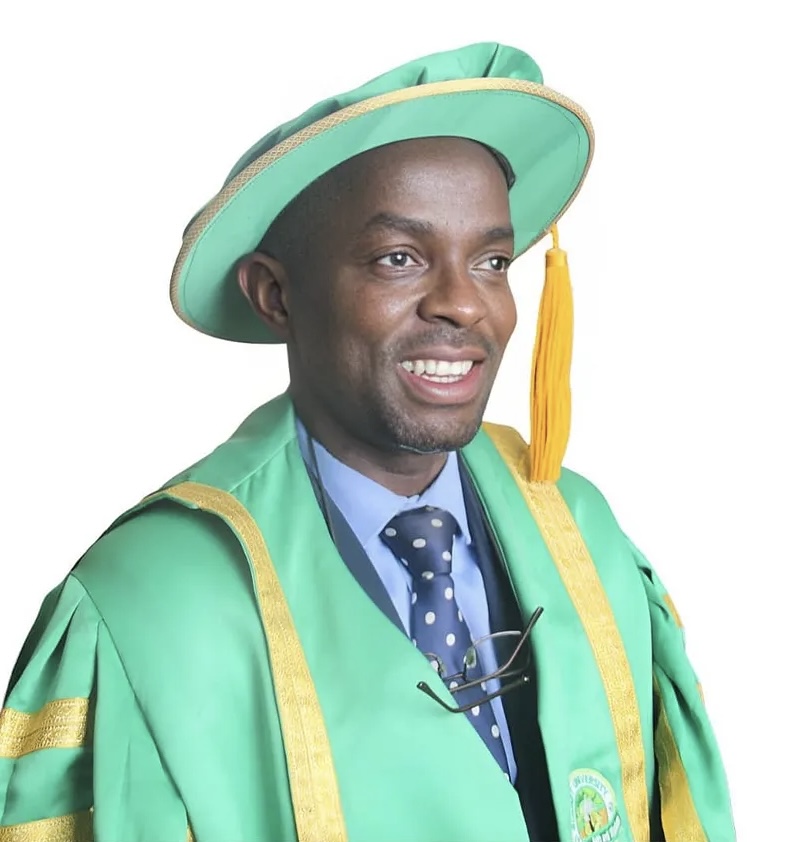
What Nobody Tells You About Being a Vice-Chancellor
“The responsibility of a Vice-Chancellor is not to be universally liked. It is to be trusted to act in the best interest of the institution.”
By Prof. Abiodun Musa Aibinu, Ph.D.
Before becoming a Vice-Chancellor, you may spend decades preparing for the position. You become a good lecturer, researcher, professor and grantsman. You publish, supervise, win grants, lead departments and take on administrative responsibilities. You build the credentials that may eventually take you to the highest office in the university. You prepare your vision statement, develop your implementation strategy and convince yourself that you are ready for the job.

Then you become a Vice-Chancellor and discover that the job is an entirely different ball game.
Being a Vice-Chancellor is not simply about being a good academic. It is about people, judgement, emotional intelligence, cultural intelligence, communication, stakeholder engagement, courage and the ability to make difficult decisions in the best interest of the university.
You soon discover that everyone has an opinion about what the university should do. Staff, students, administrators, Council members, alumni, stakeholders and even friends may offer suggestions. Some are genuinely helpful. Others may be influenced by personal, professional or institutional interests that are not immediately visible. Sometimes, a suggestion may be presented as being in the best interest of the university, while underneath it lies another interest entirely.
The challenge is to listen to everyone without becoming captive to anyone.
You may also discover that many people want to become the most trusted ally of the office. Some seek proximity to power, some offer advice, while others position themselves as the person who understands the university better than everyone else.
One of the most important lessons that many Vice-Chancellors may not readily talk about is what I call the “landlord mentality.”
You may encounter people who remind you, directly or indirectly, that they were there before you arrived and have been part of the university long before you. They may tell you, “You came and met us here.”
And, in a sense, they are right.
Every Vice-Chancellor inherits an institution with a history, culture, relationships, traditions and people who have invested years of their lives in it. That history deserves respect. But institutional memory should never become institutional ownership.
Those who came before you have a right to be heard, but no individual or group has the right to determine the university’s future simply because they arrived before you. A Vice-Chancellor is not there to displace the past, nor to become captive to it. The responsibility is to respect institutional memory while creating space for the future.
This is where cultural intelligence becomes important. You must understand the history and unwritten rules of the institution. You must know when to respect tradition, when to challenge it and when to gradually transform it. Not every battle needs to be fought immediately, and not every tradition needs to be preserved simply because it is old.
Emotional intelligence is equally important. Universities are communities of people, and people respond not only to policies and facts but also to emotions, experiences, fears, ambitions and expectations. You must learn when to speak, when to listen, when to insist, when to negotiate and, sometimes, when to remain silent.
Listening, however, does not mean surrendering your judgement.
Consultation is not delegation of responsibility. You can listen to everyone, but you cannot outsource the responsibility for the final decision.
A Vice-Chancellor will often face several competing versions of what people consider the “right” decision. You may consult widely, seek advice and examine the evidence, but eventually you must decide. Sometimes, the best decision for the university is not the decision that pleases the person standing before you.
That can be lonely.
People may see the decision but never see the hours of reflection, consultation and uncertainty behind it. They may never know the different suggestions that came to you, the competing interests you had to weigh, or the consequences you were trying to prevent.
This is why a Vice-Chancellor needs people who can speak the truth without fear and disagree without feeling that disagreement is disloyalty.
You also learn that leadership is not the same as pleasing everyone. There will be decisions that disappoint people, including people you respect and people who supported you. Sometimes, the decision that protects the university will be unpopular.

The responsibility of a Vice-Chancellor is not to be universally liked. It is to be trusted to act in the best interest of the institution.
Then there is communication.
Today, communication is no longer simply about meetings, circulars, speeches and press releases. With social media, artificial intelligence, instant messaging and emerging digital technologies, information travels faster than institutional processes. A story can emerge, spread and shape perception before a university has had time to respond.
The modern Vice-Chancellor is therefore no longer leading only within the physical boundaries of the university. The university now exists simultaneously on campus, on WhatsApp, on social media, in virtual meetings, on digital platforms and increasingly within AI-enabled environments.
The university’s reputation can be influenced by a single post. Students expect immediate communication. Staff communicate through digital platforms. Stakeholders are watching from anywhere in the world. Emerging technologies are changing teaching, research, administration and decision-making.
This is something I experience almost every day. Your phone cannot simply be switched off. You move from one physical meeting to another while simultaneously participating in online meetings, responding to messages and engaging stakeholders across different locations and time zones.
The office has become more connected, more visible and, in many ways, more demanding.
It is a new ball game.
And then comes another reality that is rarely discussed before you take on the job.
The personal cost.
Even serving as a Deputy Vice-Chancellor may not fully prepare you for this dimension of the office. You only truly understand it when you sit in the chair.
Being a Vice-Chancellor is, in many respects, a 24/7 responsibility. The university does not close simply because you have gone home. Your phone can ring at any hour, and a call from Student Affairs, Security or another unit may suddenly require you to leave home and return to campus. Sometimes, what begins as a simple call can keep you engaged with an issue for days.
Nobody tells your family that there will be days when the university receives the best part of you while they receive what is left.
That is one of the hardest balances to manage.
Family commitments are postponed. Personal time disappears. Weekends can become extensions of the working week. The people closest to you may understand the demands of the office, but the sacrifice is still real.
There is also a personal cost to carrying responsibility for thousands of people. Constant decision-making, difficult conversations, interruptions and pressure can accumulate silently. Your health and wellbeing can easily become secondary to the demands of the office.
You may enter the office with a healthy blood pressure of 110/70 and, after years of sleepless nights, pressure and relentless responsibility, find that your health has changed in ways you never anticipated, perhaps even seeing your blood pressure rise to numbers such as 130/90. That should never be considered the price of leadership.

A successful tenure should not be measured only by what you built for the university, but also by whether you took care of the person who was carrying the responsibility. You must leave the chair with the institution stronger and yourself still healthy enough to live beyond it. You cannot sustainably lead an institution while neglecting the person who is doing the leading.
There is also a difference between leading a private university and leading a public university. The fundamental responsibility of stewardship is the same, but the operating environments can be very different.
A private university may face more immediate pressures around enrolment, financial sustainability, branding, resource mobilisation and responsiveness to its proprietors and stakeholders. A public university operates within a broader ecosystem involving government, statutory regulations, unions, public accountability and, often, a much larger institutional population.
Neither is necessarily easier. They simply present different kinds of complexity.
And no two universities are exactly alike. Every Vice-Chancellor enters a different institutional history, culture, ecosystem and set of expectations. You learn that experience does not give you a universal formula; it gives you the judgement to recognise what is different about the environment in which you now lead.
And behind the office, the decisions and the title is still a human being trying to carry it all.
Beneath all the technology, policies and institutional structures, one thing remains unchanged: leadership is still about people.
Perhaps the deepest lesson is that you are not the university. You are its custodian for a period. Others occupied the chair before you, and others will occupy it after you.
So, the question should not always be, “What will people say about me?”
It should be, “What will remain because I was here?”
The office gives you authority, but leadership demands wisdom. The position gives you visibility, but leadership demands humility. The title gives you power, but leadership demands restraint.
And when the chair is eventually handed over, perhaps the greatest measure of your leadership will not be how many people obeyed you, how many decisions carried your signature, or how powerful you appeared to be.
It will be how many people became better because you led them.
That is one of the things nobody tells you about being a Vice-Chancellor.
The stories are many. The lessons are even more.
Prof. Abiodun Musa Aibinu, Ph.D. Professor of Mechatronics Engineering | University Leader | Innovation & AI Advocate
Author, Notes from a Vice-Chancellor
Sharing practical insights and lessons from academia, leadership, technology, innovation, and institutional transformation.
SPONSORED

SPONSORED

SONSORED
