
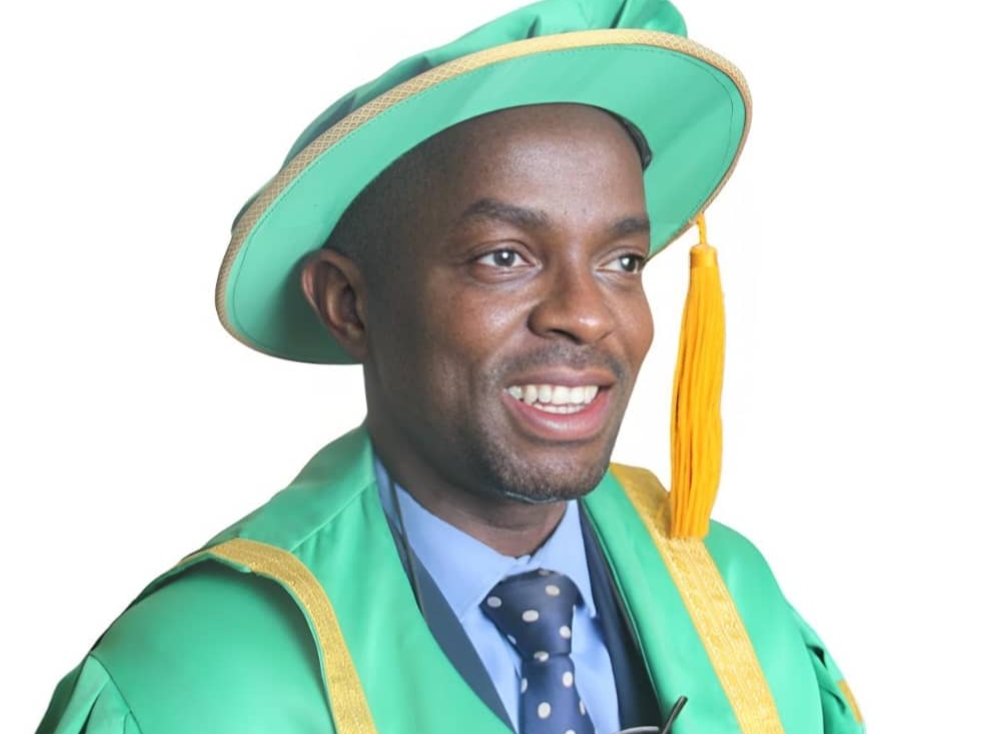
Summit University’s Second Vice-Chancellor Reflects on Years of Transformation
Professor Abiodun Musa Aibinu highlights major strides in academic expansion, innovation, infrastructure renewal and global engagement, while outlining plans to launch a College of Nursing and Allied Health Sciences and introduce a Law programme in the coming year.
When I assumed office as the 2nd substantive Vice-Chancellor of Summit University, Offa, four years ago, the vision was clear: to build a technology-driven and value-based institution that is globally competitive and locally relevant. Today, that vision is steadily becoming a reality, and I remain deeply grateful to Almighty God for the journey so far.
In just four years, the University has experienced a remarkable transformation. Our undergraduate programmes have doubled over the past four years, postgraduate studies have been successfully introduced, and student enrolment has grown steadily, supported by expanded scholarship opportunities. We have also strengthened our academic structure with the establishment of the Kola Balogun College of Artificial Intelligence and Digital Engineering, the College of Postgraduate Studies, and the College of Innovation and Computing Technology, while laying a strong foundation for the Lateefat Gbajabiamila College of Nursing and Allied Health Sciences.
Perhaps the most defining shift has been our deliberate democratisation of emerging technologies, particularly Artificial Intelligence. We have made Artificial Intelligence and other critical skills accessible to all our students. These include: Artificial Intelligence, grantsmanship, clean and renewable energy, financial literacy, Acadopreneurship, and storytelling. Today, our undergraduates confidently engage with Artificial Intelligence and apply it to real-world challenges. More significantly, both undergraduate and postgraduate students are now attracting international research grants, fellowships, and collaborations. This is clear evidence of a shift from passive learning to active global participation.
Eight strategic pillars have defined this administration: the democratisation of emerging technologies; the expansion of academic frontiers; the deliberate drive for enrolment growth and institutional visibility; the advancement of research and global engagement; the renewal of infrastructure and revitalisation of campus facilities; the development of a digitally driven University; the empowerment of staff and students alongside strengthened welfare systems; and the strategic expansion into high-impact disciplines.
We are no longer a university of admission convenience, but a university of first choice. Our goal is not just to graduate students, but to produce globally relevant problem-solvers. Hence, research and innovation have gained strong momentum through increased funding, stronger collaborations, and improved scholarly output. At the same time, our digital transformation has enhanced teaching, learning, and administration through platforms such as the Learning Management System, Institutional Repository, and other student-focused systems.
Our physical environment reflects this progress. New structures such as the Mosun Belo College building, the Kola Balogun College building, and the Aare Rafiu Ade Sanni ICT Complex now nearing completion stand as visible markers of our progress. We have also developed specialised facilities including the Isiaq Family Foundation Accounting Laboratory, the NITDA ICT Laboratory, and digital classrooms, alongside the refurbishment of student hostels. The recent sod-turning of the Lateefat Gbajabiamila College of Nursing and Allied Health Sciences complex signals yet another bold step forward, with plans underway for the commissioning of an ultra-modern Jamiu Adegunwa Senate Building.
Equally significant is the revival of spaces that once lay dormant. Facilities that were previously dilapidated or underutilised have been transformed into functional centres of learning and innovation. The Research and Innovation Unit, in particular, has evolved into a vibrant hub that has given rise to new Colleges and continues to drive institutional growth.
We have also made deliberate progress in sustainability, transitioning towards clean and renewable energy across the campus. Complementing this are internal initiatives such as solar support systems, a welding unit, and a block-producing unit, alongside the recognition secured for the establishment of an FM station.
Beyond infrastructure and systems, our greatest achievement has been the development of people. Many staff and mentees have grown significantly, attending conferences, workshops, and advancing their studies locally and internationally. Several are now making meaningful contributions across the world. This, to me, is the true measure of impact.
Staff welfare has remained a priority throughout this period. Salaries have been paid promptly, working conditions improved within available resources, and promotion backlogs were cleared and sustained. Academically, we have transitioned from a lecturer-centred approach to a student-centred learning model, positioning Summit University as a first-choice destination for many students. Our campus now reflects a rich diversity, with representation from nearly all geopolitical zones in Nigeria.
On a personal note, I remain grateful for this journey of growth. I came in as Professor Abiodun Musa Aibinu, and along the way, I have been honoured with additional roles and recognitions, including Vice-Chancellor, Alhaji, Mogaji Aikulola-Aibinuomo, Giwa Adinni, and Baba Adinni. Alhamdulillah.
I sincerely appreciate our academic and non-academic staff, whose dedication has made these achievements possible. I also acknowledge the unwavering support of the Ansar-Ud-Deen Society of Nigeria, the Board of Trustees, the Governing Council, our benefactors, parents, and the Offa community.
With the confidence reposed in my leadership through the extension of my tenure, our focus in the coming months is clear: the commencement of the Lateefat Gbajabiamila College of Nursing and Allied Health Sciences, following the successful completion of the recent resource verification exercise by the National Universities Commission. The College will begin with six undergraduate programmes: Nursing, Medical Laboratory Science, Environmental Health Science, Public Health Science, Community Health Science, and Health Information Management. We are also working towards the introduction of a Law programme within this extension period.
The journey continues, but the direction is clear: we are building a university that will not only compete globally but define the future of technology-driven education in Nigeria.
Alhamdulillah Robbil Alamin.
SPONSORED

SPONSORED

SONSORED
