
What Enrolment Taught Me About University Sustainability
Prof. Abiodun Musa Aibinu, Ph.D.
One of the things university leadership has taught me is that some numbers are much more than numbers. Enrolment is one of them. When you become a Vice-Chancellor, you inevitably look at how many students the University has, how many are coming in each year and which programmes are attracting them. But with time, I began to realise that the real question was much bigger than “How many students do we have?” The deeper question was: what happens when the people who should benefit from the vision we are building are not coming?
I have always believed that a university must look beyond today. It must anticipate where society is going and prepare its students for the world they will inherit. At Summit University, we wanted to build a university that was strongly technology-centred, responsive to emerging technologies and capable of preparing young Nigerians for the Fourth Industrial Revolution. Long before artificial intelligence became the buzzword it is today, we were already thinking about artificial intelligence, drones, drone building and piloting, robotics, power supply, clean and renewable energy, and other emerging technologies. The intention was to contribute to building the manpower Nigeria would need for the future.
That vision led to a number of initiatives, partnerships and programmes. We established the Research and Innovation Unit, won grants to support the vision, set up the Kola Balogun College of Digital Engineering and Innovation Technology and the College of Innovation and Computing Technology, and developed partnerships with the Federal University of Technology, Minna (FUT Minna), MOMAS Nigeria Limited and One Innovation Hub, Offa, while Beyond Vision provided technical support at an international level.
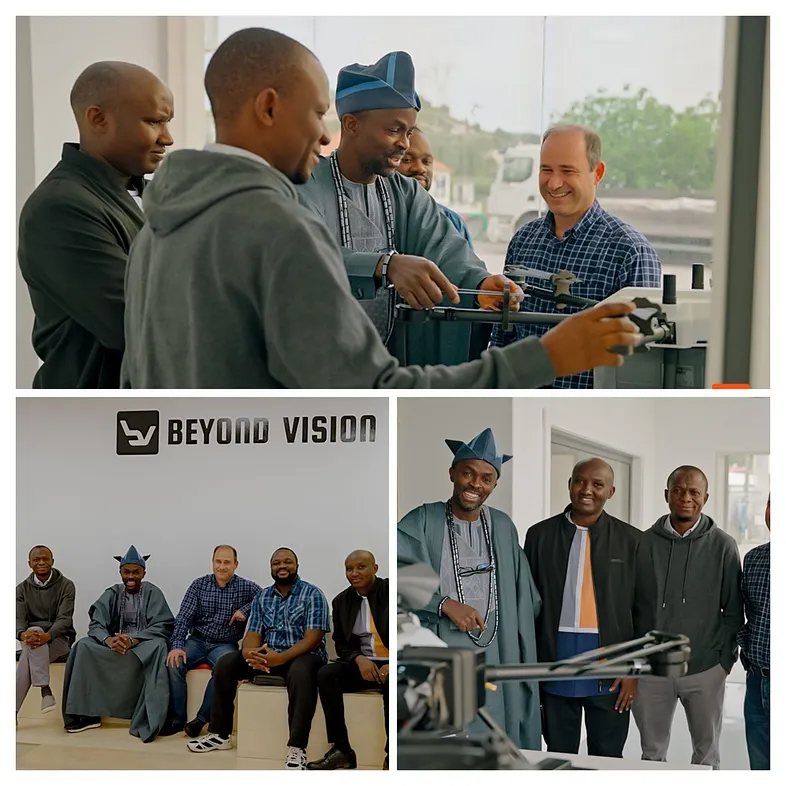
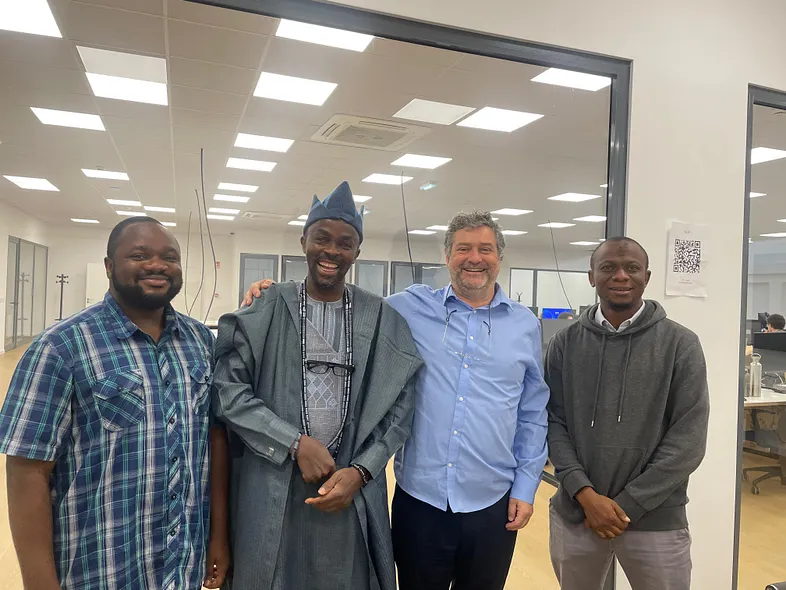
These partnerships were not simply about having organisations associated with the University. They were about bringing expertise, technology, experience and networks together to create opportunities for our students and strengthen our capacity to deliver programmes that respond to emerging needs.
But then I encountered another reality of university leadership: a good idea does not automatically translate into enrolment. You can have a compelling vision, establish a programme, bring in technology, build partnerships and have people who genuinely believe in its future value. At the end of the day, however, students and their families must also see the value and believe that it is worth choosing.
This was one of the most important lessons enrolment taught me. Resources can help us build the vision, but enrolment gives the vision life. Without students, a programme may exist largely on paper. A laboratory can be beautifully equipped and still remain underutilised. A new building can stand as a symbol of ambition, while the purpose for which it was created remains only partially fulfilled. Students bring the academic energy, interaction and purpose that allow a university to realise what it has set out to achieve.

This is why I gradually stopped seeing enrolment simply as an admissions issue. I began to see it as a question of institutional sustainability. A university needs students to sustain academic programmes, support its staff, justify infrastructure, strengthen research and create the vibrant academic community in which learning and innovation can flourish. Financial sustainability is important, but it is only one part of the larger sustainability question. A university must also remain academically relevant, socially responsive, visible and trusted.
Another important lesson I have learnt is that enrolment does not necessarily take a quantum jump within one or two years. It takes time to build, and, in many cases, growth is organic.
A good idea needs time to mature, gain visibility, build credibility and eventually earn the confidence of students and their families. But this creates another difficult question for university leadership: do you have the time to wait for an idea to grow when your leadership tenure itself is time-bound?

That has been a deep lesson for me. There is a difference between introducing an idea and building an institution around that idea. Some initiatives may begin during one administration but require several years before their full impact becomes visible. Leadership therefore requires patience, but it also requires knowing which ideas need time to mature and which interventions can produce more immediate results. Growing something from the ground up is rarely a one- or two-year journey.
This brings me to the importance of visibility. A university cannot be chosen if people do not know what it stands for, what it is doing and what opportunities it can create. Visibility, however, is not simply about advertising or putting up banners. It is about making the value of the institution visible and understandable to prospective students, parents and the wider society. A student needs a reason to say, “This is where I want to study,” while a parent needs a reason to say, “I can entrust my child to this institution.”

Sometimes, however, there is a gap between what universities believe is important and what society currently values. We experienced some of this at Summit University. There is a strong societal preference for certain professions and what many people perceive as “high-flying” careers. Traditional perceptions about professional status and future opportunities can significantly influence the choices students make. This can affect enrolment in some programmes, particularly in parts of the arts and humanities, even when those disciplines remain important to the development of a balanced society.
The lesson for me was not that these programmes are unimportant. Rather, it is that universities must continuously communicate their relevance and help society understand how knowledge translates into opportunities. We also need to rethink how we present some disciplines in a changing world. The boundaries between professions are becoming less rigid, and technology is influencing almost every field.
Our current thinking around Accounting Technology is an example. The accountant of today operates in an environment increasingly shaped by digital systems, data, automation and emerging technologies. This means that the question is no longer simply what an Accounting graduate should know. We must also ask what that graduate should be able to do in a technology-driven economy. If we want students to see the relevance of such programmes, we must show them the possibilities that exist beyond the traditional understanding of the profession.
Our experience has also taught me something about institutional strategy. We had a strong desire to become a technology-centric university and to run many technology-related programmes because we believed strongly in their relevance to the future. I still believe in that vision. However, enrolment also teaches humility. The market may respond differently from what you initially expect. We have observed that programmes in health and allied health sciences, as well as Law, can attract significant interest. That does not invalidate our technology vision. Rather, it reminds us that a university must listen carefully to society while remaining faithful to its long-term purpose.
Leadership sometimes requires holding these two realities together. We must have the courage to build for the future, but we must also understand what students and families are looking for today. We cannot simply say, “This is our vision, and society must follow us.” We must ask a more constructive question: “How do we connect our vision with the aspirations of the people we are here to serve?” That question has significantly influenced how I think about enrolment and institutional development.
It has also influenced how I think about partnerships. Our work with FUT Minna, MOMAS, Beyond Vision, Tiwa Kiki and other organisations has shown me that partnerships can help universities build credibility, capacity and visibility around emerging areas. A prospective student may understand the value of a programme differently when it is connected to industry, technology, research or established institutions. Partnerships can therefore help translate an institutional promise into something people can see and understand. But partnerships alone do not solve the enrolment challenge. They must be connected to a compelling value proposition that students and parents can appreciate.

Students want to know what they will become. Parents want to know what opportunities their children will have. Society wants to know whether universities are producing graduates who can contribute meaningfully to the economy and their communities. Universities must therefore continually ask themselves difficult questions: Are our programmes relevant? Are we communicating their value effectively? Are our graduates acquiring skills that matter? Are we visible enough? Are we listening to students and parents? Are we creating opportunities beyond the classroom? Are we building partnerships that strengthen our programmes?
Most importantly, are we giving people a reason to believe in what we are building?
I have also come to understand that enrolment is everybody’s responsibility. It cannot belong only to the Admissions Office. Every lecturer who speaks passionately about the University becomes an ambassador. Every student who shares a positive experience becomes an ambassador. Every alumnus who proudly identifies with the University strengthens its story. Every partner who believes in what we are doing contributes to our credibility. Every parent who recommends the institution to another family extends our reach. In different ways, every member of the University community can help make the institution more visible, credible and attractive.
This is where the lesson from my previous reflection, “Vision Without Resources Is Only Aspiration,” connects naturally with this one. In that article, I reflected on how people, partnerships and resources can help turn institutional dreams into reality. But once we build something, we must also ensure that people can see it, understand it and want to become part of it. Resources can help us build the vision, enrolment gives the vision life, and visibility helps people discover the vision.
For me, university sustainability therefore cannot be reduced to financial sustainability alone. It is also about academic relevance, social responsiveness, institutional credibility and the ability to continuously attract people who believe in the University’s mission. A sustainable university must be willing to evolve, listen and learn. It must be prepared to adjust its strategies without abandoning the principles and values that define it.

Perhaps one of the most important lessons enrolment has taught me is that leadership is not about insisting that everyone sees the future exactly as you see it. It is about helping people understand why that future matters. If we believe artificial intelligence will shape the future, we must show young people what that future could look like. If we believe technology can transform accounting, we must demonstrate what an Accounting Technology graduate can become. If we believe engineering will drive development, we must show students the problems they can solve. And if we believe the arts and humanities remain essential, we must help society understand the roles their graduates can play in a changing world.
Ultimately, enrolment is not simply about filling classrooms. It is about creating a community of learners who believe that they belong in the institution and that their time there can help them become who they hope to become. Every student who walks through the gates brings more than tuition. They bring a dream, the hopes of a family, their talents, questions and possibilities. They also give the institution another opportunity to fulfil its purpose.
That is why I no longer look at enrolment figures as just numbers. Behind every number is a young person making a choice, a family placing its trust in us and an opportunity for the University to make a difference. I see programmes waiting to come alive, laboratories waiting to become places of discovery, lecturers waiting to inspire and partnerships waiting to create new possibilities.
Perhaps that is the greatest lesson enrolment has taught me. A university may begin with a vision. Resources may help build it, and visibility may help people discover it. But students give that vision life. And when those students are given the knowledge, skills, values and opportunities to shape their futures, the University becomes more than an institution. It becomes part of their story, and, in time, they may become part of its story too.
The stories are many. The lessons are even more.
Prof. Abiodun Musa Aibinu, Ph.D. Professor of Mechatronics Engineering | University Leader | Innovation & AI Advocate
Author, “Notes from a Vice-Chancellor”
Sharing practical insights and lessons from academia, leadership, technology, innovation, and institutional transformation.
SPONSORED

SPONSORED

SONSORED
