
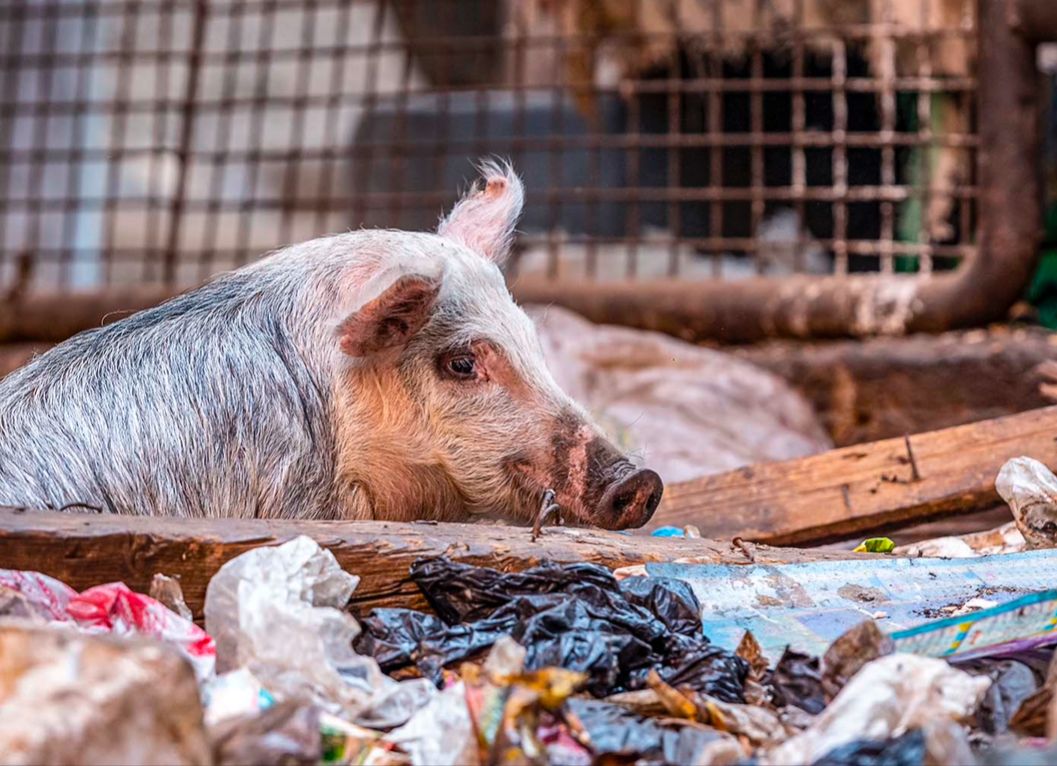
The Perils of Pork: Science and the Qur’an
“Forbidden to you are carrion, blood, the flesh of swine, and that over which a name other than Allah has been invoked; also animals killed by strangling, by a violent blow, by a headlong fall, by being gored, or partly eaten by a wild animal, unless you are able to slaughter it before its death…” (Qur’an 5:3)
By Abdullahi Yusuf
Adapted from Sheikh Ahmed Mohammed A. Wal’s Islam & Science
God has prohibited the consumption of carrion, blood, pork, and the flesh of animals that have been strangled, beaten, fallen to their death, gored or partly devoured by wild animals.
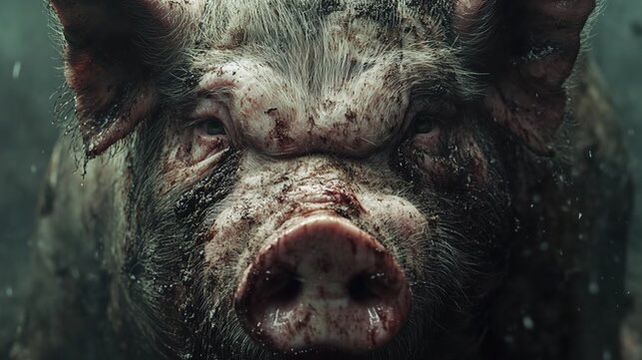
Fourteen centuries ago, such prohibitions might have appeared mysterious to many people, particularly in an age when little was known about microorganisms, parasites and the transmission of infectious diseases. Today, however, scientific knowledge has revealed that diseased animals, contaminated meat and improperly handled animal products can expose human beings to a range of pathogens and parasites.
An animal that is diseased, whether dead or alive, may harbour disease-causing microorganisms in its blood, tissues or organs. An animal that has been bitten by another animal may also have been exposed to infections transmitted through bites.
After death, the tissues of an animal begin to decompose, creating conditions in which microorganisms can multiply. Blood from an infected animal can likewise contain harmful pathogens and other substances. Consuming contaminated animal products can therefore expose human beings to serious infections.
God is the Greatest; there is no god but Him.
The wisdom contained in the following verse of the Qur’an, 5:3, may be appreciated more deeply in the light of what is now known about food safety, contamination and disease:
“Forbidden to you are carrion, blood, the flesh of swine, and that over which a name other than Allah has been invoked; also animals killed by strangling, by a violent blow, by a headlong fall, by being gored, or partly eaten by a wild animal, unless you are able to slaughter it before its death. And forbidden are those sacrificed on stone altars and those whose fate is determined by divining arrows. That is grave disobedience.” (Qur’an 5:3)
The Qur’an forbids the consumption of pork as a matter of divine command, and for Muslims that command is sufficient reason to abstain from it. At the same time, modern medicine has identified genuine health risks associated with pork and with parasites that can be transmitted through infected or inadequately cooked meat.
One important example is Taenia solium, commonly known as the pork tapeworm. Humans can develop taeniasis after eating raw or undercooked pork containing the parasite’s larval cysts. The adult tapeworm lives in the human intestine and may cause digestive symptoms, although many infected people have few or no symptoms.

There is an important distinction, however, between taeniasis and cysticercosis. Cysticercosis occurs when a person swallows Taenia solium eggs, usually through food, water or surfaces contaminated with human faeces. The resulting larvae can travel to different tissues, including the muscles, eyes and brain. When the central nervous system is affected, the condition is known as neurocysticercosis and can cause seizures and other serious neurological complications.
This distinction is significant because cysticercosis is not acquired simply by eating undercooked pork. Undercooked pork containing the larval cysts causes intestinal tapeworm infection, while cysticercosis results from swallowing the parasite’s eggs. Both conditions, however, are part of the life cycle of Taenia solium and demonstrate the importance of proper sanitation, food handling and cooking.
Another parasite associated with pork and other meats is Trichinella, a parasitic worm that causes trichinellosis when people consume raw or undercooked infected meat. The risk is one reason why proper meat inspection, food hygiene and thorough cooking remain important public-health measures.
Some have argued that pork can be made safe for consumption through thorough veterinary inspection and modern food-safety procedures. Such measures can reduce the risk of particular infections, but they do not alter the Islamic ruling. For Muslims, the prohibition remains a matter of obedience to Allah, regardless of the degree to which modern technology may reduce specific health risks.
So what, then, are the real reasons behind the prohibition of pork?
Scientific investigation has uncovered a number of health hazards associated with pork-borne parasites and contaminated or inadequately cooked meat. These findings provide a contemporary perspective on a prohibition that Muslims have observed for centuries. They should not, however, be understood to mean that science has determined the complete reason for a divine command. The wisdom of Allah’s legislation is not limited to what human beings are presently able to discover.
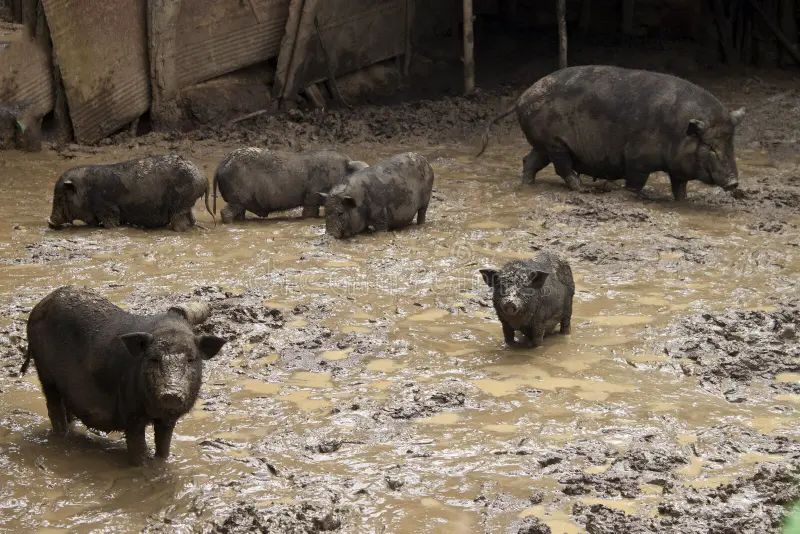
Among the most significant concerns is Taenia solium. Its importance extends beyond intestinal infection because its eggs can produce cysticercosis, including the potentially severe form that affects the brain. The disease can occur months or even years after infection, depending on the location and development of the cysts.
The parasite’s life cycle also demonstrates the close relationship between human sanitation, animal infection and food safety. Humans infected with the adult tapeworm can shed eggs in their faeces. Where sanitation is poor, those eggs can contaminate food, water or the environment. Pigs may ingest the eggs, allowing the parasite’s larval stage to develop in their tissues. Humans can then acquire the adult tapeworm by eating infected pork that has not been adequately cooked.
The medical consequences of T. solium infection can therefore be serious. While ordinary intestinal taeniasis is often mild or asymptomatic, cysticercosis can affect the eyes, muscles and central nervous system. Neurocysticercosis, in particular, is recognised as an important cause of seizures and other neurological illness.
This does not mean that every piece of pork contains a parasite or that every person who eats pork will become ill. Modern veterinary inspection, sanitation, refrigeration and proper cooking can reduce many foodborne risks. But the existence of modern controls does not invalidate the religious prohibition; nor does the absence of illness in an individual consumer make the prohibition less binding upon a Muslim.

The deeper lesson is that believers do not need to wait for scientific discovery before obeying a command from their Creator. Scientific knowledge may illuminate some of the physical consequences surrounding a prohibition, but revelation remains the foundation of faith.
The Qur’an mentions the prohibition of pork in four distinct verses: Surah Al-Baqarah 2:173, Surah Al-Ma’idah 5:3, Surah Al-An’am 6:145 and Surah An-Nahl 16:115.
The repetition of the prohibition leaves no ambiguity about the Islamic position. Muslims are commanded to avoid the flesh of swine, just as they are commanded to observe the other dietary restrictions established by Allah.
For the believer, therefore, the fundamental reason for avoiding pork is not dependent upon the latest scientific discovery. It is obedience to Allah. If science subsequently reveals health hazards associated with what He has prohibited, such discoveries may deepen one’s appreciation of the wisdom behind the command, but they do not constitute its foundation.
SPONSORED

SPONSORED

SONSORED
