
Saudi Arabia Turns to $8bn Loan as Iran War Tests Its Finances
Saudi explores fresh borrowing as war disrupts trade, hits oil output and leaves the kingdom facing a $9.1bn second-quarter deficit
By Abdullahi Yusuf
Saudi Arabia is exploring a fresh loan of at least $8 billion as the economic fallout from the war with Iran puts additional pressure on the kingdom’s finances and pushes Riyadh to widen the sources of capital available to fund its ambitious economic transformation.
The kingdom’s National Debt Management Centre (NDMC) has approached banks to gauge interest in a potential loan, according to people familiar with the discussions cited by Bloomberg.
The talks remain at an early stage and the proposed transaction may ultimately not materialise.
Saudi Aramco, the kingdom’s state-backed oil giant, is also holding discussions with banks over a possible loan, according to the same sources.
The developments point to a broader recalibration of Saudi Arabia’s financing strategy as the regional conflict disrupts trade through the Strait of Hormuz, raises import costs and places additional pressure on supply chains across the Gulf.
War pressure meets an already expensive agenda
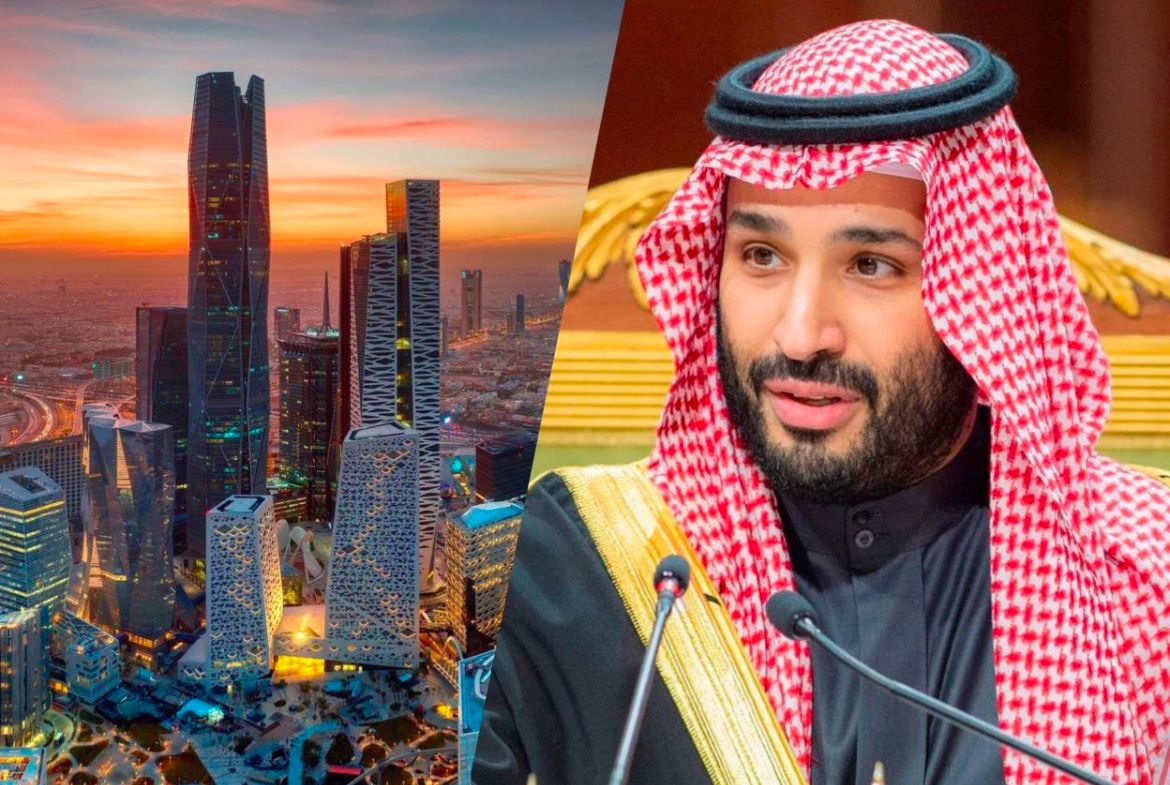
Saudi Arabia entered the conflict with an ambitious economic programme requiring substantial investment in infrastructure, industry, tourism and other sectors under Crown Prince Mohammed bin Salman’s diversification drive.
The war has complicated that environment.
Iran has targeted Saudi energy infrastructure, while Iran-backed Houthi forces have threatened shipping in the Red Sea. The disruption has also complicated Riyadh’s efforts to move more oil through its western coastline in order to reduce dependence on the Strait of Hormuz.
Saudi Arabia’s economy also suffered its sharpest contraction since the pandemic during the second quarter, with the oil sector shrinking by nearly 25%, according to the Bloomberg report.

Yet the conflict has produced an important counterweight: higher oil prices.
Benchmark Brent crude has averaged around $87 a barrel this year, providing additional revenue support for oil-producing economies even as the conflict disrupts production and transportation.
That support, however, has not prevented Saudi Arabia from recording a substantial fiscal shortfall.
The kingdom posted a 34.3 billion-riyal ($9.1 billion) budget deficit in the second quarter, according to Saudi Arabia’s Ministry of Finance. Government revenue stood at about 338.8 billion riyals against expenditure of roughly 373 billion riyals.
The same recalibration is visible at the Public Investment Fund, Saudi Arabia’s sovereign wealth fund, which Bloomberg has valued at roughly $900 billion.
The latest loan discussions come only months after the NDMC said it had completed its annual borrowing programme, securing roughly 90 per cent of its financing requirements.
The debt-management agency said additional requirements would primarily be met through private financing channels and domestic markets.
Saudi Arabia has nevertheless remained one of the most active borrowers among emerging-market economies.
The kingdom has raised about $6 billion through domestic and international bonds this year, while Aramco has raised another $4 billion. Saudi Arabia’s sovereign wealth fund, the Public Investment Fund (PIF), also raised $7 billion in May.
The latest discussions would therefore represent another step in Riyadh’s increasingly diversified approach to financing.
In late 2025, the NDMC raised a $13 billion, seven-year syndicated loan, demonstrating the kingdom’s willingness to tap bank financing alongside conventional bond markets.
The parallel discussions involving Aramco underline how the search for external capital extends beyond the Saudi government itself.
The oil giant has previously indicated that it intends to remain active in debt markets and develop new financial instruments capable of attracting different classes of investors.
It is also pursuing a privatisation strategy that could eventually generate as much as $35 billion, according to Bloomberg reporting.
Aramco remains financially powerful despite the wider pressure on the Saudi economy. Its second-quarter 2026 results showed revenue of 450.77 billion riyals and net income attributable to shareholders of 121.51 billion riyals.
The potential borrowing should therefore not be read simply as evidence that the kingdom or Aramco is running out of money.
Rather, it reflects a broader effort to spread the cost of Saudi Arabia’s investment programme across multiple sources of capital, while preserving flexibility as economic conditions become more uncertain.
The same recalibration is visible at the Public Investment Fund, which sits at the centre of Saudi Arabia’s plans to transform the economy beyond oil.
Under its new five-year strategy, the roughly $900 billion sovereign wealth fund is preparing to accelerate the transfer of mature assets to private owners, pursue listings and divestments, and increase its reliance on outside capital.
The strategy reflects a gradual shift from a model in which Saudi state institutions provide much of the financing for the kingdom’s transformation towards one in which private and international capital are expected to play a greater role.
That shift comes as Riyadh reassesses the scale and timing of some of its enormous development projects.
Despite the pressure created by the war and the need to reconsider spending priorities, Saudi Arabia has continued to pursue major international investments.
The kingdom recently committed to a €6 billion ($7 billion) theme-park complex near Paris, while Saudi capital continues to flow into sectors ranging from gaming and electric vehicles to technology and infrastructure.
The competing pressures leave Riyadh balancing two priorities: maintaining the momentum of its economic transformation while ensuring that the cost of that transformation remains financially manageable.
For now, the proposed $8 billion loan remains only a possibility.
But the fact that Saudi Arabia’s debt managers are once again sounding out banks, while Aramco is considering similar financing, offers a glimpse into how the regional war is reshaping the kingdom’s approach to funding its ambitions.
Saudi Arabia is not abandoning its diversification drive. But the latest borrowing discussions suggest that the kingdom
SPONSORED

SPONSORED

SONSORED
