
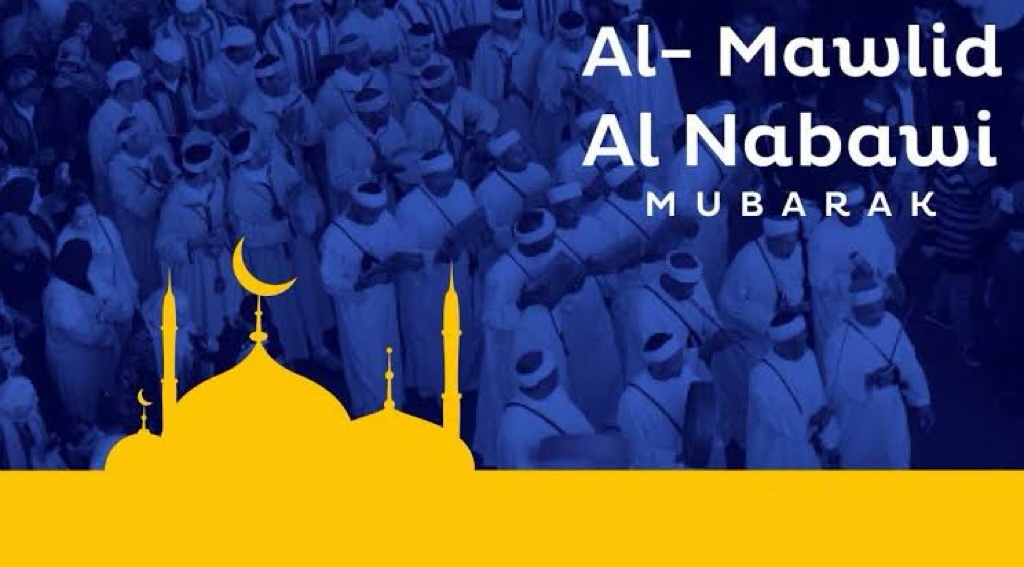
Mawlid 2026: 10 Things to Know About Prophet Muhammad’s Birth
From its disputed date to centuries-old observances, here is what Muslims around the world mark, and why some do not
By Abdullahi Yusuf
Muslims in Nigeria and communities across the world are marking Mawlid al-Nabi, the annual observance associated with the birth of Prophet Muhammad (peace be upon him).
In Nigeria, the observance falls on Tuesday, August 25, 2026, corresponding to 12 Rabiʿ al-Awwal 1448 AH. The Federal Government has declared the day a public holiday.
But Mawlid is not observed in exactly the same way everywhere. Muslim communities differ over whether the occasion should be commemorated at all, while those who observe it have developed different traditions around the Prophet’s life, teachings and birth.
Here are 10 things to know about Mawlid.
1. What is Mawlid?
Mawlid al-Nabi, commonly shortened to Mawlid, refers to the commemoration of the birth of Prophet Muhammad (pbuh).
It is observed by many Muslim communities as an occasion to remember the Prophet’s life, character, teachings and example.
The Arabic word mawlid broadly refers to a birth or place and time of birth, and in this context refers to the Prophet’s birth.
2. It is observed in Rabiʿ al-Awwal
Mawlid is traditionally associated with Rabiʿ al-Awwal, the third month of the Islamic lunar calendar.
The Islamic calendar follows the lunar cycle, meaning its months move through the Gregorian calendar from year to year. Rabiʿ al-Awwal therefore does not fall in the same period of the Gregorian calendar every year.
In Nigeria, Rabiʿ al-Awwal 1448 AH began on August 14, 2026, placing 12 Rabiʿ al-Awwal on August 25.
3. Why is August 25 associated with Mawlid in Nigeria?
August 25, 2026 corresponds to 12 Rabiʿ al-Awwal 1448 AH in the Nigerian Islamic calendar.
The 12th of Rabiʿ al-Awwal is one of the dates most widely associated with the Prophet’s birth in Sunni Muslim communities.
It is important, however, not to present the date as universally agreed upon. Islamic scholarship contains different reports concerning the precise day of the Prophet’s birth.
4. The exact date of the Prophet’s birth is disputed
There is broad agreement in Islamic historical tradition that Prophet Muhammad (pbuh) was born in Makkah on a Monday, in the Year of the Elephant.
The precise date, however, has been the subject of scholarly disagreement.
The 12th of Rabiʿ al-Awwal is a prominent traditional position, while other dates have also been proposed, including the 8th, 9th and 10th. Some Muslim communities associate the birth with 17 Rabiʿ al-Awwal.
The distinction matters because 12 Rabiʿ al-Awwal should therefore be described as a widely recognised traditional date, rather than an undisputed historical fact.
5. Prophet Muhammad (pbuh) was born in Makkah
Islamic historical sources place the Prophet’s birth in Makkah, in the Arabian Peninsula, around 570 CE.
The year is traditionally known as the Year of the Elephant, referring to the reported expedition of Abraha against Makkah.
The Prophet later received the first revelation of the Qur’an in Makkah before migrating to Madinah, where the Muslim community developed into a major religious and political community.
Yaqeen Institute places his birth in Makkah in 570 CE and his death in Madinah in 632 CE.
6. Muslims who observe Mawlid mark it in different ways
There is no single worldwide format for Mawlid.
In communities where it is observed, gatherings can include Qur’an recitation, religious lectures, sermons, poetry in praise of the Prophet (pbuh), readings from his biography, salutations upon him and communal meals.
In some places, large public gatherings are organised, while other communities mark the occasion more privately through worship, learning and remembrance.
The forms of observance are therefore shaped partly by local religious and cultural traditions.
7. Not all Muslims observe Mawlid
Mawlid remains a matter of disagreement among Muslims. Many Sunni and Shia communities commemorate the Prophet’s birth, although their dates and practices can differ.
Other Muslims do not observe Mawlid as a religious occasion, arguing that the Prophet (pbuh), his Companions and the earliest generations of Muslims did not establish such a celebration.
For this reason, a report about Mawlid should not describe it as an observance practised by all Muslims.
The disagreement is primarily about the religious legitimacy and historical basis of formally commemorating the Prophet’s birth, rather than about the importance Muslims attach to the Prophet himself.
8. Mawlid celebrations developed centuries after the Prophet
Formal Mawlid observances emerged centuries after the Prophet’s death in 632 CE.
Historical accounts trace the development of formal Mawlid observances to later Muslim societies, where the practice took different forms and spread across parts of the Muslim world.
That historical development is one reason the question of Mawlid remains part of a longstanding scholarly discussion among Muslims.
9. Charity and community gatherings are part of Mawlid in many places
In communities that observe Mawlid, the occasion can extend beyond religious lectures and recitations.
People may distribute food, support the poor, visit relatives, organise community gatherings and engage in other charitable activities.
These practices are not identical everywhere and should not be treated as mandatory components of Mawlid.
For many communities, however, they reflect a broader emphasis on embodying the Prophet’s teachings through generosity, compassion and service to others.
10. Why does Mawlid fall on different dates every year?
The Islamic calendar is lunar and contains 12 months based on the cycles of the moon. Because the lunar year is shorter than the Gregorian solar year, Islamic months move backwards through the Gregorian calendar each year.
That is why Mawlid can occur at a different time of the Gregorian year from one year to another. In Nigeria, 12 Rabiʿ al-Awwal 1448 AH falls on Tuesday, August 25, 2026.
Why Mawlid still matters
For millions of Muslims who observe it, Mawlid provides an opportunity to remember Prophet Muhammad (pbuh) and reflect on his life, character and teachings.
For Muslims who do not commemorate it, the occasion remains a point of religious difference over the legitimacy of establishing a specific celebration for the Prophet’s birth.
What is common across Muslim communities is the central place of Prophet Muhammad (pbuh) in Islam and the importance of studying his life and teachings.
In Nigeria, this year’s observance is taking place against the backdrop of a Federal Government public holiday, with Muslims gathering in mosques and communities for different forms of remembrance and religious activities.
SPONSORED

SPONSORED

SONSORED
