
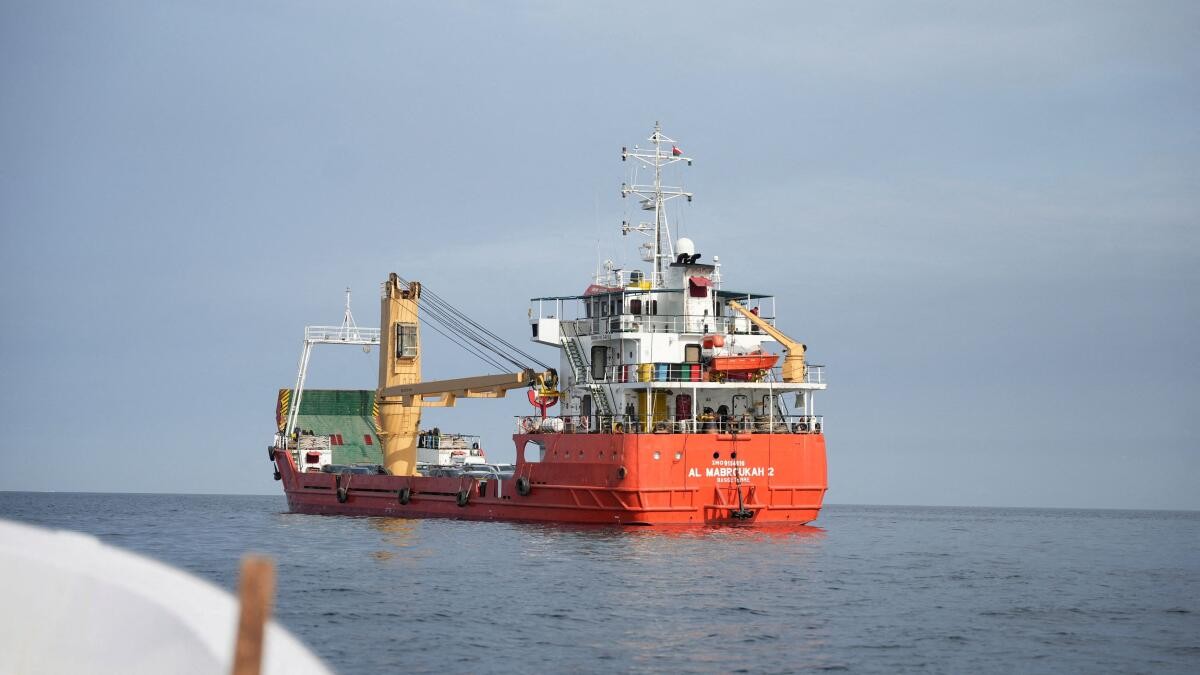
Iran warns Gulf ports unsafe after US blockade
Revolutionary Guards signal wider maritime threat as Washington restricts access to Iranian ports in the Strait of Hormuz
By Abdullahi Yusuf
Iran’s Islamic Revolutionary Guard Corps (Islamic Revolutionary Guard Corps) has warned that “no port in the Gulf and the Sea of Oman will be safe” following a United States decision to impose a naval blockade on traffic to and from Iranian ports.
In a statement carried by state broadcaster Islamic Republic of Iran Broadcasting, the IRGC described the move as “illegal” and akin to “piracy”, signalling a potential escalation in tensions across one of the world’s most critical shipping corridors.
“The security of ports in the Gulf and the Sea of Oman is either for everyone or for no one,” the statement said, suggesting that wider regional maritime stability could be affected if the restrictions remain in place.
The United States said the blockade would take effect at 1400 GMT on Monday, targeting vessels entering or leaving Iranian-controlled ports via the Strait of Hormuz, a route through which a significant share of global energy supplies is transported.
Iranian officials indicated that vessels they describe as “enemy-affiliated” would be denied passage through the strait, while other ships may be allowed to transit under conditions set by Tehran.
The IRGC also warned that it was preparing to implement what it called a “permanent mechanism” to control access to the waterway, citing what it described as ongoing threats from adversaries. The language suggests that any measures introduced during the current conflict could remain in place beyond its conclusion.
The latest developments follow the collapse of recent negotiations between the United States and Iran in Islamabad, where talks aimed at easing tensions ended without agreement after nearly a full day of discussions.
That diplomatic setback has heightened concerns over the risk of further escalation in the Gulf, where commercial shipping routes remain highly sensitive to shifts in security conditions.
The current phase of the conflict traces back to late February, when a joint US-Israeli military offensive targeted Iran, triggering a broader confrontation that has since extended across the region.
Analysts say the combination of military pressure, economic restrictions and competing claims over maritime control now risks drawing in a wider range of actors, with the Strait of Hormuz once again emerging as a central flashpoint in the dispute.
SPONSORED

SPONSORED

SONSORED
