
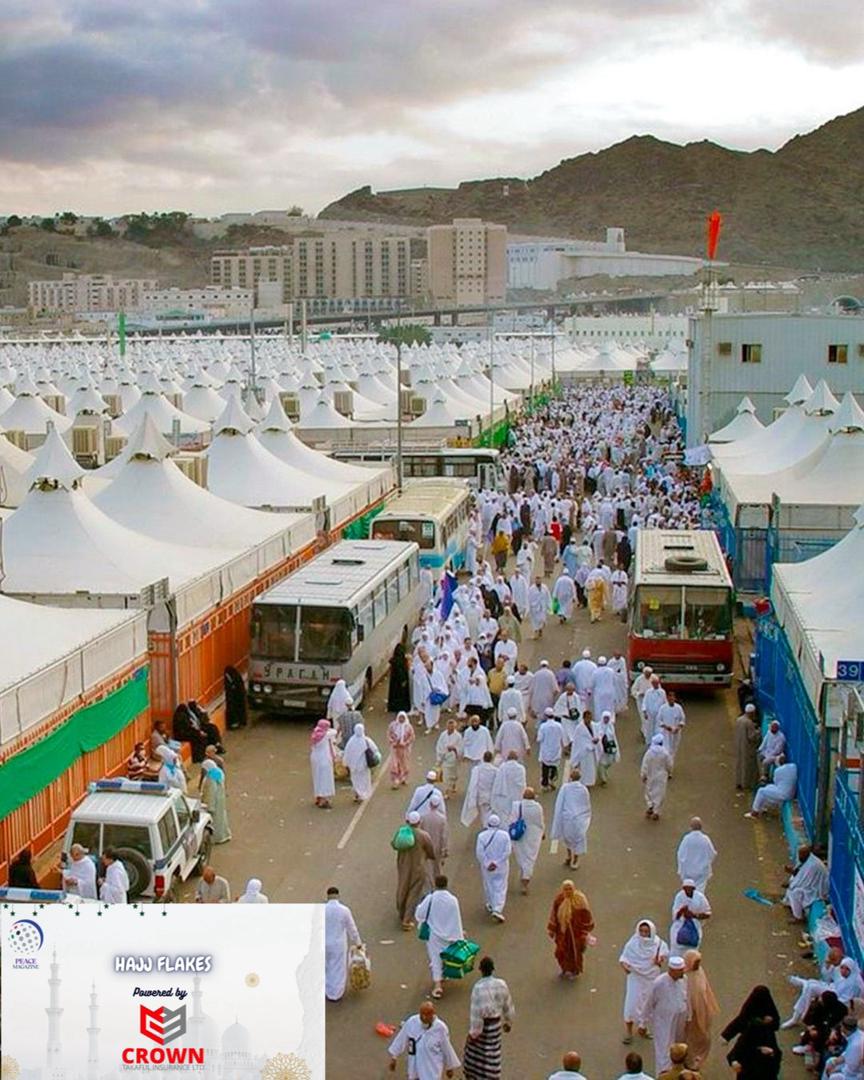
Hajj Flakes – 19 Dhu al-Qadah 1447 AH
By Abdullahi Yusuf
- Nigeria’s 2026 Hajj airlift entered Day 4 with sustained momentum, as operations expanded across additional departure points following a coordinated start on May 3.
- A late-night flight departed Gombe for Jeddah at 23:28hrs carrying 550 pilgrims, while an early morning flight airlifted 481 Plateau pilgrims from Bauchi to Madinah at 05:55hrs.
- According to the National Hajj Commission, a cumulative airlift figures have now reached 6,493 pilgrims across 15 flights, reflecting a steady scaling of operations within the first four days.
- Plateau State formally commenced its airlift, with 303 male and 178 female pilgrims on its first outbound flight.
- Governor Caleb Mutfwang bid farewell to 1,134 Plateau pilgrims, including 570 state-sponsored beneficiaries, urging them to serve as worthy ambassadors of Nigeria.
- Civil society groups have called on state pilgrims boards and private tour operators to establish dedicated inquiry lines, citing growing demand for real-time information and improved communication during the pilgrimage.
- A tragic incident was reported in Adamawa State, where an intending pilgrim was killed by unidentified assailants while en route to a Hajj seminar, raising fresh concerns over safety in parts of the country.
- The Saudi Food and Drug Authority has updated medication clearance guidelines, requiring pilgrims carrying controlled drugs to present valid prescriptions, passport copies, and limit quantities to a 30-day supply.
- Ondo State has confirmed plans to airlift 825 pilgrims in two batches on May 7 and 9, marking a notable increase from its previous annual average.
- The Kano State Pilgrims Welfare Board has completed refunds of Hajj fare differentials following a downward review from ₦8.5 million to ₦7.69 million.
- The Niger State Pilgrims Welfare Board has convened a multi-agency stakeholders’ meeting involving aviation, security, immigration, and health authorities to finalise airlift logistics.
- Governor Abdullahi Sule has sponsored Hadaya (sacrificial animals) for all pilgrims from Nasarawa State.
- In Lagos, Governor Babajide Sanwo-Olu announced financial support packages covering Ihram, Hadaya, Siyara, and Arafat-day allowances for intending pilgrims.
- Saudi authorities have dismissed viral claims of a ban on photography at holy sites, clarifying that no such restriction exists, while urging pilgrims to remain respectful during worship.
- Saudi enforcement has intensified against unauthorized pilgrims, with 10 Indonesian nationals detained for attempting Hajj without valid permits.
- Indonesia has so far airlifted about 89,000 pilgrims across 229 flights, with authorities also reporting minor health cases amid temperatures reaching 39°C in Madinah and Makkah.
- Libya is set to commence its Hajj airlift, with four inaugural flights scheduled from Benina and Mitiga airports, each carrying about 170 pilgrims to Jeddah.
Did you know?
- The Ihram is similar to prayer or fasting, certain everyday actions become prohibited during this sacred state.
- Prohibited acts during Ihram include using perfume, cutting hair or nails, engaging in marital relations, hunting, getting married.
- Ihram garments for men are two unstitched white cloths, Izar (lower body wrap) Rida (upper body wrap) and No underwear or sewn clothing allowed.
- Ihram garments for women include women wearing loose-fitting black or white abayas, jilbabs, or burqas no decorative designs or colours, their hands and faces must remain uncovered.
- Ihram must be worn before passing the Miqat. For flights landing in Jeddah, pilgrims must don Ihram before arrival.
- Clothing forbidden in Ihram, Men must not wear caps, stitched garments, socks, pajamas, or saffron-coloured clothing. Women must not cover their faces or wear gloves. Also, If no shoes are available, leather socks may be worn.Abu Dharr al-Ghifari, a companion of the Prophet, survived solely on Zamzam water for an entire month during his early days in Makkah.
- Historically used to treat illness, Zamzam was sprinkled on the sick by the Prophet and gifted to loved ones as a spiritual remedy.
- Scientific tests show Zamzam has higher levels of calcium and magnesium, along with natural fluoride making it both refreshing and germ-resistant, without any chemical treatment.
- The zamzam well is directly linked to Prophets Ibrahim and Ismail, and later became the home of Prophet Muhammad’s (peace be upon him) ancestors.
- The zamzam well lies about 20 meters east of the Kaaba in Makkah, and is approximately 35 meters deep, still flowing miraculously to this day.

SPONSORED

SPONSORED

SONSORED
