
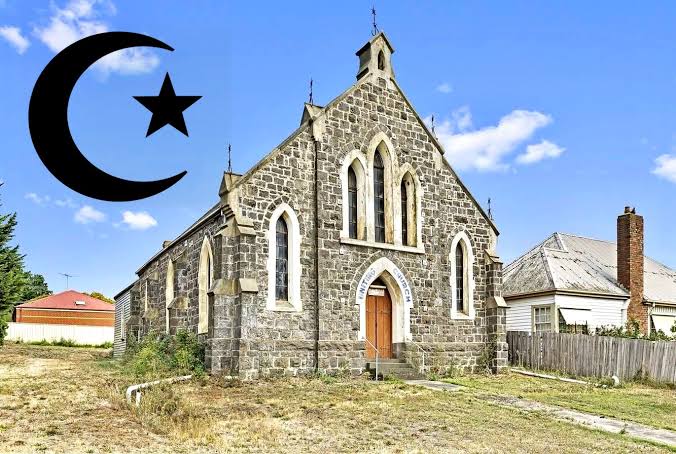
When a Church Becomes a Mosque: A Sacred Space in a Changing Australia
The proposed conversion of a 165-year-old former church in Victoria into a mosque offers a different way to understand Australia’s changing religious landscape, not simply as decline and replacement, but as communities finding new uses for places built to bring people together.
By Abdullahi Yusuf
For more than a century and a half, the former Wesleyan Methodist Church on Powlett Street in Kilmore, Victoria, stood as a place where a community gathered to worship, learn, celebrate and mourn.
Built in 1858 during the Victorian gold rush, the heritage building witnessed generations of baptisms, weddings, funerals and Sunday services. Its significance extended beyond religion: like many places of worship, it became part of the social fabric of the town.
Now, the building is being considered for a new chapter.
At the soft launch and fundraising dinner for the proposed Kilmore Islamic and Community Centre on August 1, the former church became the setting for a conversation about faith, heritage and the changing communities that inhabit Australia’s towns and cities.
The proposed mosque is significant not simply because a church may become a mosque, but because it raises a broader question: what happens to buildings created for worship when the communities that built them change?
Across Australia, some Christian congregations have faced declining attendance, ageing memberships and the growing cost of maintaining large or heritage properties. For some communities, buildings that once accommodated full congregations have become increasingly difficult to sustain.
Recent reporting by ABC News has highlighted similar cases of former churches being acquired for use as mosques in Victoria, reflecting the intersection of changing religious demographics and the challenges of maintaining older places of worship.
At the same time, Australia’s Muslim communities have grown, creating demand for permanent spaces in which to worship, educate and provide community services.
The meeting of those two realities can produce an outcome that is sometimes portrayed as a contest between religions. But the Kilmore project suggests another interpretation. It can be understood as a form of continuity.
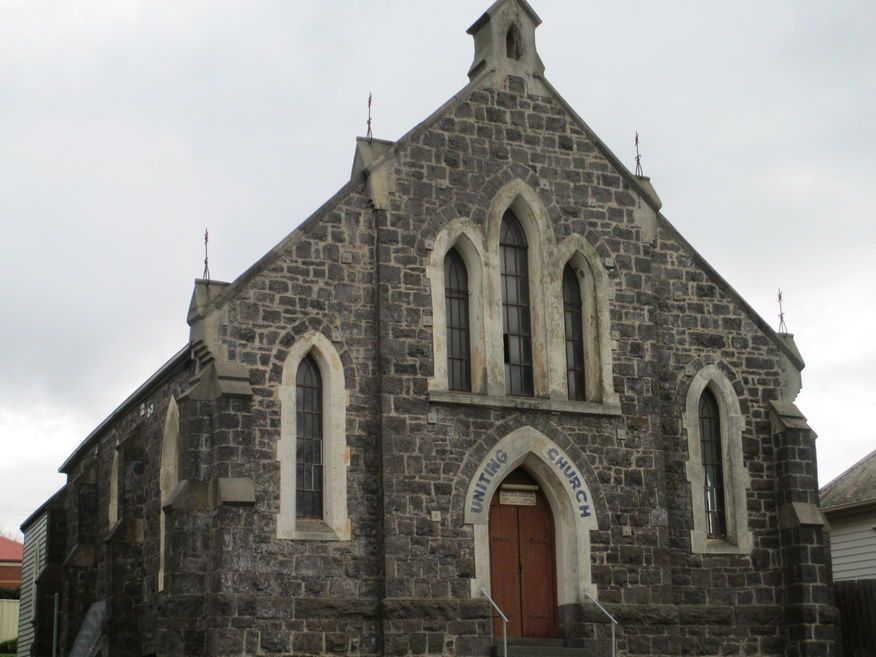
The religious identity of the congregation may change, but the building can continue doing something remarkably similar to what it was designed to do: bring people together around faith and service.
That distinction matters.
A church becoming a mosque can easily be presented as a symbol of religious replacement, one faith retreating as another advances. Such a reading may make for a striking headline, but it risks reducing a more complicated social change to a simple contest.
The reality is less dramatic and, perhaps, more revealing.
Communities change. Places change with them.
For Muslim communities seeking permanent premises, an existing church can offer advantages over vacant land: an established structure, architectural character and an existing connection to the surrounding community. Acquiring and adapting such a building can give a new congregation a permanent home while preserving its original function as a place of worship and community.
That is particularly relevant when the alternative is leaving a heritage property unused or struggling to maintain it. The preservation question is therefore important.
Heritage is not only about keeping a building frozen in the past. It is also about ensuring that significant buildings continue to have a viable future.
A historic structure that remains intact but cannot be sustained faces its own uncertainties. A community willing to invest in its restoration and continued use can, by contrast, give that heritage a practical future.
The proposed Kilmore Islamic and Community Centre presents itself in those terms. Its vision is not to erase the building’s past, but to retain its character while adapting the space for a new community.
There are, of course, important differences between churches and mosques. Their religious practices, traditions and architectural requirements are not the same. But their broader community functions can overlap.
Both can provide spaces for worship, education, charity, pastoral support and community gathering, extending their role beyond the formal act of worship.
That common ground is easy to overlook when religious buildings are discussed primarily through the language of ownership and identity.
The Kilmore story offers a different lens.
The project was presented not simply as an effort to acquire a building, but as an attempt to give a growing community a permanent home while preserving the property’s heritage character.
That makes the project part of a wider conversation about adaptive reuse.
Australia’s religious landscape is not static. Migration, changing patterns of religious affiliation and urban expansion are reshaping the communities that use Australia’s places of worship. Some buildings will close. Others will be sold. Some will become homes, businesses or cultural spaces.
A smaller number may continue as places of worship under a different tradition. The significance of those conversions should therefore not be exaggerated. A handful of church-to-mosque projects does not, by itself, demonstrate a wholesale transformation of Australia’s religious landscape.
But neither should their meaning be dismissed. They provide a visible illustration of demographic change and of the ways communities adapt to it.
The former Wesleyan Methodist Church in Kilmore has already survived more than 165 years of social and religious change. If the proposed mosque project proceeds, its next chapter will be written by a different congregation.
Yet the central idea behind the building may remain familiar: a place where people gather, worship, learn, support one another and serve their community.
Perhaps that is the more important story.
Religious buildings, like the societies around them, can change without losing their meaning. Sometimes continuity does not mean preserving everything exactly as it was. It means finding a way for something valuable to remain useful to the people who come after.
In Kilmore, a building that began its life as a Methodist church may yet become a mosque. The faith community may be different. The country around it may be changing. But if the building continues to bring people together, its story may be less about one religion giving way to another than about a sacred space finding a new generation to serve.
SPONSORED

SPONSORED

SONSORED
