
Mecca Defence Pact Has No Target, Enemy, Türkiye’s Fidan Says
Turkish foreign minister says agreement with Saudi Arabia and Pakistan is defensive, modelled on NATO’s collective-defence principle
By Abdullahi Yusuf
Türkiye’s Foreign Minister Hakan Fidan has described the defence agreement signed by Türkiye, Saudi Arabia and Pakistan in Mecca as a collective-defence pact with no designated enemy or target, saying the arrangement is intended to respond to growing instability in the region.
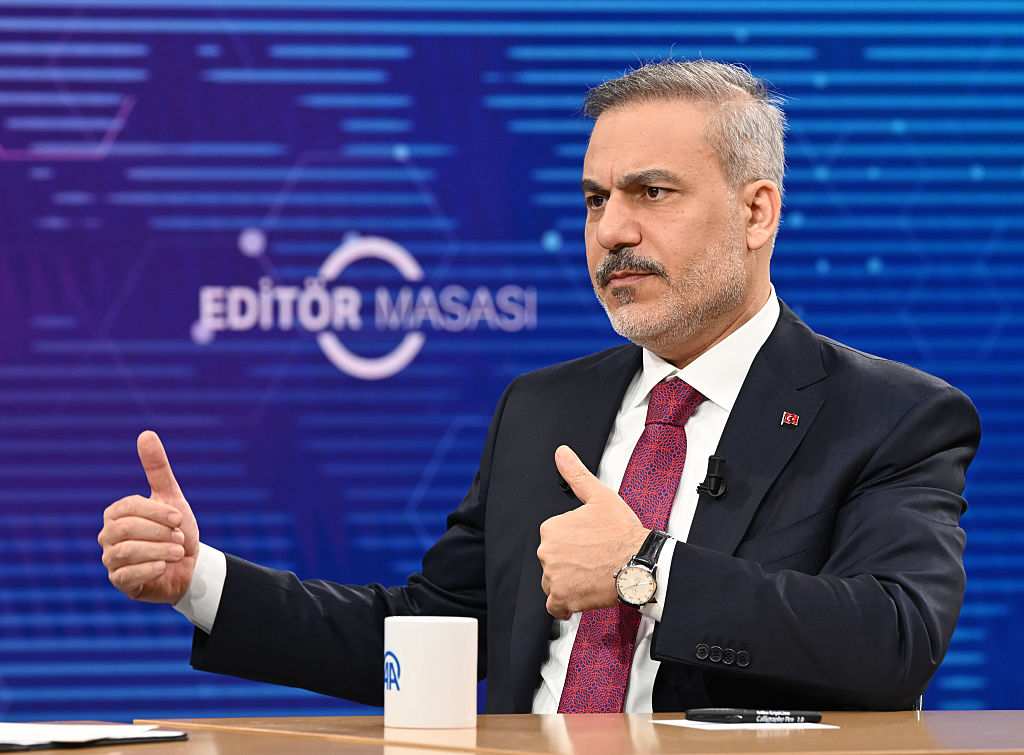
Speaking in an exclusive interview with Anadolu on Saturday, Fidan said the agreement was technically comparable to NATO’s Article 5, which provides for collective defence among member states when one is attacked.
“The Mecca defence agreement is technically the same as NATO’s Article 5,” Fidan said.
He stressed, however, that the trilateral agreement did not identify a common threat or designate any country as an adversary.
“The pact does not specify any common threat,” he said, adding that the three countries agreed on the need for a structured collective-defence framework amid what he described as deepening regional instability.
Fidan said the agreement was defensive rather than offensive and was not designed to expand the military reach or territorial ambitions of its members.
“No country is our target as long as they don’t attack member countries,” he said.
He added that Türkiye, Saudi Arabia and Pakistan were not expansionist states and that the agreement was intended to strengthen security and stability rather than project military power.
The pact brings together three major Muslim-majority countries with significant military and economic capabilities. Türkiye is a member of NATO, Saudi Arabia is one of the region’s leading military spenders, while Pakistan is a nuclear-armed state with one of Asia’s largest standing armies.
Fidan said the agreement reflected what he described as a strategic necessity arising from prolonged instability in the Middle East and surrounding region.
He also said Turkish President Recep Tayyip Erdoğan wanted the Mecca Joint Defence Agreement to eventually expand beyond the three founding countries, potentially bringing other states into the framework if necessary.
According to Fidan, the agreement could represent a step towards lasting regional stability in a region that has experienced prolonged periods of insecurity.
The remarks provide the clearest explanation so far of Ankara’s position on the purpose of the Mecca defence agreement, presenting it as a framework for collective security rather than a military alliance directed against a particular state.
SPONSORED

SPONSORED

SONSORED
