
Turkey says Israel casting it as next enemy after Iran
Foreign Minister Hakan Fidan warns of widening regional tensions, asTürkiye criticises Israeli strategy and questions US-NATO direction
By Abdullahi Yusuf
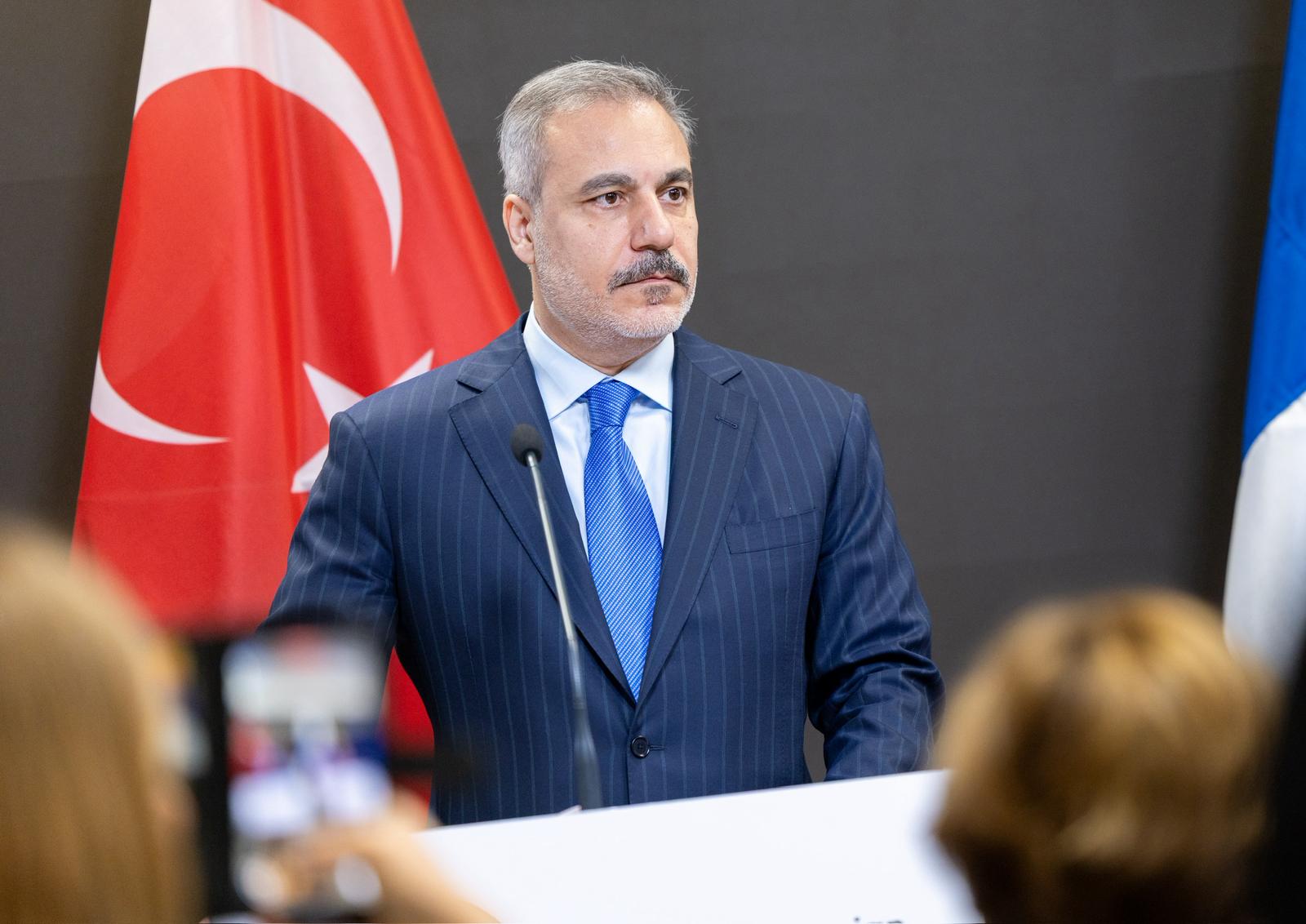
Turkish Foreign Minister Hakan Fidan has accused Israel of attempting to reshape regional narratives by portraying Türkiye as its next strategic adversary following the Iran conflict, warning that what he described as an “enemy-driven foreign policy mindset” is becoming institutionalized in Israeli strategy.
Fidan made the remarks during a televised interview, arguing that Israeli leadership is driven by a persistent need for confrontation in the region.
He claimed that after the escalation with Iran, Israel is now shifting its political and security rhetoric toward Turkiye, a move he framed as part of a broader pattern of regional destabilization.
According to Fidan, both the Israeli government and elements of its political opposition are contributing to this narrative shift, suggesting that Türkiye is being increasingly framed as a hostile actor in Israeli discourse.
He argued that this reflects a deeper structural tendency in Israeli policy to sustain regional tension rather than pursue de-escalation.
He also linked the current situation to the broader regional fallout from the US-Israeli military campaign against Iran, saying the conflict has widened instability across the Middle East and created new fault lines between regional powers.
Tensions between Ankara and Tel Aviv have already deteriorated sharply since the Gaza war began in 2023, with diplomatic exchanges becoming increasingly hostile as Israel expanded its military operations across Gaza, Lebanon, and Iran-related theaters.
Turkish officials have repeatedly accused Israel of pursuing expansionist policies and undermining diplomatic processes in the region.
Fidan further criticized Israeli Prime Minister Benjamin Netanyahu, referencing corruption allegations and international legal proceedings, including the International Criminal Court’s arrest warrant over alleged war crimes and crimes against humanity. He argued that Israel’s current leadership is responsible for deepening instability rather than resolving it.
He also claimed that Israel’s actions in recent years have contributed to the erosion of regional trust, pointing to repeated military escalations that have drawn widespread international criticism, particularly over civilian casualties in Gaza and Lebanon.
NATO, Trump, and alliance strain
In the same interview, Fidan turned to transatlantic relations, warning that NATO is entering a period of structural uncertainty due to growing friction between the United States and its allies.
He said European members should use the upcoming NATO summit in Ankara to recalibrate their relationship with Washington, particularly amid concerns that US engagement in the alliance could decline under President Donald Trump’s approach to foreign policy.
Fidan suggested Trump may attend the summit due to what he described as personal ties with President Recep Tayyip Erdoğan, though he acknowledged uncertainty over Washington’s long-term commitment to NATO structures.
He criticized what he described as US unilateralism, arguing that Washington’s shifting stance on alliance obligations, especially during crises linked to the Iran conflict and the Strait of Hormuz, has forced European states to reconsider their security assumptions.
According to Fidan, NATO members are now preparing for scenarios in which US military and political involvement in Europe could be reduced, requiring a redistribution of defense responsibilities within the alliance.
He said the Ankara summit should serve as a turning point to place US-NATO relations on a more predictable and structured footing, warning that failure to plan for potential US disengagement could leave allies strategically exposed.
Fidan’s remarks come amid growing tensions within NATO, with divisions emerging over Middle East policy, maritime security in the Gulf, and Washington’s increasingly confrontational posture toward both allies and adversaries in the region.
With additional information from MNTV
SPONSORED

SPONSORED

SONSORED
