
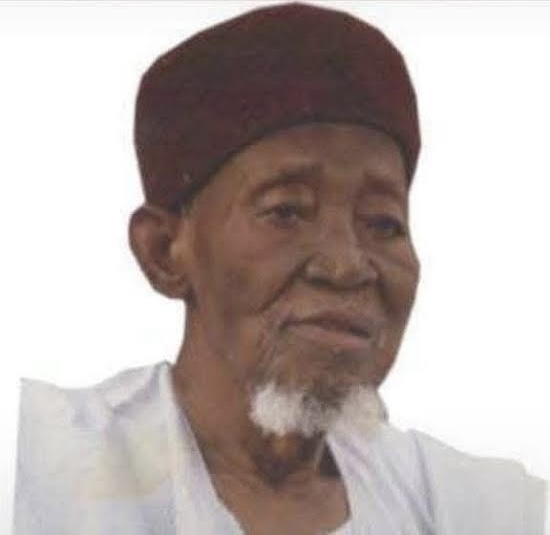
They Called His Ideas “Satanic.” A Century Later, His Legacy Lives On
The extraordinary story of Sheikh Muhammad Kamalud-Deen Al-Adabiy (Alhaji Agba), the Genius who fought to transform Islamic education and whose vision continues to shape generations.
By Yusuf Abdulbasit Hozaifah
Some lives are too large to fit into a few paragraphs, a single book, or even a library. The ordinary words we use to describe teacher, scholar, leader, reformer and philanthropist sometimes feel too small for the weight of what they leave behind. Sheikh Muhammad Kamalud-Deen Habibullah Al-Adabiy, fondly remembered as Alhaji Agba, was one of such people.
To speak about Sheikh Muhammad Kamalud-Deen Al-Adabiy is to speak about a man who lived for more than a century and whose ideas have continued to live long after him. He understood that education could determine the future of a people, and also faith did not have to be sacrificed for knowledge, and that preserving one’s identity did not require turning one’s back on a changing world.
As centenary celebrations surrounding his educational legacy continue, it is easy to become carried away by ceremonies, speeches, photographs and tributes. But far beyond the celebration is a deeper story: the story of a young scholar who grew up in Ilorin’s rich Islamic tradition and eventually helped transform the way knowledge was organised and transmitted.
It is the story of a man who did not merely complain about the educational challenges facing his people. He built an alternative. And perhaps most importantly, it is the story of a man whose greatest monument was never going to be a building. His greatest monument was going to be people.
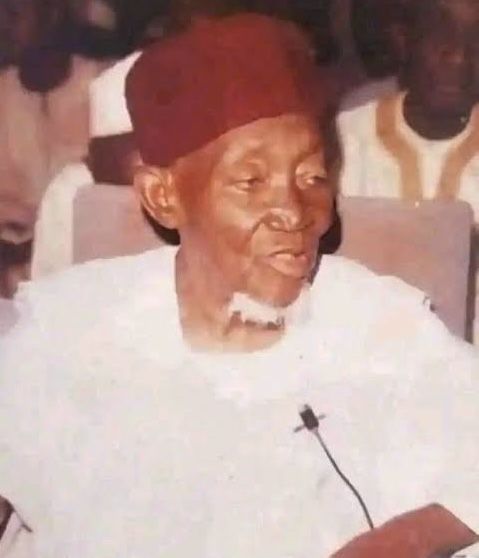
Sheikh Muhammad Kamalud-Deen Al-Adabiy was born into the scholarly tradition of Ilorin, a city deeply connected with Islamic learning for generations. His early education was rooted in the Qur’an and the traditional Islamic system of scholarship. He was said to have drunk from another ocean of knowledge before becoming a student of Sheikh Muhammad Jamiu Al-Labib, popularly known as Taju-l-Adab.
Under the influence of this great teacher, the intellectual foundation of the young Sheikh Muhammad Kamaludeen Al-Adabiy became firmly established. His early exposure is to understand knowledge as a responsibility and use it in the service of people.
That foundation later became extremely important. Sheikh Muhammad Kamaludeen Al-Adabiy was not content with simply preserving what he had inherited. The world around him was changing rapidly. Western-style education was becoming increasingly important. Colonial administration was creating new forms of employment and social mobility. Communities unable to adapt risk being left behind. For him, this was not merely an educational question. It was a question about the future of his people.
At a time when many Muslims feared that Western education could weaken their faith and culture, Sheikh Muhammad Kamalud-Deen Al-Adabiy saw both the danger and the opportunity. He understood the concern that Muslim children entering missionary-influenced schools might lose their religious identity. But he also recognised that completely rejecting modern education could exclude Muslims from emerging professional, administrative and political structures.
His answer was not to abandon Islam or to reject modern knowledge. His answer was to build an educational system where both could exist together. That idea was revolutionary, but it did not come without resistance. Professor Mahmud Mashood Jimba Deputy Vice Chancellor Kwara state University and one of the products of Sheikh Muhammad kamaldeen educational tradition, recalled during the ongoing centenary programme that Baba was challenged, he struggled and suffered while establishing the educational system from which many people benefit today.
According to Professor Jimba, Sheikh Muhammad Kamaludeen Al-Adabiy faced severe criticism from people who did not understand or accept his reforms. Some critics reportedly described the new form of knowledge as satanic knowledge. The resistance went beyond words and included attacks against him.
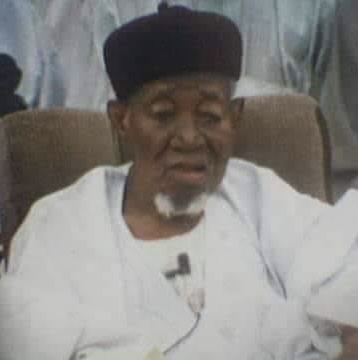
This testimony gives a human face to what might otherwise appear to be a smooth story of institutional success. The schools that later became symbols of educational advancement did not emerge effortlessly. Behind them was a man who endured suspicion, criticism, opposition and hardship because he believed his people needed an education that could prepare them for the world ahead.
What many people now consider normal is the combination of Islamic learning with modern education, organised classrooms and broader academic instruction was once something that had to be defended.
Accounts of his educational reforms trace the beginning of his organised school experiment In 1926, when he established Azumuratul Adabiyatul kamaliyah, which began as educational work gradually developed into something much larger.
Sheikh Muhammad Kamalud-Deen Al-Adabiy introduced methods that were not common within the traditional Islamic educational environment of his time. He brought students into organised classrooms and introduced benches, tables, blackboards, registers, examinations, promotion systems, uniforms, structured curricula, assemblies and extracurricular activities. Arabic drama and other activities were also incorporated into the school environment.
These things seem ordinary today, but their significance becomes clearer when viewed against the period in which they were introduced.
He was saying that Islamic education did not have to remain static. A Muslim child could sit in a properly organised classroom, learn mathematics, science and other subjects, study the Qur’an and Arabic, understand his or her faith, and still become prepared to participate in the modern world.
He was saying that the blackboard did not threaten the Qur’an, that modern educational methods did not automatically mean abandoning Islamic values, and that a community could embrace useful knowledge without surrendering its identity.
This philosophy became associated with what was popularly described as “Akewukewe”—an educational approach combining Western education with Arabic and Islamic learning. It remains one of Sheikh Muhammad Kamalud-Deen Al-Adabiy’s most important contributions to the educational history of Ilorin and beyond.
It is easy, from the comfort of the twenty-first century, to underestimate the courage required to pursue such a vision. Today, many parents send their children to schools where Islamic and Western education are taught together. Islamic studies, Arabic, science, mathematics, literature and technology can exist within the same curriculum.
But somebody had to challenge the belief that these worlds could not coexist. Somebody had to endure the suspicion that came with introducing something different. Somebody had to take the first difficult steps.
That somebody was Sheikh Muhammad Kamalud-Deen Al-Adabiy. And the story did not end with one school.
One of the clearest demonstrations of his vision was the establishment of the Ansarul Islam Society of Nigeria on 28 May 1942. The organisation was created as part of a broader effort to strengthen Islam and improve the educational circumstances of Muslims.
Its work eventually expanded beyond one location into a network of educational institutions. Historical accounts associated with the movement describe the development of numerous primary and secondary schools across different parts of Nigeria.
The scale of this expansion is important. It shows that Sheikh Muhammad Kamalud-Deen Al-Adabiy was not simply interested in creating a school that would bear his name. He wanted to create a system that could continue reaching people.
A school can disappear when its founder dies. A movement built around an enduring philosophy can survive generations. Sheikh Muhammad Kamalud-Deen Al-Adabiy chose the second path.
His educational philosophy produced generations of people who entered different areas of public life. Some became teachers and scholars; others entered the civil service, administration, law, politics and other professions.
The significance of this cannot be measured merely by counting schools. Every student who passed through those institutions carried something from that educational philosophy into another part of society. A teacher taught another generation. A civil servant served in an office. A professional raised child. A scholar taught another student.
That is how legacies become larger than their founders.
Perhaps one of the most remarkable chapters in Sheikh Muhammad Kamalud-Deen Al-Adabiy’s life was his connection with Al-Azhar in Egypt. In 1962, he travelled to Egypt and established a relationship with the leadership of Al-Azhar, one of the world’s oldest and most respected centres of Islamic scholarship.
That relationship contributed to the establishment in Ilorin in 1963 of Ma’had Al-Deen Al-Azhari, an institution connected to the Al-Azhar educational tradition. Historical accounts describe it as the first Al-Azhar branch in West Africa.
Think about what that meant at the time.
This was not the era of instant communication, online applications or virtual meetings. Travelling from Ilorin to Cairo to establish educational relationships required vision, persistence and courage. Sheikh Muhammad Kamalud-Deen Al-Adabiy understood that strengthening Islamic scholarship in Nigeria required looking beyond the boundaries of his immediate environment.
He built a bridge between Ilorin and Cairo. Across that bridge flowed teachers, ideas, curricula and opportunities.
The relationship represented his belief that Nigerian Muslims could participate confidently in the wider intellectual tradition of the Muslim world. It showed that a scholar from Ilorin could engage one of the most important Islamic educational institutions in the world and bring part of that intellectual tradition back home.
This was the pattern that appeared repeatedly throughout his life: he built bridges where others might have seen boundaries.
He connected traditional Islamic scholarship with modern education. He connected Ilorin with Cairo. He connected religious learning with professional development. He connected scholarship with community service. And he connected generations of students with opportunities that had once seemed distant.
His influence was not restricted to education.
Sheikh Muhammad Kamalud-Deen Al-Adabiy was also respected within the wider social and political environment of his time. His relationships with prominent Nigerian leaders and traditional authorities showed that he was not a scholar detached from society.
Historical accounts record his relationship with Sir Ahmadu Bello, the Sardauna of Sokoto, and his involvement in important national Muslim affairs. He also accompanied General Murtala Mohammed on the Hajj pilgrimage in 1975.
His proximity to influential people was not simply a matter of personal prestige. His wider work suggests that he believed scholars had a responsibility to participate in conversations about education, community development and the future of society.
His contributions to Ilorin’s physical development reflected the same philosophy. Historical accounts attribute financial support from him to infrastructure projects, including roads in parts of Ilorin, Government Secondary School, Ballah, and Ilorin City Hall.
These contributions remind us that his understanding of service extended beyond books and classrooms.
For Sheikh Muhammad Kamalud-Deen Al-Adabiy, scholarship was not supposed to make a person distant from society. It was supposed to make the person more useful to society.
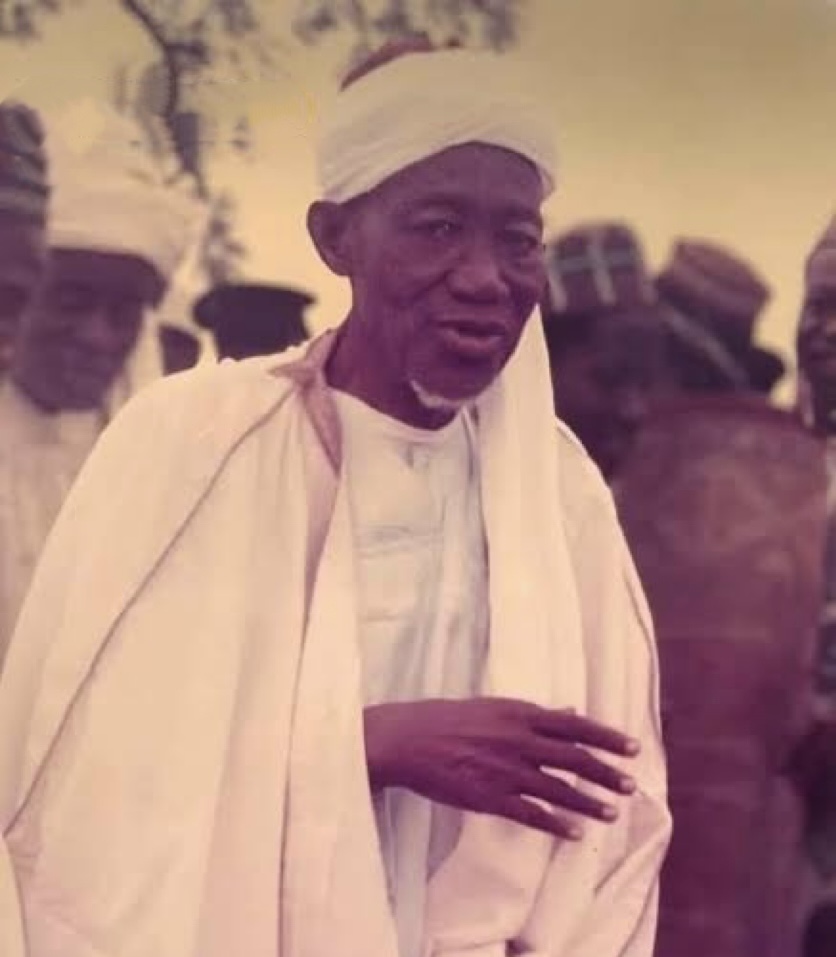
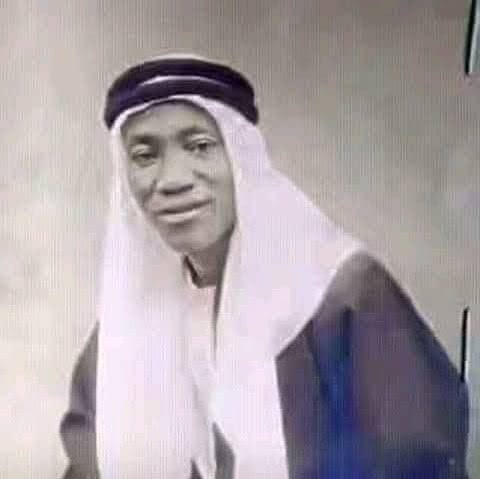
Perhaps this is why the title Alhaji Agba continues to carry such emotional weight among those who remember him and those who inherited his educational tradition. It is not merely a title attached to an old photograph. It represents an elder whose life became intertwined with the educational and religious development of an entire community.
During his lifetime, Sheikh Muhammad Kamalud-Deen Al-Adabiy received significant recognition. He was honoured with the Member of the Order of the Federal Republic (MFR) in 1963 and later the Officer of the Order of the Federal Republic (OFR) in 1981.
He received other recognitions for his contributions to education, Islamic scholarship and public service, including recognition from Egypt. The University of Ilorin later conferred on him an honorary Doctor of Literature (D.Litt.) in 1998.
Perhaps the most meaningful honour came toward the end of his life when he was recognised as the first Grand Mufti of Ilorin. In a city with such a long tradition of Islamic scholarship, this was no ordinary accomplishment.
Yet even these titles do not fully explain why he remains relevant.
Awards are given to people, but institutions are left behind.
And Sheikh Muhammad Kamalud-Deen Al-Adabiy left institutions.
He died on 18 December 2005, after living for more than a century. By then, the world he had entered as a young scholar had changed dramatically. Colonial rule had ended. Nigeria had become independent. The country had experienced political upheavals, military governments and democratic transitions. Education had expanded, and technology had transformed communication.
Yet the educational philosophy he championed continued to move through generations.
That may be the strongest evidence of his greatness.
The true test of an institution is what happens when its founder is no longer there to supervise it.
Sheikh Muhammad Kamalud-Deen Al-Adabiy was no longer there.
But the work continued.
The Ansarul Islam educational tradition continued to produce students and scholars. His name continued to be remembered. His philosophy continued to influence institutions. Eventually, a university carrying his name emerged in Ilorin.
Muhammad Kamalud-Deen University is one of the clearest contemporary examples of how far the seed planted by Sheikh Muhammad Kamalud-Deen Al-Adabiy has travelled. The university brings the name of the scholar and reformer into the modern university system and represents a continuation of the educational philosophy associated with his legacy.
This is where the centenary celebration acquires a deeper meaning.
A century is a long time. Most human projects do not survive that long without losing their original character. Institutions change. Leaders change. Societies change. Educational needs change.
Yet the fact that people are still gathering, discussing, researching and celebrating the educational vision associated with Sheikh Muhammad Kamalud-Deen Al-Adabiy suggests that something important has survived.
Not simply his name, but his idea.
It is tempting during anniversaries to look backwards and say, “Look at what our fathers achieved.” But the more important question is: what are we doing with what they left us?
Sheikh Muhammad Kamalud-Deen Al-Adabiy lived at a time when the future was uncertain. He could not have known what Nigeria would look like in 2026. He could not have imagined smartphones, artificial intelligence, social media, online education or the modern university system.
But he understood something that remains true regardless of technological change: a community that wants to remain relevant must take education seriously.
That lesson remains painfully relevant today.
Nigeria still struggles with access to quality education. Young people still face difficult choices about what kind of education will prepare them for life. Religious and secular communities still debate how best to balance identity, tradition and modernity.
The question Sheikh Muhammad Kamaludeen Al-Adabiy confronted nearly a century ago has not disappeared:
How do we prepare our children for the modern world without losing the values that make us who we are?
He did not merely ask that question.
He built an answer.
That is what separates him from many people who have ideas. He converted an idea into an institution, an institution into a movement, and a movement into a legacy.
He also understood something modern leadership often forgets: the greatest leaders are not necessarily those who make themselves indispensable. They are those who build something capable of surviving without them.
Sheikh Muhammad Kamalud-Deen Al-Adabiy did exactly that.
When he was alive, people could point to the man.
Today, people can point to the schools, the scholars, the graduates, the institutions, the educational philosophy, the university and the generations of people who continue to carry parts of his vision.
That is a different kind of immortality.
A man can be remembered because people tell stories about him. But a man becomes truly difficult to forget when his work becomes part of other people’s lives.
Sheikh Muhammad Kamalud-Deen Al-Adabiy achieved that.
Perhaps that is why his story continues to command respect in Ilorin. Perhaps that is why the centenary is not merely an anniversary but an opportunity to pause and ask what kind of society he was trying to build.
He planted an educational idea almost a century ago. Others watered it. Generations inherited it. Institutions grew from it. Today, long after the hands that planted the seed have returned to the earth, the tree is still producing branches.
That is the real story of Alhaji Agba.
It is not simply that Sheikh Muhammad Kamalud-Deen Al-Adabiy lived for more than a hundred years. It is not simply that he received national honours, travelled to Egypt, interacted with great leaders, founded schools or helped establish institutions.
It is that he looked at his society, recognised a problem, imagined a different future and spent his life building towards it.
He understood that knowledge without identity could be dangerous, but identity without knowledge could leave people vulnerable.
So he chose neither isolation nor surrender.He chose education.He chose institution-building. He chose service. And perhaps that is why, a century after the beginning of the educational journey associated with his legacy, we are still talking about him.
The celebration may eventually end. The banners will come down. The speeches will stop. The visitors will return home.
But the real celebration of Sheikh Muhammad Kamalud-Deen Al-Adabiy will not be found in the closing ceremony.
It will be found in every child who enters a classroom because somebody believes education matters. It will be found in every teacher who passes knowledge to another generation. It will be found in every scholar who continues the intellectual tradition he helped strengthen. It will be found in every institution that survives because someone understood that building for the future is more important than seeking applause in the present.
And perhaps, when another generation gathers many years from now to speak about the man they called Alhaji Agba, the most fitting tribute will still be the simplest one:
He came, he taught, he struggled, he built—and what he built refused to die, and will never die
SPONSORED

SPONSORED

SONSORED
