

Surrounded by Sand, Saudi Arabia Still Has to Import It
So which of the favours of your Lord will you deny?” (Qur’an 55)
The Kingdom’s deserts contain billions of tonnes of sand, but centuries of wind erosion have made much of it unsuitable for concrete, forcing one of the world’s biggest builders to look overseas for a resource it appears to have in abundance.
By Abdullahi Yusuf
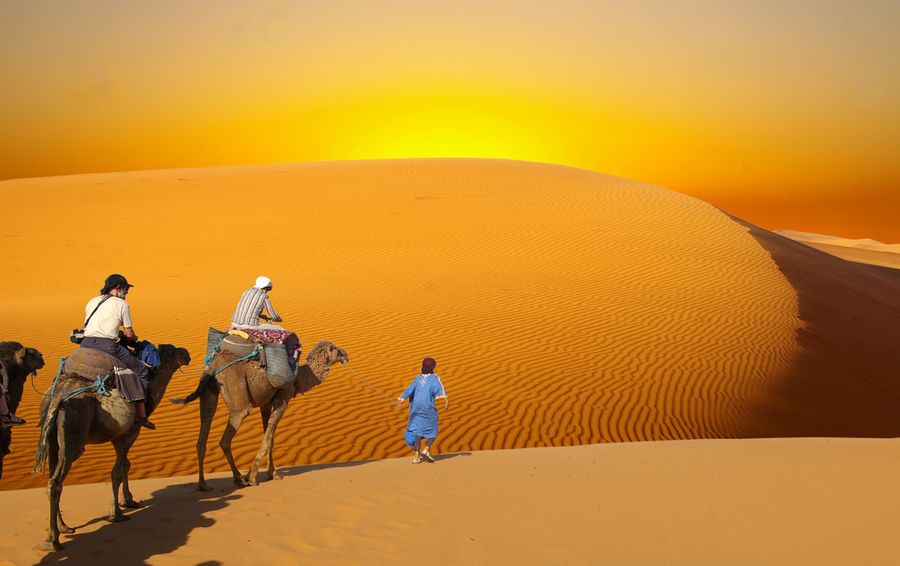
Few facts about modern construction appear more counterintuitive than this: Saudi Arabia, a nation covered by vast deserts and seemingly limitless sand, imports sand from abroad. The reason lies not in scarcity, but in geology.
Although the Arabian Peninsula contains immense quantities of sand, much of it is unsuitable for use in concrete, the fundamental material behind the Kingdom’s ambitious infrastructure programme. Years of wind erosion have left desert sand grains smooth, rounded and remarkably uniform characteristics that make them poorly suited to the demands of modern construction.
As a result, Saudi Arabia has increasingly relied on imports of construction-grade sand from countries such as Australia, whose geological conditions produce the rough, angular grains required for strong concrete.
According to trade data, Saudi Arabia imported approximately $140,000 worth of construction sand from Australia in 2023. While modest in monetary terms, the figure highlights a wider challenge confronting not only the Kingdom but much of the Gulf region: possessing abundant sand does not necessarily mean possessing usable sand.
Why desert sand is unsuitable for concrete
The distinction comes down to the shape of individual grains.
Construction engineers require sand that can bind effectively with cement. Sand sourced from rivers, lakes, glacial deposits and rock quarries typically contains angular particles with rough surfaces. These grains interlock when mixed into concrete, creating a strong and durable structure.
Desert sand behaves differently.
Over thousands of years, wind-driven collisions between airborne grains gradually wear away sharp edges. The result is sand that is smooth, rounded and highly polished. Under microscopic examination, such grains appear almost spherical. While aesthetically striking, these particles perform poorly in concrete mixtures.
Industry specialists often compare them to miniature ball bearings. Rather than locking together, the grains slide past one another, creating weaker bonds within the hardened concrete. This can leave microscopic voids throughout the structure, reducing durability and increasing the risk of cracking over time.
For small-scale construction, the limitations may sometimes be manageable. For skyscrapers, bridges and major infrastructure projects, engineers generally require stronger alternatives.
This has particular significance for Saudi Arabia, where projects such as the futuristic city of NEOM and the Red Sea Project demand enormous quantities of construction materials.
Importing the ‘right’ sand
To meet these requirements, Gulf states have increasingly sourced sand from regions where geological processes produce sharper and more angular grains.
Australia has emerged as one of the world’s leading suppliers. According to international trade data, the country exported approximately $273 million worth of sand in 2023, making it one of the largest exporters globally.
Its rivers, quarries and ancient geological formations generate sand ideally suited for concrete production, creating a supply chain that links Australian extraction sites with some of the Middle East’s largest construction projects.
What appears at first glance to be an economic oddity is, in reality, the predictable outcome of materials science. The challenge extends beyond Saudi Arabia.
The construction of landmark Gulf projects has long depended on imported or specially sourced sand. Reports have indicated that the construction of the Burj Khalifa required imported sand for portions of its concrete production because local desert sand lacked the necessary structural properties.
Similarly, the creation of the Palm Jumeirah involved the use of vast quantities of marine sand dredged from carefully selected locations where grain characteristics met engineering requirements.
Across the region, the pattern is largely the same: mega-projects require angular sand, while surrounding deserts provide predominantly rounded grains.
A growing global resource challenge
Saudi Arabia’s dependence on imported construction sand also reflects a broader international issue.
According to the United Nations Environment Programme (UNEP), the world now extracts approximately 50 billion tonnes of sand and gravel every year, making it the second most consumed natural resource after fresh water.
Global demand has increased dramatically over recent decades as urbanisation, infrastructure development and population growth have accelerated.
UNEP estimates that demand for construction sand could rise by as much as 45 per cent by 2060.
The organisation warns that many of the world’s most valuable sand reserves are concentrated in river systems, coastlines and seabeds, where extraction often causes environmental damage. Excessive mining has been linked to riverbank erosion, habitat destruction, disappearing beaches and ecological disruption in vulnerable coastal regions.
The challenge has become so significant that UNEP describes an emerging global “sand gap” a growing imbalance between demand and the availability of environmentally sustainable supplies.
Searching for alternatives
Faced with rising demand and environmental concerns, governments and construction companies are increasingly exploring alternatives.
One option is manufactured sand, produced by crushing rock into particles that mimic the angular characteristics required for concrete. Another is the recycling of demolished concrete and construction materials for reuse in new projects.
Saudi Arabia is investing in both approaches as part of its wider development strategy under Vision 2030. While alternative materials may reduce dependence on imports in the future, they do not alter the fundamental geological reality.
The Arabian deserts contain enormous quantities of sand, but not the type most modern builders need.
For a country building some of the world’s most ambitious cities and infrastructure projects, the challenge is not finding sand. It is finding the right sand.
SPONSORED
SPONSORED

SPONSORED

SPONSORED
