
Shari’ah And its Branches
Written by Alh. M. Ajibola Kaka Esq
Shari’ah is an arabic word meaning the path followed. Literally it means the way to a watering place. It is the path leading to Allah the most High and the path believed by all Muslims to be the path shown by Allah, the creator himself through His messenger, prophet Muhammad (SAW).
In Islam, Allah alone is the sovereign and it is He who has the right to ordain a path for the guidance of mankind thus, it is only Shari’ah that liberates man from servitude to other than Allah. The absolute knowledge, which is required to lay down a path for human life, is not possessed by any group of people. Thus the claim to perfection by man is a great sin.
Islam commands justice, Allah sent with His messenger three gifts which aim at rendering justice and guiding the entire human society to the path of peace. In Suratul Hadid. The Qur’an says:
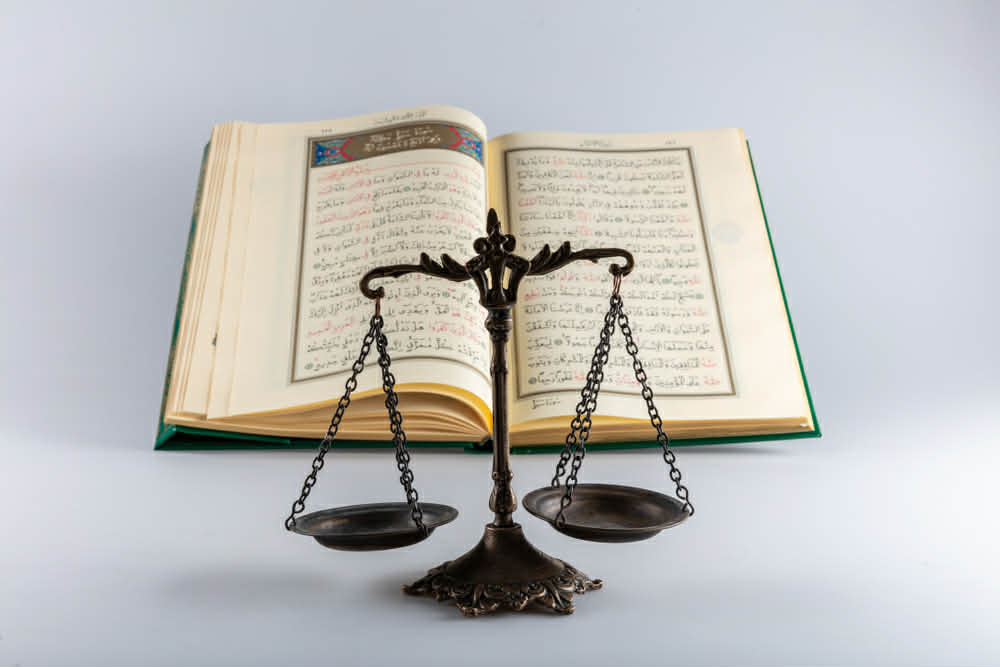
“We sent afore time our Messengers with clear signs and sent down with them the Book and the Balance of right and wrong, that men stand forth in justice” Q57:24
Justice is a comprehensive term and may include all the virtue of good behaviour. But the religion of Islam asks for something warmer and more human, the doing of good deeds even where perhaps they are not strictly demanded by Justice, such as returning good for evil or obliging those who in worldly language “have no claim” on you and of course the fulfilling of the claims of those whose claims are recognized in social life. Similarly the opposites are to be avoided. Everything that is recognized as shameful and everything that is really unjust and any inward rebellion against Allah’s law or our own conscience in its most sensitive form.
The Prophet of Allah is asked to tell the people to do justice as the creator of the nourisher and the cherisher of all has commanded it: “Say my Lord has commanded Justice.” “Allah commanded you to render back your trust to those to whom they are due. And when you judge between men, that you judge with justice.”
The Islamic Justice is something higher than the formal justice of Roman law or any other human law. It is even more penetrative than the subtler justice in the speculations of the Greek philosophers. It searches out the innermost motives, because we are to act as in the presence of Allah, to whom all things acts and motives are known.
Justice is Allah’s attribute and to stand firm in justice is to be a witness to Allah even if it is detrimental to our own interest or those who are near or dear to us.
In Shari’ah, therefore there is an explicit emphasis on the fact that Allah is the lawgiver and the whole Ummah, the nation of Islam, is merely His trustee. It is because of this principle that the Ummah enjoys a derivative rule – making power and not an absolute law-creating prerogative. The Islamic state, like the whole of what one might call Islamic political psychology view the Dar-al-Islam (Abode of Islam) as one vast homogenous common wealth of people who have a common goal and a common destiny and who are guided by a common ideology in all matters both spiritual and temporal. The entire Muslim Ummah lives under Shari’ah to which every member has to submit, with sovereignty belong to Allah alone.
The Sources of Shari’ah
The Qur’an: The First Primary Source of Shari’ah
The Holy Qur’an is the Book of Allah sent through the last of the Prophets, Muhammad (SAW). It contains the knowledge imparted by Allah and the guidance for men who are righteous for all time to come. It is a declaration of the truth and light to show the right path. It is the wise, the complete exhortation and the clear message. It is a rope of Allah by holding which individual and nation can achieve salvation. It is remedy for all the spiritual ailments of men. It is a constant reminder for all of us that Prophets will not come any more for our guidance. It acts as the criterion to choose between the truth and the falsehood.
The Sunnah: The Second Primary Source of Shari’ah In reality, the entire life of the Holy Prophet (SAW) whatever he did or said was according to the teachings of the Qur’an. Hence if all the events of his life and teachings are taken together with all the authentic Ahadith, we get a complete tafsir of the Qur’an put into practice by the Messenger of Allah himself, the bearer of the divine revelation.
The Secondary Sources of Shari’ah
Al-ljma
Apart from the Qur’an and the Sunnah, the two primary sources of the Shari’ah, there are two secondary sources, one of them is al-ijma. Ijma is the consensus of opinion of the companions of the prophet (Sahabah) and the agreement reached on the decision taken by the learned “Muftis” or the Jurists on various Islamic matters. Next to Ijma is Al-Qiyas; Analogical Deduction.
Al-Qiyas could be defined in Islamic theological parlance introduced in order to arrive at a logical conclusion of a contain law on a certain issue that has to do with the welfare of the Muslims. In exercising this power, however, it must be based on Qur’an, Sunnah and Ijma.
Istihsan or Istislah or Masalial-Mursal (Public Interest)
Public Interest is also regarded in Shari’ah as a basis of law. It should be noted that the concept of public welfare and several interest can really be helpful particularly in cases which are not regulated by any authority of the Book of Allah, the Sunnah or Ijma.
Of all the schools of thought, the Shafii School did not recognize public interest as a source of Shari’ah. According to Imam Shafi, if this is allowed, it can open the door to the unrestricted use of fallible human opinion since the public interest will vary from place to place and time to time.
SPONSORED

SPONSORED
