
Saudi Arabia Begins Annual Replacement of Holy Kaaba’s Kiswa
Specialist Saudi teams have begun preparations for the annual renewal of the Holy Kaaba’s silk covering, continuing a centuries-old Islamic tradition that combines meticulous craftsmanship with modern manufacturing techniques.
By Abdullahi Yusuf
Saudi Arabia has commenced preparations for the annual replacement of the Holy Kaaba’s Kiswa, the black silk covering that adorns Islam’s holiest sanctuary in Makkah, as authorities begin one of the most significant ceremonial and technical operations associated with the care of the Two Holy Mosques.
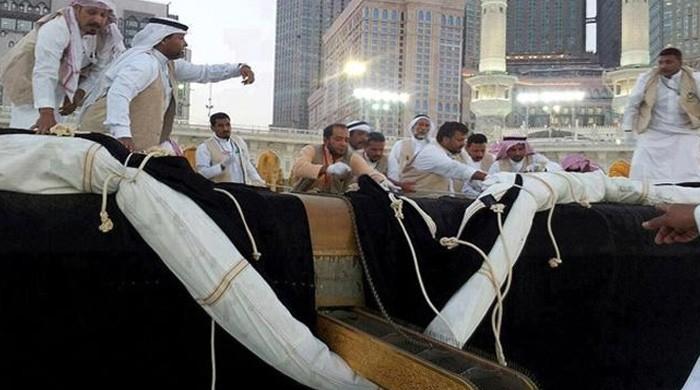
The process, overseen by the General Authority for the Care of the Affairs of the Grand Mosque and the Prophet’s Mosque through the King Abdulaziz Complex for the Holy Kaaba Kiswa, marks the start of the yearly tradition of renewing the sacred covering that envelops the Kaaba at the centre of the Grand Mosque.
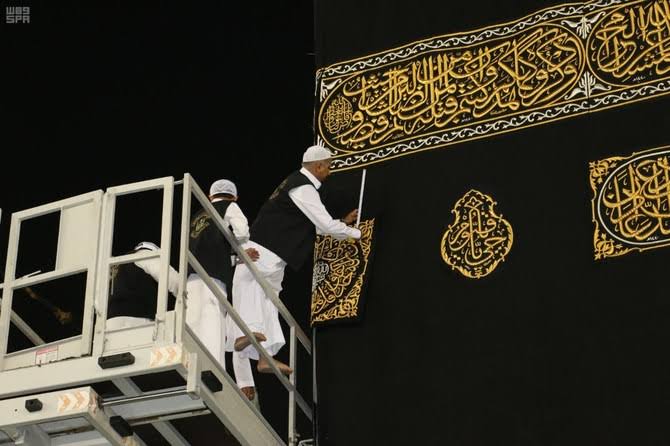
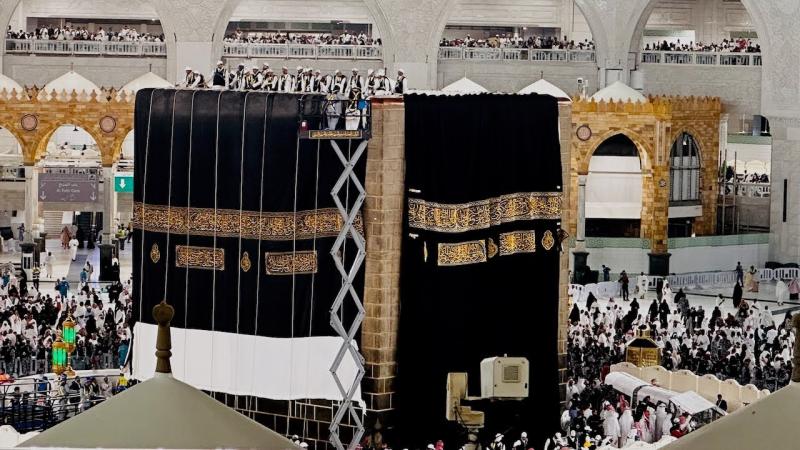
According to the Saudi Press Agency (SPA), preparatory work has already begun with the careful removal of the gold-embroidered ornaments, decorative elements, lamps and other embellishments attached to the current Kiswa. The curtain covering the Kaaba’s door is also being lowered as part of the established annual procedures preceding the installation of the new covering.
Saudi authorities said the replacement operation is being carried out through an integrated operational system designed to ensure precision, safety and adherence to the highest technical standards.
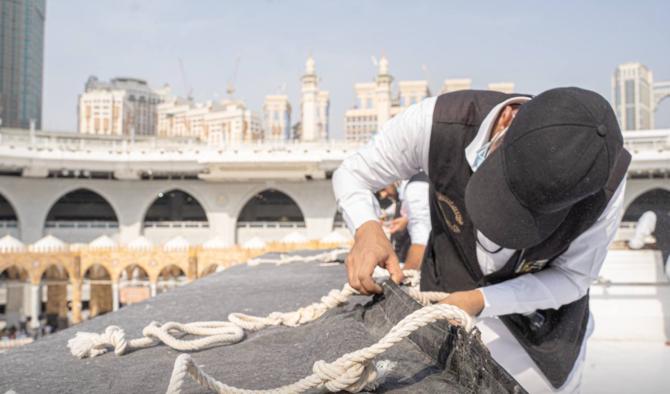
The newly completed Kiswa is being transported from the King Abdulaziz Complex to the Grand Mosque under the supervision of a specialised Saudi team responsible for raising the existing covering, removing its embroidered components and installing the new Kiswa in accordance with the annual tradition.
Behind the annual ceremony lies a highly sophisticated manufacturing process that combines traditional Islamic artistry with modern technology.
The production of the new Kiswa relies on carefully selected premium materials, including 825 kilograms of natural silk, 47 rolls of black silk for the exterior covering and 400 kilograms of raw cotton for the inner lining. The intricate Qur’anic inscriptions and decorative motifs are embroidered using 60 kilograms of pure silver and 120 kilograms of gold-plated silver threads.
Before entering production, every material undergoes extensive laboratory testing within the King Abdulaziz Complex to ensure compliance with strict quality standards and durability under varying climatic conditions.
During the printing stage, Qur’anic verses and Islamic decorative patterns are transferred onto the silk fabric before skilled craftsmen embroider them with gold and silver threads using advanced precision techniques developed specifically for the production of the sacred covering.
Despite technological advancements, hand weaving remains an essential element of the manufacturing process. Saudi artisans continue to produce specialised decorative pieces that require exceptional craftsmanship and precision, helping preserve the artistic heritage that has distinguished the Kiswa throughout its long history.
Once each stage of production has been completed, the embroidered sections are assembled to create the complete covering before it is prepared for installation on the Holy Kaaba.
Saudi officials said the manufacturing process consists of seven integrated stages: dyeing, machine weaving, laboratory testing, printing, embroidery, hand weaving and final assembly. Together, these stages combine premium materials with meticulous workmanship to produce a covering befitting the sanctity of the Holy Kaaba and the Grand Mosque.
The combination of premium materials, advanced technology and traditional craftsmanship is intended to ensure that the finished Kiswa reflects the sanctity of the Holy Kaaba and the significance of the Grand Mosque for Muslims around the world.
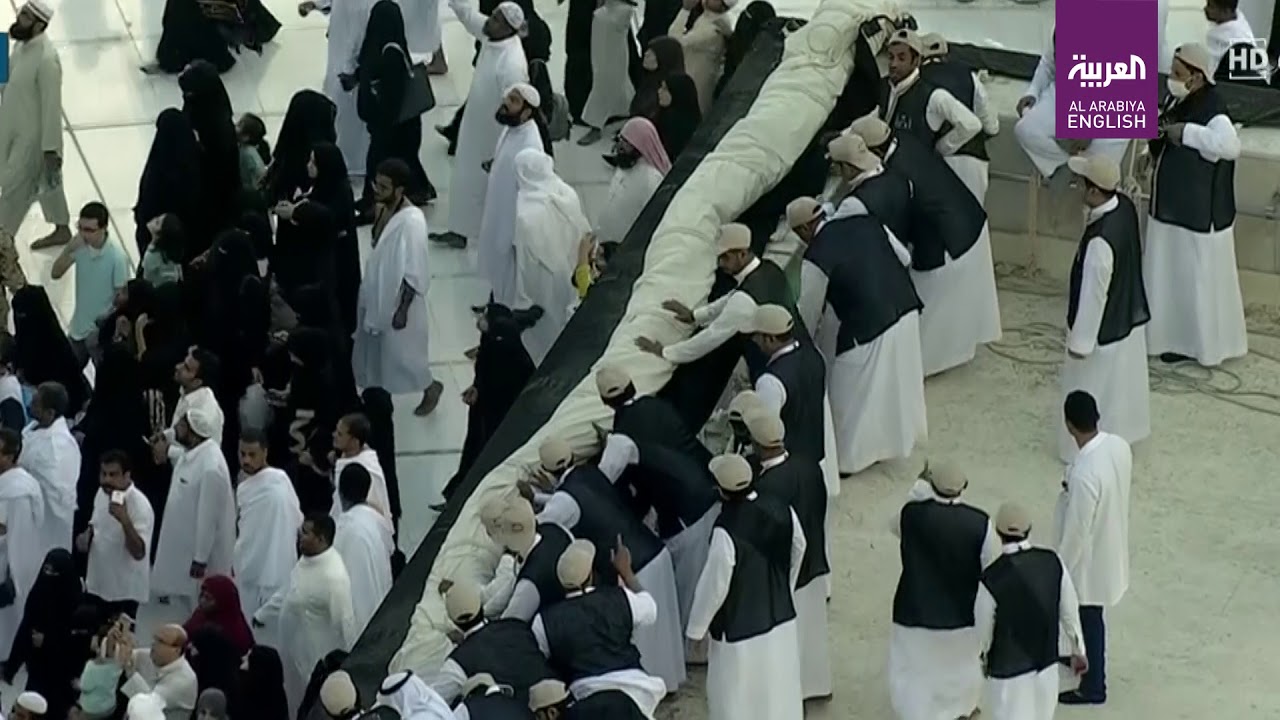
For more than a century, the annual replacement of the Kiswa has remained one of the Kingdom’s most enduring religious traditions, symbolising Saudi Arabia’s role as Custodian of the Two Holy Mosques and its continued commitment to preserving Islamic heritage.
The Kingdom continues to rely on national expertise and modern technologies in producing the sacred covering, maintaining a practice that stands as one of the most visible expressions of service to Islam’s holiest sanctuary and the millions of pilgrims who visit Makkah each year.
The information was released by the General Presidency for the Affairs of the Grand Mosque and the Prophet’s Mosque.
SPONSORED

SPONSORED

SONSORED
