
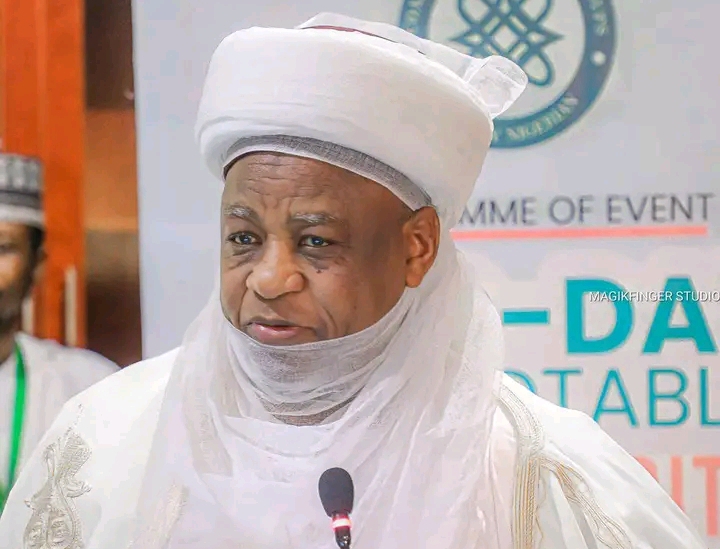
NSCIA Takes on UI, OAU, UNILAG Over Hijab, Demands Respect for Supreme Court Ruling
Council challenges attempts to redesignate public-origin schools as private, urges institutions to uphold Muslim women’s right to wear hijab
By Abdullahi Yusuf
The Nigerian Supreme Council for Islamic Affairs (NSCIA) has faulted the University of Ibadan (UI), Obafemi Awolowo University (OAU) and the University of Lagos (UNILAG) over what it described as hostile dispositions towards a Supreme Court judgment affirming the right to wear hijab in international schools.
The council also raised concern over what it described as attempts to redesignate the institutions’ international schools as private schools despite their public origins, urging the universities to remain law-abiding and uphold inclusive educational practices.
The position formed part of resolutions adopted at the NSCIA General Assembly held on Thursday, October 1, 2026, at the Abuja National Mosque under the theme, “Nigerian Muslims and the Imperative of Nation-building.”
The Assembly called for respect for the Supreme Court judgment and urged the affected institutions to comply with the ruling rather than pursue measures that could undermine its effect.
Beyond the university cases, the council called on government agencies and institutions to respect the right of Muslim female students, Muslim female members of the National Youth Service Corps, Muslim female security personnel and Muslim female staff to wear the hijab, describing the right as a fundamental human right.
The NSCIA’s resolution placed the issue within a broader call for the protection of religious rights and inclusion in Nigeria’s public institutions, particularly where Muslim women and girls are concerned.
The council also expressed satisfaction with a separate Supreme Court judgment upholding an appellate court decision in a case involving the prevention of mosque use by authorities of Rivers State University.
It called on the Rivers State Government and the university to implement the judgment without delay.
The Assembly’s position on the cases came alongside its call for greater adherence to law and institutional responsibility, with the council urging Nigerian Muslims to uphold their rights through lawful means.
The General Assembly was attended by prominent Emirs, Obas, Chief Imams, renowned Islamic scholars, leaders of major national Islamic organisations and delegates from the 36 states and the Federal Capital Territory.
The communiqué containing the resolutions was signed by the Sultan of Sokoto and President-General of the NSCIA, Alhaji Muhammad Sa’ad Abubakar, CFR, mni, and the Secretary-General, Prof Is-haq O. Oloyede.
SPONSORED

SPONSORED

SONSORED
