
NAHCON deploys all resources as Nigerian pilgrims demount Arafat for other rites
1,707,301 pilgrims descend from Mount Arafat
By Abdullahi Yusuf
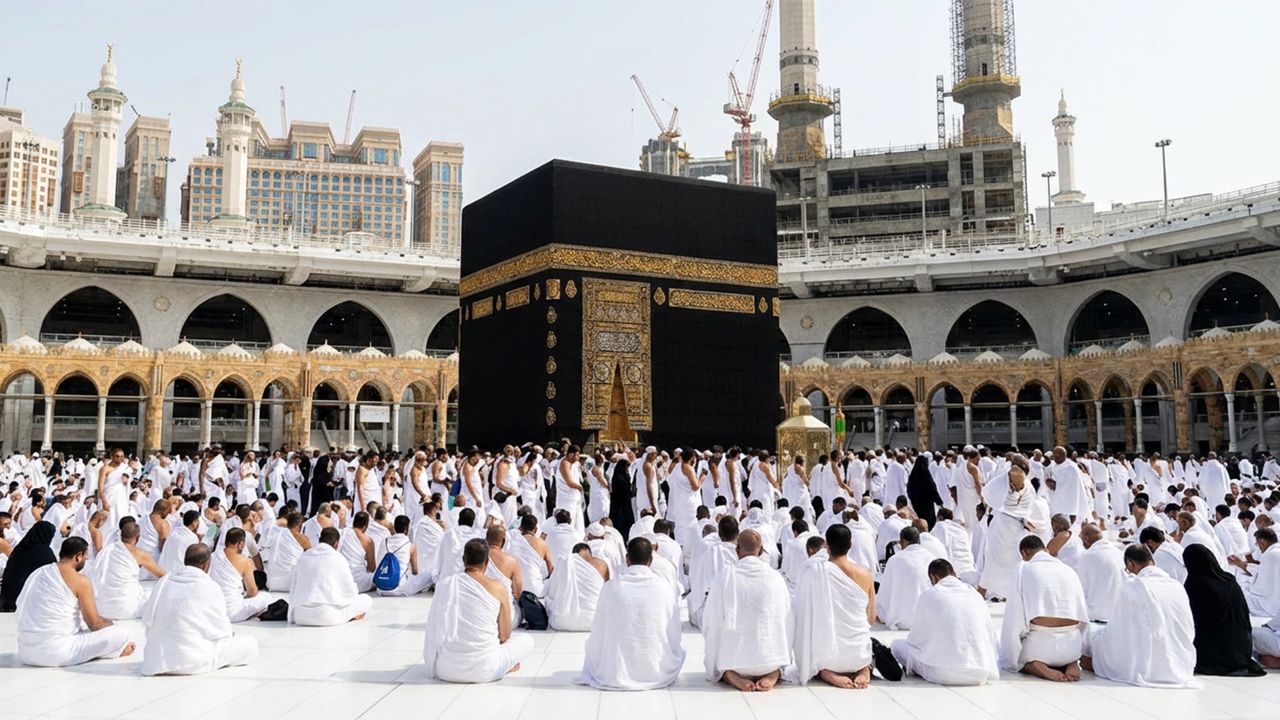
Saudi Arabia says a total of 1,707,301 pilgrims performed the 2026 Hajj, according to figures released by the General Authority for Statistics (General Authority for Statistics (GASTAT)), marking another major annual gathering in Mecca as the Kingdom continues to manage one of the world’s largest recurring religious mass movements.
The official breakdown shows 1,546,655 pilgrims arrived from outside Saudi Arabia, while 160,646 were domestic participants. Authorities say the figure represents a slight increase on last year’s reported total of 1,673,230 pilgrims, reflecting what officials describe as steady recovery and operational normalisation in the post-restriction era.
The Hajj, one of the five pillars of Islam, draws Muslims from across the world to perform a tightly scheduled set of rituals in and around Mecca over several days. Managing the influx of more than 1.7 million people requires extensive coordination across transport, security, health services, and accommodation systems.
Saudi authorities have in recent years expanded infrastructure and crowd-management systems in an effort to reduce congestion and improve safety, particularly during peak rituals such as the stoning of the Jamarat in Mina and the mass gatherings in Arafat.
While the Kingdom highlights logistical success and growing international participation, the scale of the pilgrimage continues to underscore the political and administrative sensitivities surrounding access, quotas, and cross-border travel arrangements for Muslim-majority countries.
Nigeria, the National Hajj Commission of Nigeria (National Hajj Commission of Nigeria (NAHCON)) says it has deployed what it describes as “all available resources” to ensure Nigerian pilgrims receive improved welfare and coordination during this year’s Hajj operations.
According to internal directives cited within the commission, senior officers at Level 12 and above were instructed to step back from performing personal Hajj rites for the season and instead dedicate themselves fully to operational and welfare duties for pilgrims.
The directive positions experienced staff as on-ground supervisors, often described within NAHCON’s operational structure as “shepherds” of pilgrims, responsible for movement coordination, accommodation oversight, and emergency response across key ritual sites.
Officials say the intention is to reduce logistical gaps during peak movement periods, particularly in the Mashaʿir areas Mina, Muzdalifah and Arafat, where large-scale crowd concentration requires tight supervision and rapid response capability.
The commission maintains that the strategy is aimed at ensuring a “hitch-free exercise” for Nigerian pilgrims, with senior personnel prioritised for service delivery rather than personal participation in rituals.
The 2026 figures once again highlight the scale of modern Hajj management, where religious devotion intersects with high-level state coordination and international logistics. With more than 1.7 million participants converging on a single location within days, even minor disruptions can have significant operational consequences.
Saudi authorities continue to present the pilgrimage as a model of large-scale crowd control and infrastructure planning, while participating countries deploy their own national systems to manage travel groups, welfare services, and medical support for citizens abroad.
SPONSORED

SPONSORED

SONSORED
