
Muslims Have Been Part of America Since Its Earliest History, Historic Mosques Show
As the United States marks 250 years of independence, some of the country’s oldest mosques are challenging one of the most enduring misconceptions about Islam in America, that Muslims are newcomers rather than part of the nation’s historical fabric.
By Abdullahi Yusuf
The country turns 250 today, and the fireworks will carry the familiar story of who America belongs to and who only just arrived.
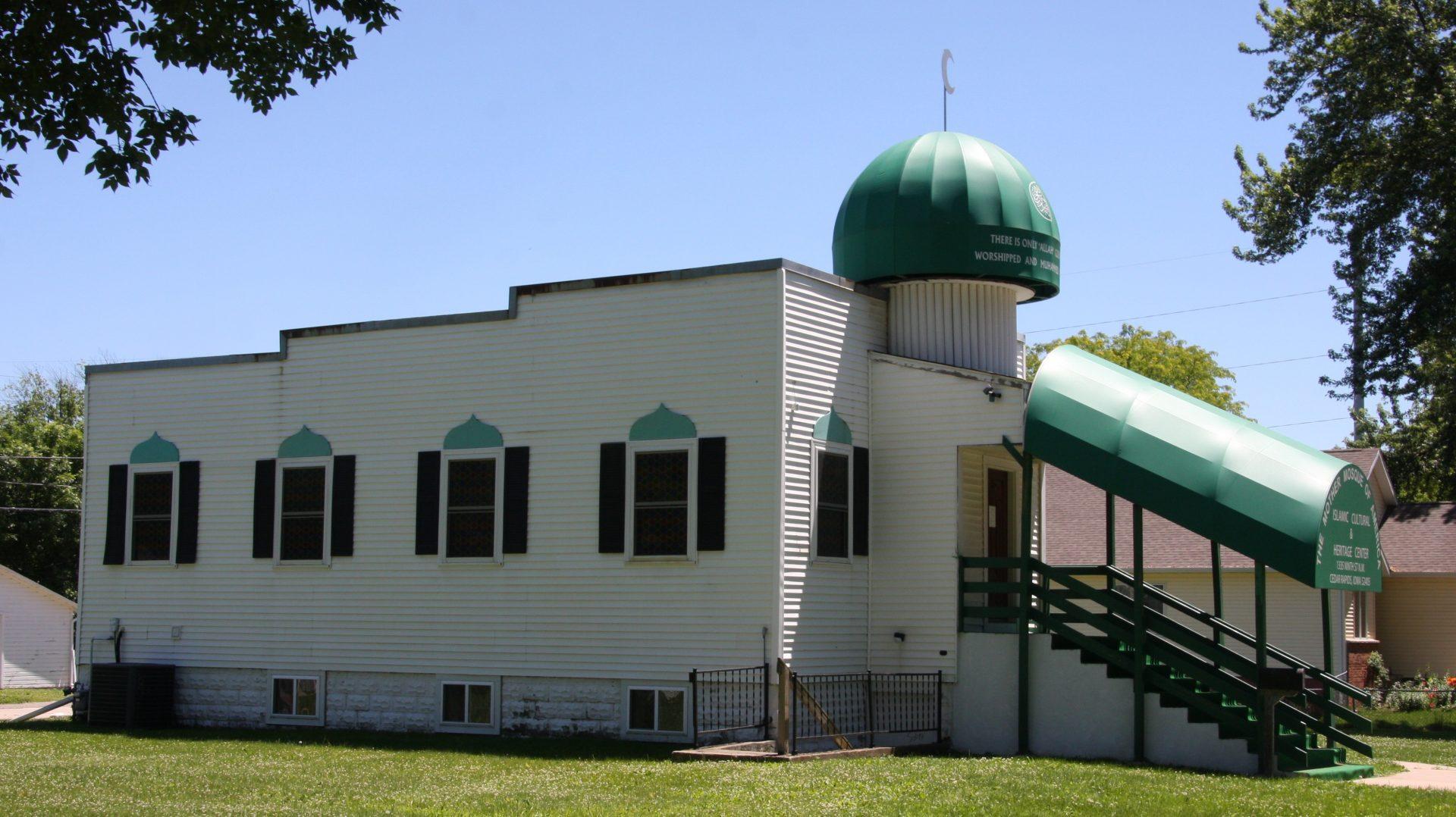
On a residential street in Cedar Rapids, flanked by ordinary houses, stands a modest one-story building that looks more like an old prairie schoolhouse than a landmark. It has no grand dome, no towering minaret.
Yet it is one of the deepest roots American Islam has put down: the Mother Mosque of America, widely regarded as the oldest surviving mosque built from the ground up in North America.
Its cornerstone was laid nearly a century before this anniversary, and its story is, in almost every detail, an American one.
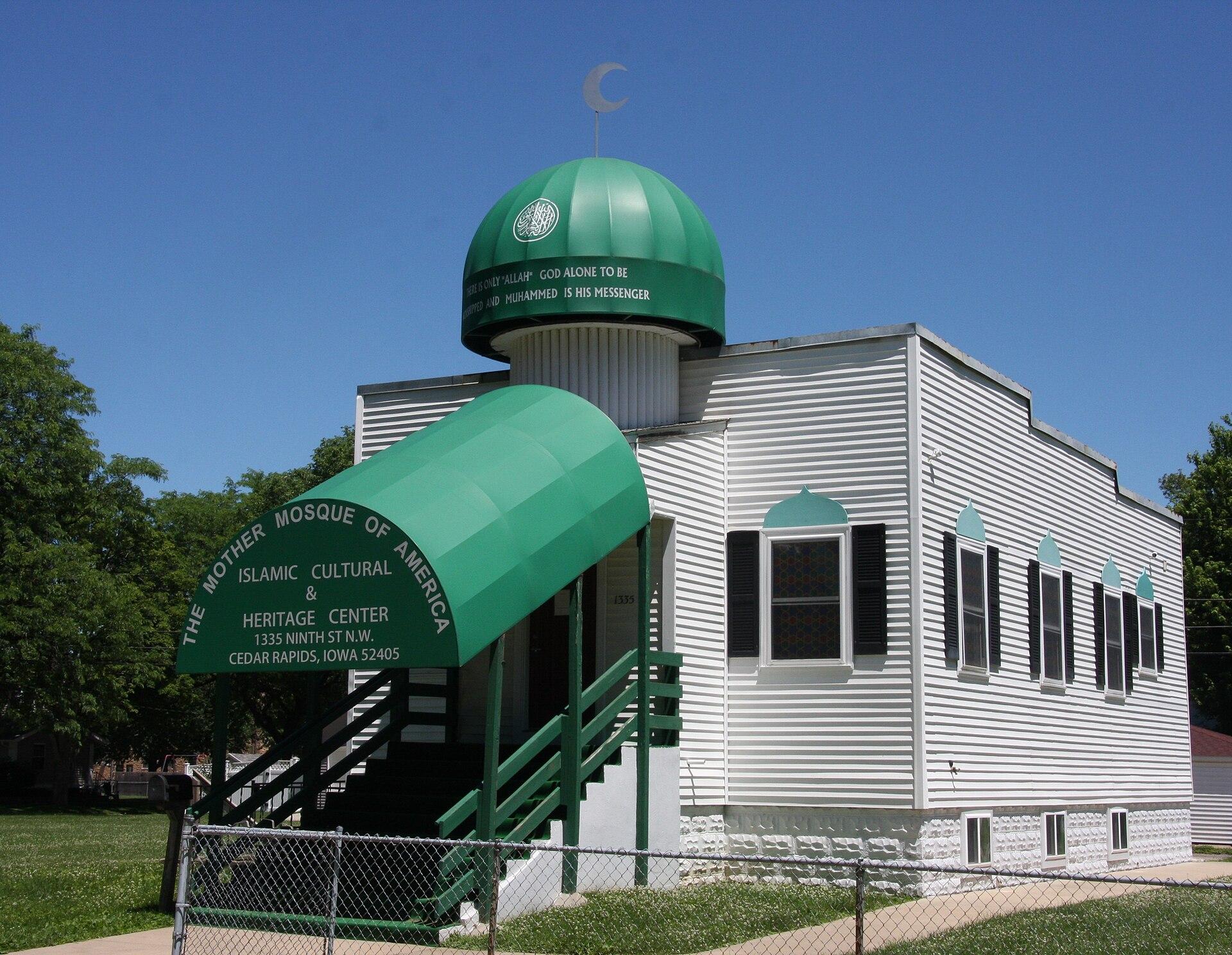
By the 1890s, Muslim immigrants most from what was then Ottoman Greater Syria, in today’s Lebanon and Syria, had begun settling in Cedar Rapids, drawn by farmland and a chance at a good life.
They worked as peddlers and shopkeepers. They opened grocery stores and gas stations. For years they prayed in rented halls and living rooms. Then, at the close of the 1920s, a group of young men decided their faith deserved a house of its own.
They chose the worst possible moment. The Great Depression descended just as construction began, and so the community built much of the mosque with their own hands.
It opened its doors in 1934. The neighbors helped: Cedar Rapids’ Christian Arab community pitched in on the mosque, returning a favor from years earlier, when Muslim families had helped build the local Orthodox church.
Two communities, side by side, raising each other’s houses of worship, an image of coexistence that feels almost improbable today.
The congregation that gathered in that little building went on to shape Muslim life across the country.
Its members helped establish one of the first Muslim national cemeteries, in 1948, and one of them, a World War II veteran, pushed the U.S. military to formally recognize Islam so that Muslim service members would no longer be buried as though they had no faith at all.
When the community outgrew the building in the 1970s, it was nearly lost, sold off, neglected, left to decay before local Muslims bought it back, restored it, and won it a place on the National Register of Historic Places.
A contested crown
Call it the “oldest mosque in America,” though, and you invite an argument and the argument is the point.
The title is genuinely contested, and the reason it is contested is that the roots are older and more scattered than a single building can hold.
Out near the Canadian border in Ross, North Dakota, Syrian and Lebanese homesteaders were gathering for Friday prayers by the early twentieth century and raised a mosque of their own around 1929.
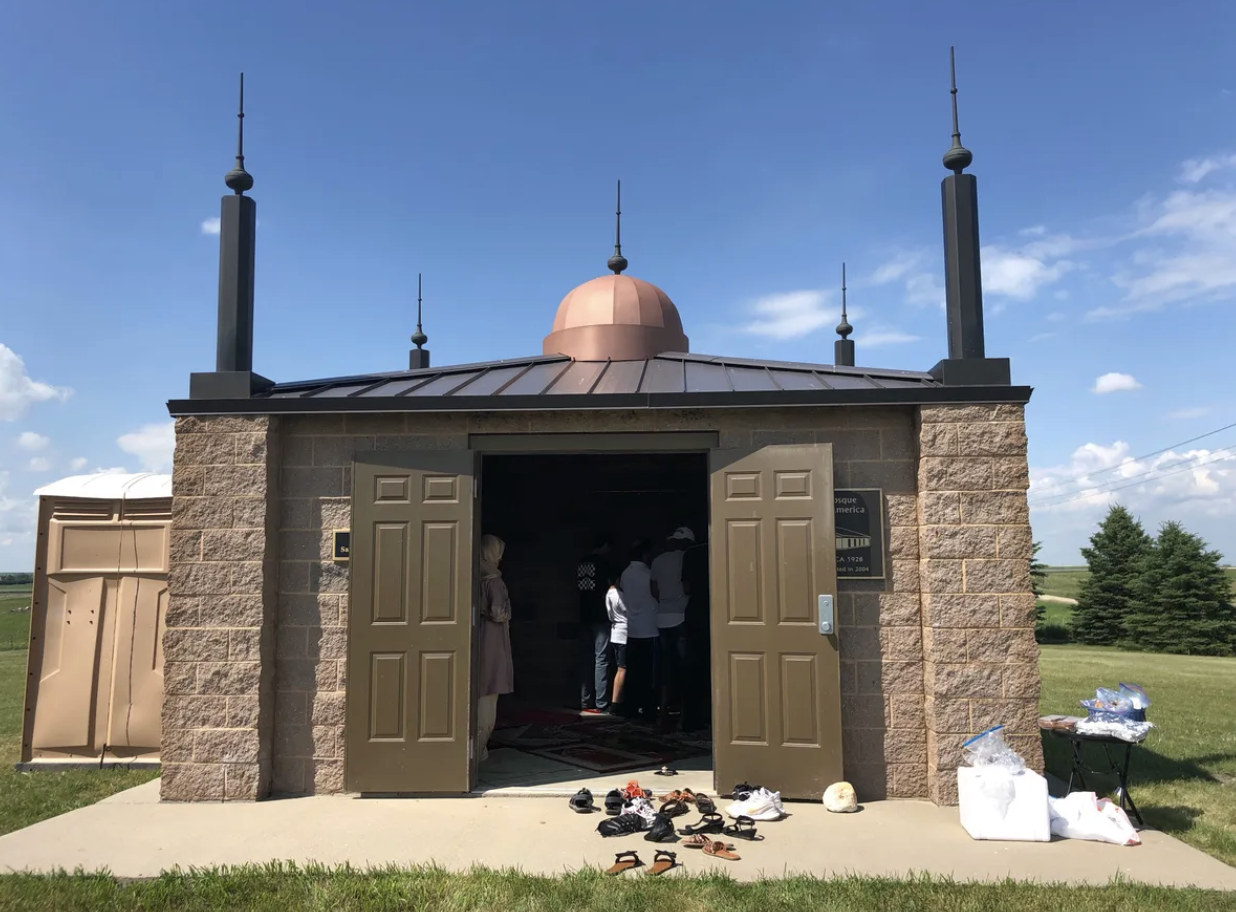

That plain structure eventually fell to ruin and was torn down, but in 2005 their descendants built a small commemorative mosque on the site, complete with a tiny copper dome, so the place would not be forgotten.
Historians point to still earlier communal prayers and gathering spaces in Biddeford, Maine, and to a purpose-built mosque in Highland Park, Michigan, that served autoworkers in the early 1920s before it was sold.
Each community has a claim; each claim is a reminder that Muslims were quietly weaving themselves into small-town and industrial America a hundred years ago.
And the story runs deeper still.
The first documented Muslim to set foot in what is now the United States was not an immigrant at all but Estevanico, a North African who arrived with a Spanish expedition in 1527.

Among the enslaved Africans brought to these shores in the centuries that followed were tens of thousands of Muslims, some of whom kept their faith alive in secret, praying in small groups long before any mosque was permitted to exist.
Islam did not arrive in America; it was here at the founding, in chains.
Two rivers, one country
That older thread surfaces again in the nation’s capital.
Masjid Muhammad in Washington, D.C., began in 1960 as a Nation of Islam center — organized with help from Malcolm X — and is widely remembered as the first mosque in the capital built by the descendants of enslaved African Americans.
In the 1970s it moved into mainstream Sunni practice, reoriented its prayers toward Mecca, and became part of the broad current of Black American Islam that grew alongside the immigrant one.

The two rivers ran through the twentieth century side by side.
In Dearborn, Michigan home to one of the country’s largest Muslim populations, a mosque that grew from a house of Lebanese autoworkers in the 1930s became, in the 1980s, the first in America permitted to broadcast the call to prayer aloud over loudspeakers.
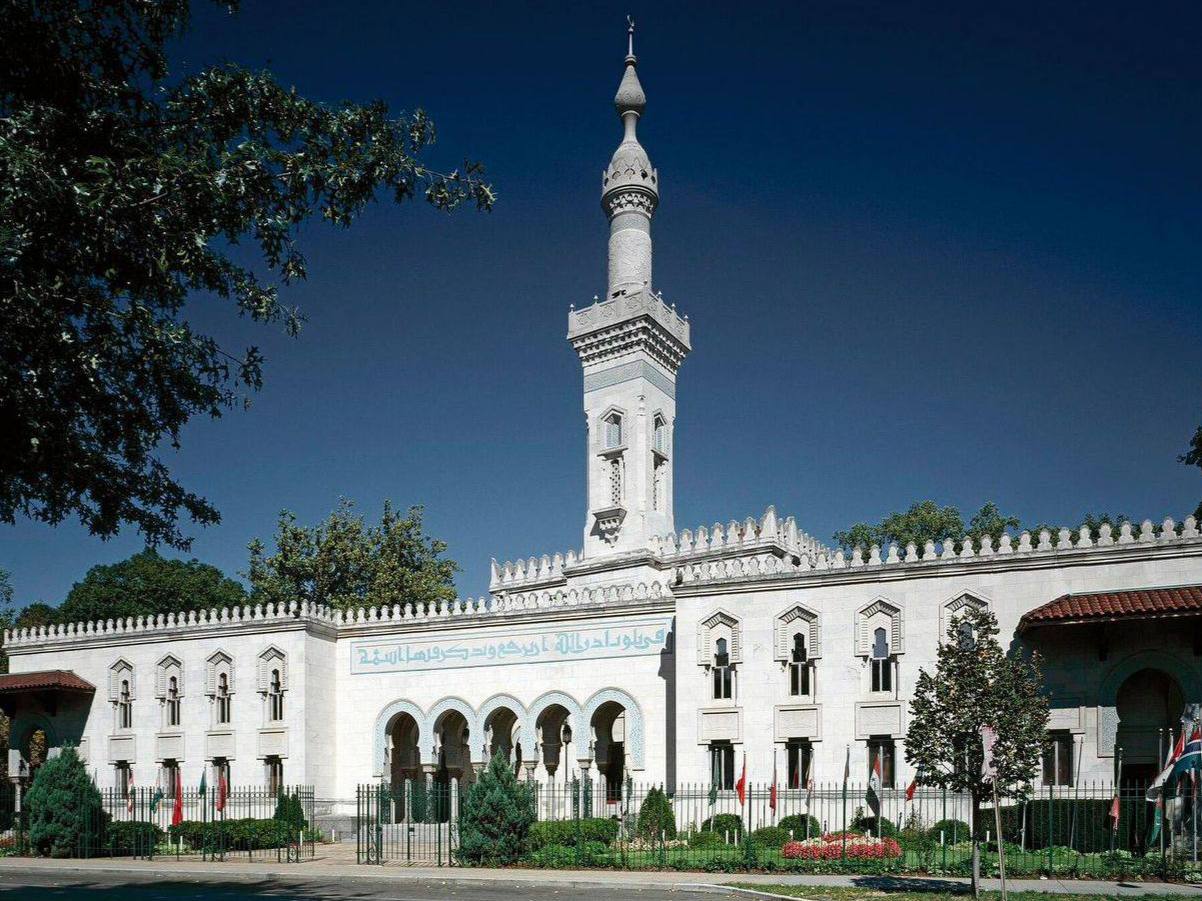
In 1952, the Islamic Center of Washington opened its Mamluk-styled doors; at its dedication, President Dwight Eisenhower praised it as one of the capital’s most beautiful buildings and affirmed the place of Muslims in American life.

A mosque made of American earth
Nowhere is that rootedness more literal than on a mesa above the Chama River in northern New Mexico.
There, near the old Pueblo village of Abiquiu, stands Dar al-Islam, a mosque raised not from imported stone but from adobe, the sun-dried earth of the American Southwest.
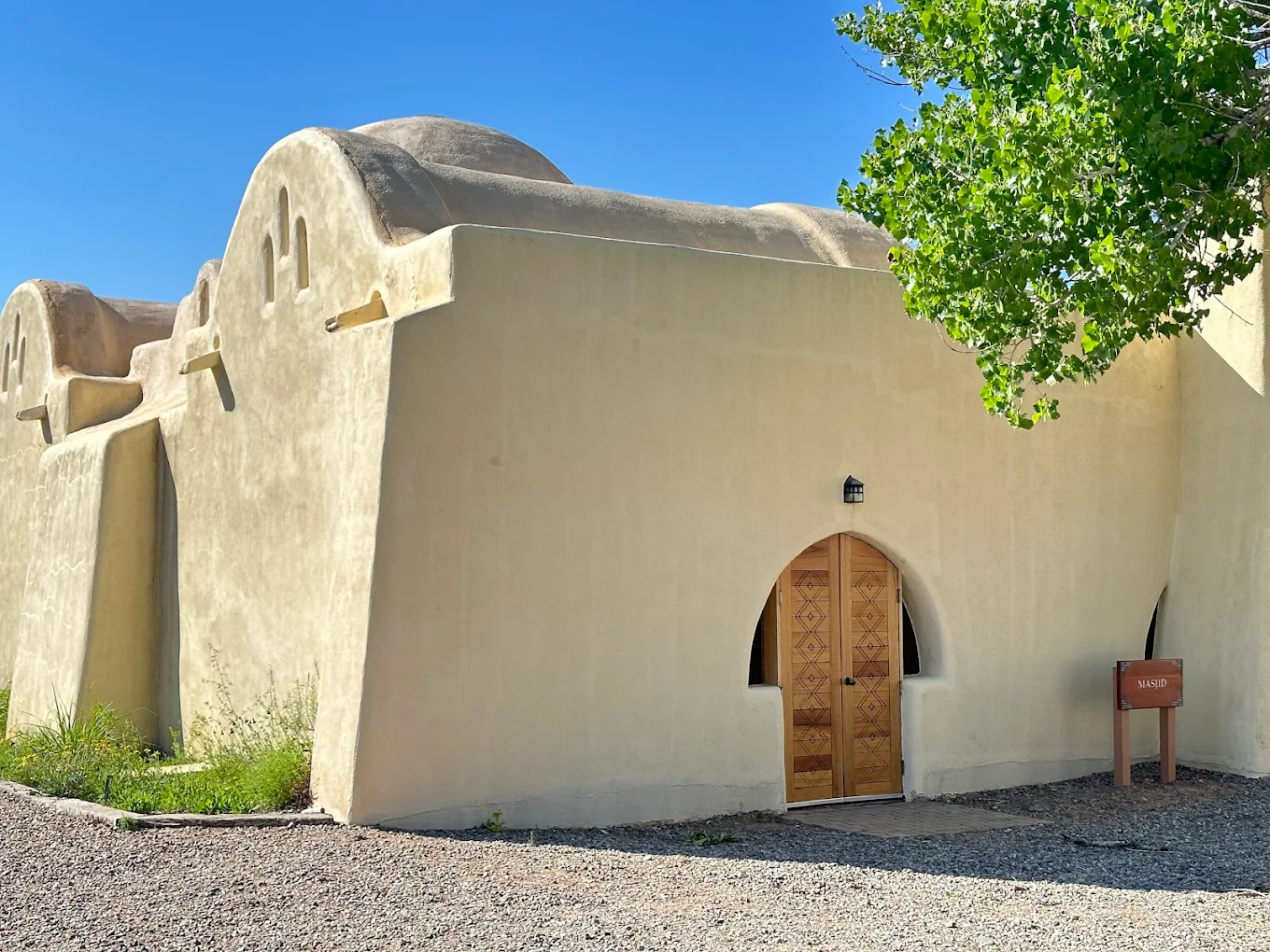
Founded in 1979 as the country’s first planned Islamic community, Dar al-Islam turned to the renowned Egyptian architect Hassan Fathy, who arrived from Cairo with two Nubian master masons and, between 1980 and 1982, built a mosque of mud-brick domes and vaults without a scrap of timber or steel.
It was Fathy’s only work in the Western Hemisphere, and among his last.
The choice of New Mexico was deliberate. The region’s adobe tradition, practiced by Pueblo peoples and Hispano settlers for centuries, traces back — by way of Moorish Spain — to North Africa.

In shaping an Islamic house of worship from Southwestern earth, Fathy’s team was, in a sense, returning those building techniques to their roots. Muslim and non-Muslim volunteers of every background — Black and white converts, Arab and South Asian Americans, and local Hispano and Pueblo builders — mixed the mortar and molded the bricks side by side.
The result belongs to its landscape as fully as any adobe church or pueblo house: a mosque made, quite literally, of America.
What the buildings say
There are close to 3,000 mosques in the United States today, most of them built in the last few decades by a community that has grown and diversified beyond anything those first worshippers could have imagined.
But the old ones, the schoolhouse in Cedar Rapids, the little copper dome on the North Dakota plains, the restored temple in Washington, carry a weight the new ones can’t.
On this 250th Fourth of July, when the country tells itself the story of who belongs here and who is new, these buildings answer in wood and brick. Two and a half centuries in, the answer they give is that Muslims did not arrive yesterday.
They cleared farmland, staffed factories, buried their dead in American ground, sent their sons to American wars, and raised their houses of worship in the teeth of the Depression, often with their Christian neighbors lending a hand.
The roots are already here, sunk deep, older than the fireworks suggest.
With additional information from MNTV
SPONSORED

SPONSORED

SONSORED
