
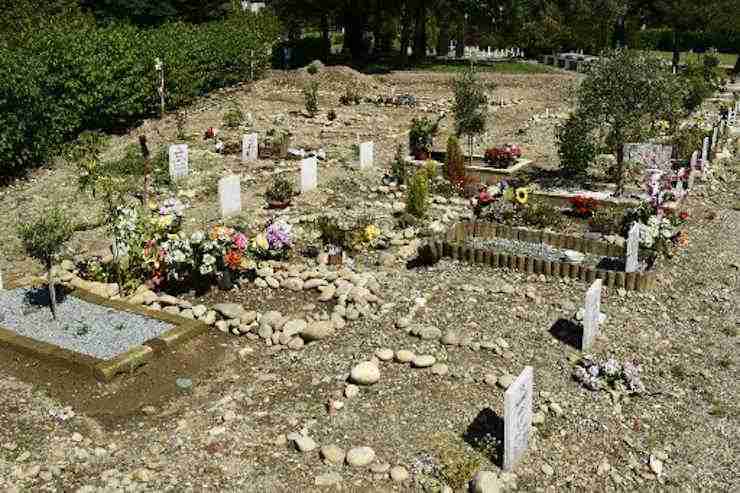
Japan’s Muslims Struggle for a Place to Bury Their Dead
Growing resistance to Islamic cemeteries exposes wider tensions over immigration, identity and belonging in Japan
By Abdullahi Yusuf
Japan is facing growing scrutiny over the treatment of its Muslim residents as an increasing number of families struggle to find places to bury their dead according to Islamic tradition, exposing deeper national tensions surrounding immigration, religion and social acceptance.
Although burial is legal in Japan, access to cemeteries that permit Islamic rites remains severely limited, creating what critics describe as a silent but significant crisis for the country’s expanding Muslim population.
As more foreign workers, students and long-term residents settle in Japan, many Muslim families are discovering that fulfilling one of the most fundamental obligations of their faith has become increasingly difficult.
According to reports by Unseen Japan, fewer than a dozen cemeteries nationwide currently accommodate Muslim burials, with none located west of the Chūgoku region, despite large concentrations of foreign Muslim workers and their families living in areas such as Kansai and Kyushu.
For Muslims, burial is not regarded as a cultural preference but a religious duty. Islamic tradition requires the deceased to be washed, wrapped in a simple white shroud and buried as quickly as possible, usually within 24 hours of death.
In many cases, however, grieving families are forced to transport bodies across long distances within Japan in search of suitable burial grounds. Others are compelled to repatriate their loved ones overseas at considerable financial cost.
What should ordinarily be a private moment of mourning has increasingly become a logistical, emotional and economic burden.
The issue has now become part of a broader national debate over Japan’s changing demographics and its uneasy relationship with immigration.
Facing labour shortages and an ageing population, Japan has steadily expanded its foreign workforce over the past decade. By the end of 2024, the number of foreign workers in the country had reached approximately 2.3 million, nearly triple the figure recorded ten years earlier.
A substantial proportion of those workers come from Muslim-majority countries, particularly Indonesia.
In response to the growing concerns, the Japanese government began surveying burial practices earlier this year. Since January 2026, authorities have asked 129 prefectures and major cities to provide information on cemetery regulations and whether local facilities are capable of accommodating burials.
The survey forms part of wider government efforts to manage the country’s expanding foreign resident population.
Yet attempts to establish dedicated Muslim burial grounds have repeatedly encountered resistance from local communities.
One of the most prominent disputes emerged in Hiji, where plans to establish a Muslim cemetery generated national controversy.
A local Islamic association had secured an agreement to purchase municipal land for the project, reportedly with support from nearby residents. The proposed cemetery included strict limits on the number of burial plots, restrictions governing who could be buried there and environmental safeguards such as groundwater testing.
Despite those measures, opposition soon intensified.
Some residents in neighbouring communities expressed fears about possible contamination of local water sources, while others submitted complaints containing discriminatory language. Legal experts warned that parts of the backlash could amount to hate speech.
The debate also fuelled wider anti-Muslim rhetoric online and in local political discourse, including claims that Muslim residents should return deceased relatives to their countries of origin rather than seek burial in Japan.
Critics argue such arguments ignore the reality that many Muslims in Japan are permanent residents, while some are Japanese citizens themselves.
The controversy soon entered local politics.
During a mayoral election in 2024, a candidate opposed to the cemetery project defeated the incumbent mayor by a significant margin. Shortly after taking office, the new mayor halted the planned land sale, effectively bringing the project to an end.
A similar dispute later unfolded in Sakuragawa, where a Buddhist-affiliated religious organisation had sought permission to establish a burial site intended for Muslim use in cooperation with Islamic groups.
Following objections from local residents, including complaints that the community had not been adequately consulted, the organisation eventually withdrew its application.
Together, the two cases illustrate what many observers describe as a recurring national pattern: even where Islamic burial is legally permitted and organisers attempt to address local concerns, projects frequently collapse under political pressure, public opposition or misinformation campaigns before construction can begin.
SPONSORED

SPONSORED

SONSORED
