
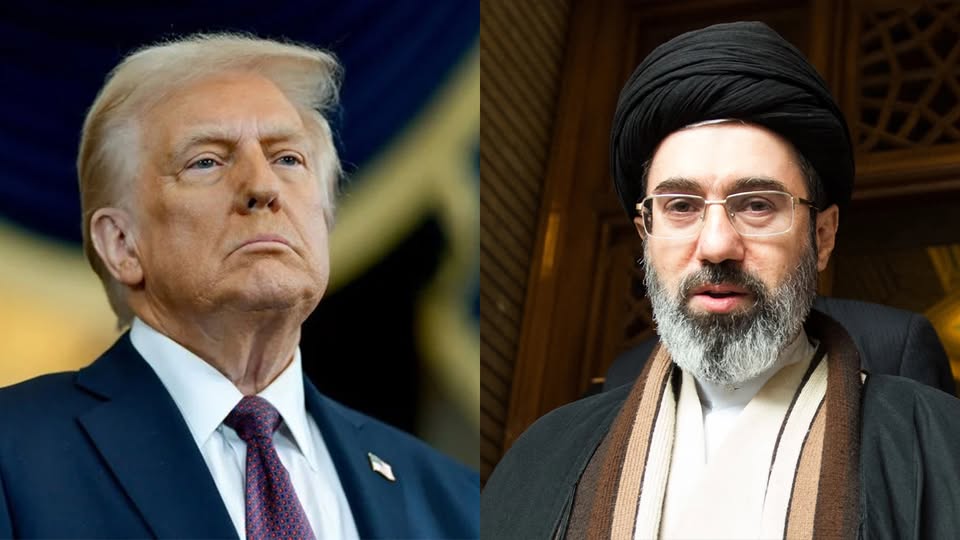
Iran Accuses U.S. of Pushing ‘Unreasonable Demands’ Over War Proposal
Tehran says its response to Washington’s peace offer was “reasonable and generous” as tensions widen across the Gulf and beyond
By Abdullahi Yusuf
Iran has accused the United States of pursuing “unreasonable demands” shaped by Israeli influence, deepening an already fraught diplomatic standoff over efforts to end the escalating conflict in West Asia.
Speaking during his weekly press briefing on Monday, Iranian Foreign Ministry spokesman Esmail Baghaei defended Tehran’s latest proposal to Washington as a measured attempt to restore regional stability, while criticising the U.S. administration for rejecting it outright.
The remarks came after U.S. President Donald Trump reportedly dismissed Iran’s official response as “completely unacceptable” following discussions with Israeli Prime Minister Benjamin Netanyahu.
Iran formally submitted its response to the American proposal on Sunday through Pakistan, which has been acting as an intermediary in efforts to prevent further escalation between Tehran and Washington.
Baghaei insisted Iran had not sought excessive concessions and said Tehran’s demands reflected only what it regarded as its legitimate national rights.
“We did not demand any concessions. The only thing we have demanded is Iran’s legitimate rights,” he said.
Among Iran’s conditions are an end to the war in the region, a halt to attacks targeting Iranian shipping and the release of frozen Iranian assets held abroad.
Baghaei questioned why such demands were being portrayed by Washington as unreasonable, arguing that Tehran’s proposals were aimed at securing stability not only for Iran but for the wider international community.
“Is our proposal for safe passage through the Strait of Hormuz unreasonable? Is establishing peace and security across the entire region irresponsible?” he asked.
The Iranian spokesman accused the United States of refusing to seriously engage with Tehran’s position and claimed Washington continued to pursue policies shaped by what he described as “the mindset of the Israeli regime.”
The latest exchange highlights the widening gulf between the two countries as regional tensions continue to intensify following months of military confrontation involving Iran, Israel and the United States.
Tehran has repeatedly maintained that any negotiations at this stage will focus exclusively on ending what Iranian officials describe as an “imposed war” in the region.
Baghaei also rejected longstanding American accusations against Iran, portraying the Islamic Republic as a responsible regional actor resisting foreign intimidation.
“It is enough to look at Iran’s record,” he said. “Were we the ones who deployed troops? Are we the ones bullying countries in the Western Hemisphere? Were we the ones who committed assassinations twice during negotiations?”
He argued that the continued U.S. military presence in the region had itself fuelled instability and contributed to an ongoing cycle of violence across West Asia.
The spokesman also sought to underline Iran’s growing strategic ties with China, saying Tehran remained in close consultation with Beijing over the evolving crisis.
He confirmed that Iranian Foreign Minister Abbas Araghchi had recently travelled to China and said Chinese officials were fully informed of Tehran’s position regarding the conflict.
According to Baghaei, Beijing views the actions of the United States and Israel against Iran as part of a broader pattern of increasing unilateralism by Washington.
“Security in the Persian Gulf and West Asia is as important to China as it is to us,” he said.
Baghaei also issued a warning to European governments amid reports that some European states could deploy naval assets to the Gulf region in response to growing instability around the Strait of Hormuz.
“We have conveyed very clearly that Europe should not allow the temptations of the U.S. and the Israeli regime to unintentionally drag them into a crisis from which they will gain nothing,” he said.
Instead, he urged countries concerned about international security to pressure what he described as the party responsible for disrupting navigation in the Strait of Hormuz.
In a separate development, Baghaei condemned Bahrain over reports that authorities had revoked the citizenship of individuals accused of sympathising with Iran.
He described the move as “a flagrant violation of human rights” and condemned the practice of stripping citizenship as “a medieval punishment” incompatible with basic human dignity.
“We have clearly stated our positions in line with respecting human dignity, and Bahrain’s actions are against human rights,” he said.
The remarks come as fears continue to grow over the possibility of a broader regional confrontation, with diplomatic efforts increasingly strained and tensions around the Gulf showing little sign of easing.
...........................................
SPONSORED

SPONSORED

SONSORED
