
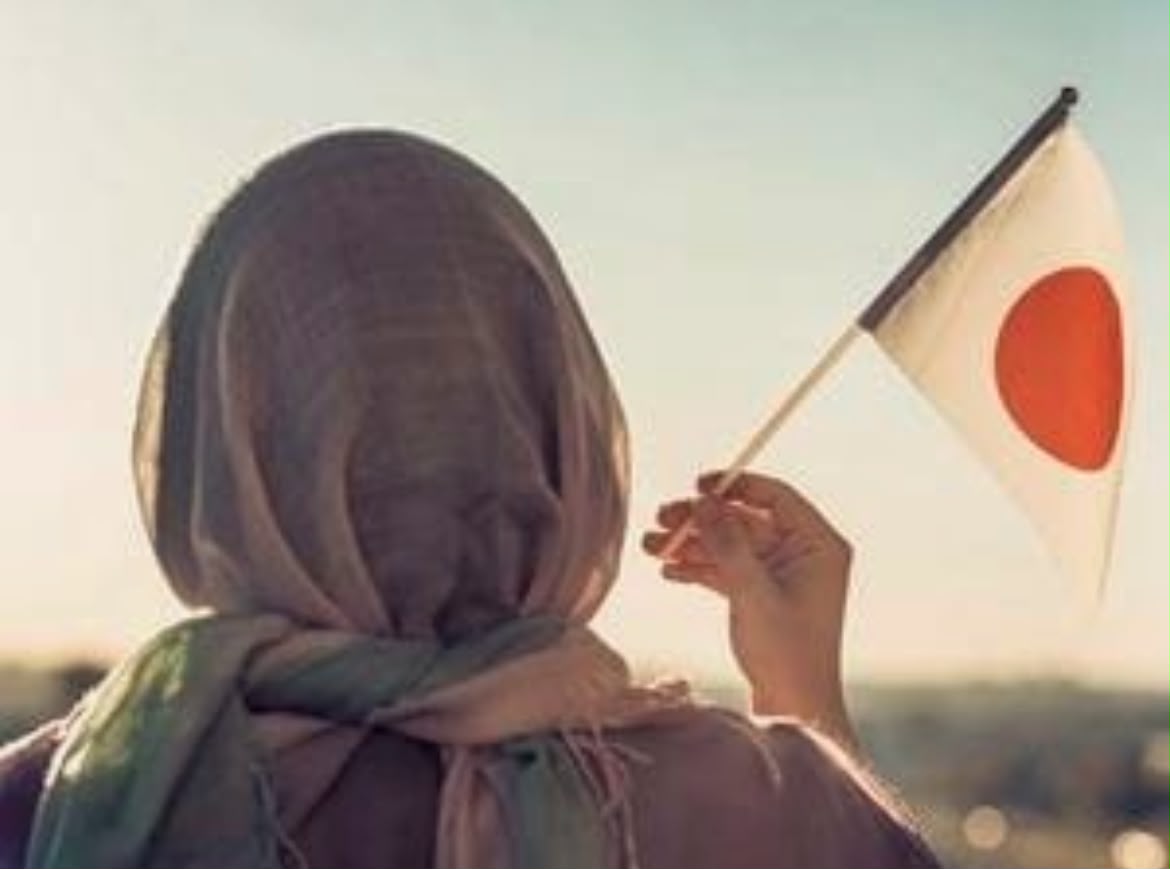
Japan’s Muslims Fear Growing Intolerance
Community leaders and researchers say online misinformation and hate speech are fuelling a rise in anti-Muslim hostility as Japan’s Muslim population reaches record levels.
By Abdullahi Yusuf
A growing number of Muslims in Japan say they are facing increasing hostility, with community leaders and researchers warning that anti-Muslim sentiment is becoming more visible both online and in public life, raising concerns about discrimination and social cohesion in a country long regarded as relatively safe and orderly.
The concerns come as Japan’s Muslim population has expanded significantly in recent years, driven by immigration, international students, foreign workers and a small but growing number of Japanese converts to Islam.
According to Hirofumi Tanada, Professor Emeritus at Waseda University and a leading researcher on Islam in Japan, the country’s Muslim population stood at approximately 420,000 by the end of 2024, compared with about 230,000 in 2019. The number of mosques nationwide has also increased, with more than 160 now operating across the country.
Community members say that growth has coincided with a sharp rise in anti-Muslim rhetoric, particularly on social media platforms, where misinformation and inflammatory narratives have become increasingly widespread.
Observers note that discrimination against foreigners in Japan has historically focused on other minority communities, including ethnic Koreans and, more recently, Kurdish residents. However, many now believe Muslims have become the latest target of online hostility and public suspicion.
Mosques across the country have reportedly received abusive phone calls and emails, while some Muslims say they have become reluctant to participate openly in public life for fear of harassment.
One mosque leader, identified as Ali, said his mosque had been receiving between five and ten hostile messages each day since last year. Many of the messages contained phrases such as “Go back to your country” and “Japan doesn’t need mosques.”
The mosque, established around three decades ago, has long sought to build positive relations with its surrounding community. While it previously experienced tensions with local residents over practical issues such as street parking, Ali said cooperation with local authorities and police had gradually improved relations.
Beyond serving as a place of worship, the mosque has played an important role in helping newcomers adapt to Japanese society by providing guidance on issues ranging from waste disposal regulations to the country’s pension system.
“We have always strived to ensure that the mosque serves as a bridge with the local community,” Ali said.
Despite those efforts, he and other worshippers say attitudes have changed noticeably over the past year.
A Pakistani university student who regularly attends prayers at the mosque said he was puzzled by the rise in hostility, particularly because his personal experiences with classmates and friends had largely been positive.
“People who don’t know each other are causing a commotion on social media,” he said. “Why is this happening when my friends are so understanding of my faith?”
Others fear the rhetoric could move beyond words.
A Japanese man of Pakistani heritage in his thirties said he worries that the growing hostility towards Muslims could eventually lead to physical violence if left unchecked.
The tensions have emerged alongside growing public debates about how Japan should accommodate the needs of a more diverse population.
As the Muslim population grows, demand has increased for facilities and services such as Islamic burial grounds and halal meals in schools and public institutions. These requests have occasionally generated local controversy in a society where cremation and burial in Buddhist temple cemeteries remain the norm.
Researchers say social media has played a significant role in amplifying local disputes and spreading anxiety far beyond the communities directly involved.
Michito Ohashi, a visiting researcher at the multicultural coexistence institute of Aichi Prefectural University, said local concerns can quickly become national controversies once they are circulated online.
“There is a tendency for local issues to be widely shared on social media, which makes it easier for anxiety to spread,” he said.
Ohashi acknowledged that laws and local ordinances designed to combat hate speech have helped address some forms of discrimination. However, he argued that existing measures have not proved sufficiently effective in deterring abuse.
He said greater engagement between communities would be essential in reducing tensions.
“It’s important for the local community to engage with Muslims not based on their identity as Muslims but as individuals,” he said.
For many Muslims living in Japan, the challenge now is not only confronting online hostility but preserving the relationships they have spent decades building with neighbours and local communities. While incidents of discrimination remain far from universal, community leaders warn that unchecked misinformation and prejudice risk undermining the coexistence that many residents have worked hard to foster.
With additional information from South China Morning Post
SPONSORED
SPONSORED

SPONSORED

SPONSORED
