
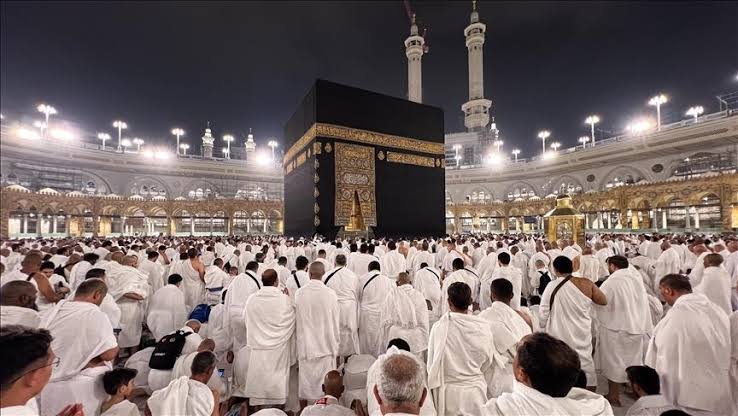
Israel blocks Gaza Muslims from Hajj for third year
As millions of Muslims travel to Mecca for the annual pilgrimage, thousands in Gaza remain unable to join them for a third consecutive year amid the continued closure of the Rafah border crossing and the impact of the ongoing war.
By Abdullahi Yusuf
For the third consecutive year, thousands of Muslims in Gaza have been unable to perform the Hajj pilgrimage after Israel continued to keep the enclave effectively sealed off from international travel routes, leaving many Palestinians stranded amid war, displacement and deepening humanitarian collapse.
As more than a million Muslims converge on the holy city of Mecca for one of Islam’s most sacred obligations, many families in Gaza say they are enduring yet another season of heartbreak, watching from crowded shelters and destroyed neighbourhoods as their hopes of undertaking the pilgrimage remain out of reach.
Among them is 65-year-old Hanan al-Hams, who had been selected as part of Gaza’s official Hajj quota in 2024 before the war interrupted all travel arrangements. Sitting inside a makeshift tent erected over the remains of her home in northern Gaza, she described the emotional toll of losing both family and opportunity during the conflict.
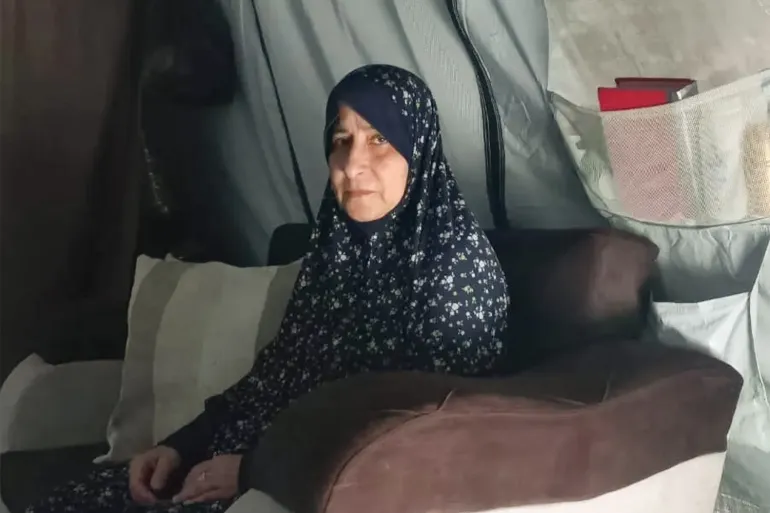
“I lost my son, my home was destroyed, and now I am deprived of the journey I waited decades for,” she told Al Jazeera.
Israel’s military campaign in Gaza, launched following the October 7, 2023 attacks, has devastated much of the territory’s infrastructure and displaced large sections of the population. The continuing closure of the Rafah crossing, Gaza’s main gateway to Egypt and historically the route used by Palestinian pilgrims travelling to Saudi Arabia has effectively suspended the enclave’s participation in Hajj for three years running.
Another would-be pilgrim, identified as Abu Foul, said the ceasefire hopes earlier this year briefly revived expectations that travel might resume.
“The war stopped, and we hoped to perform Hajj, but for three years, I haven’t been able to leave,” he said.
According to Gaza’s Ministry of Awqaf and Religious Affairs, more than 10,000 Palestinians have now been prevented from performing Hajj since the closure began. Officials say at least 71 Palestinians who had secured places through previous official pilgrimage ballots died during the war before they were able to undertake the journey.
Beyond the spiritual deprivation, Palestinian officials and researchers say the restrictions have triggered the near-total collapse of Gaza’s religious travel sector, once a modest but vital component of the territory’s economy.
A study published in May 2026 by the Palestinian Center for Political Studies and authored by researcher Khaled Abu Amer described the destruction of Gaza’s Hajj and Umrah sector as a form of “structural economic genocide”. The report concluded that all 78 licensed Hajj and Umrah travel companies operating in Gaza before the war had either ceased functioning or suffered severe destruction.
Mohammed al-Astal, head of the Association of Hajj and Umrah Companies in Gaza, said most company offices were either damaged or completely destroyed during the conflict. The sector, according to the report, sustained capital losses exceeding four million dollars, while an estimated additional two to three million dollars remains frozen abroad with airline operators, hotels and travel agents in Saudi Arabia and Egypt.
Before the war, pilgrimage-related activities reportedly contributed at least 12 million dollars annually to Gaza’s economy and supported more than 1,500 direct and indirect jobs.
Mohammed Abdul Bari, a local Hajj organiser, recalled the years before the conflict when pilgrims departed in large convoys accompanied by public farewell gatherings.
“We used to send off pilgrims with 20 buses in celebration,” he said while standing amid the rubble of his destroyed office. “All of that has disappeared.”
The Palestinian Center for Political Studies argues that the repeated destruction of religious travel infrastructure and the sustained prevention of movement amount to a deliberate policy rather than incidental wartime damage.
The report cites Article 33 of the Fourth Geneva Convention, which prohibits collective punishment, alongside provisions of international human rights law protecting freedom of religion and freedom of movement. It also references Article 53 of the same convention, which prohibits the destruction of civilian property except where absolutely necessary for military operations.
Israeli authorities have not publicly responded to the legal characterisations contained in the report.
With Gaza residents unable to travel, Palestinian officials say this year’s Hajj quota allocated to the territory has instead largely been filled by Palestinians holding Gaza identification documents who currently reside abroad, particularly in Egypt. Other pilgrimage slots have temporarily been reassigned to Palestinians from the occupied West Bank and East Jerusalem, with assurances that Gaza would be compensated with equivalent allocations in future years.
Yet for many elderly residents trapped inside the enclave, such assurances offer little immediate comfort.
“We could not organise the season because we were given no guarantees that the crossing would open,” said Rami Abu Staitah, Director General of Hajj and Umrah at Gaza’s Waqf Ministry.
“The preparations require early, complex contracts for housing and transport, which are impossible under these conditions,” he added.
The ministry has appealed to Saudi Arabia, Egypt and the wider international community to intervene, urging that access to the Islamic pilgrimage be treated separately from the broader political and military conflict.
With additional information from Aljazeera
SPONSORED
SPONSORED

SPONSORED

SPONSORED
