
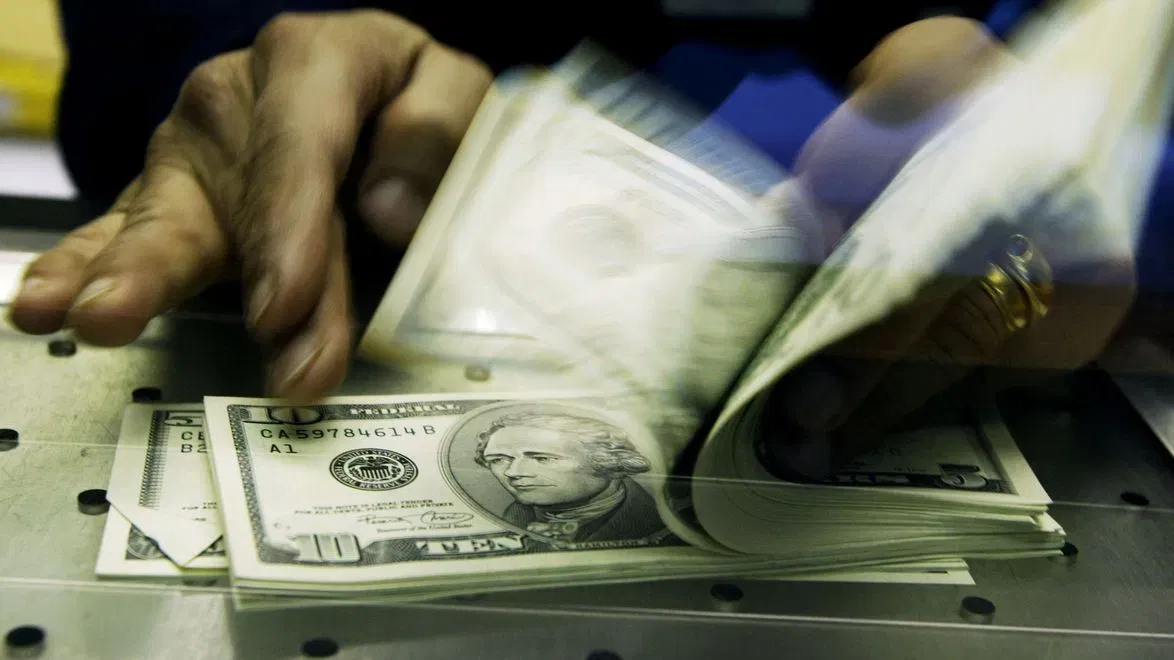
Iran’s Dollar Lifeline Persists Despite US Sanctions, WSJ Reports
Billions of dollars linked to Iran continue to pass through accounts connected to US banks each year, despite Washington’s efforts to restrict Tehran’s access to the global financial system.
By Abdullahi Yusuf
Iran continues to gain indirect access to the US dollar banking system despite years of American sanctions designed to isolate Tehran financially, with billions of dollars linked to the country still moving through foreign banks that maintain correspondent relationships with US financial institutions, according to a report by The Wall Street Journal.
The report said the transactions exploit the structure of international correspondent banking, through which foreign financial institutions can access the US financial system and settle dollar-denominated transactions through accounts held with American banks.
According to the report, Iranian-linked funds can move through financial institutions in jurisdictions including the United Arab Emirates and Hong Kong, with networks of front companies, currency exchanges and other intermediaries helping to obscure their connection to Iran before transactions reach the US banking system.
The scale of the activity is substantial. US Treasury officials have identified about $9 billion in Iranian funds that passed through US banks in 2024, according to the Wall Street Journal.
The findings highlight a significant challenge for Washington as the Trump administration intensifies its campaign to cut Tehran’s remaining financial lifelines under Operation Economic Outcast, a sanctions strategy announced last month with the stated objective of increasing pressure on Iran and restricting the channels through which it generates and moves revenue.
The US Treasury has already begun targeting foreign financial institutions it says are facilitating Iranian-linked transactions.
In August, the Treasury’s Financial Crimes Enforcement Network proposed cutting the United Arab Emirates operations of Egypt’s state-owned Banque Misr from correspondent banking access to US financial institutions. The department said Banque Misr UAE had processed approximately $1.8 billion between January 2024 and June 2026 for 103 companies potentially connected to Iranian shadow-banking networks.
The proposed measure would prevent US financial institutions from maintaining or opening correspondent accounts for Banque Misr UAE if the rule is finalised. Treasury has described the UAE operation as a critical point through which Iranian-linked networks obtain access to dollars and the wider international financial system.
The Treasury has also imposed sanctions on individuals and companies it says have helped Iran move funds through the international financial system, including the Dubai-based manager of Bank Melli and a Hong Kong-based company allegedly used in connection with an Iranian exchange house.
But the Wall Street Journal report suggests that closing individual channels may not be enough to eliminate Iran’s access to dollar-based financial infrastructure.
Foreign banks can themselves maintain correspondent relationships with US banks, allowing transactions involving Iranian-linked entities to enter the dollar system indirectly. The use of multiple jurisdictions and intermediary companies makes the networks more difficult to identify and disrupt.
That creates a dilemma for US regulators. Increasing pressure on foreign banks to scrutinise every transaction with possible Iranian connections could make it harder for Tehran to access dollars, but it could also increase compliance costs and disrupt legitimate international payments.
The broader concern is that aggressive use of the dollar system as a sanctions instrument could encourage banks and businesses outside the United States to seek alternative payment channels, potentially accelerating efforts to reduce dependence on the dollar.
Iran has already sought to reduce its reliance on the US currency in international trade, turning increasingly towards alternative currencies and payment arrangements. Yet the dollar remains important for parts of its international commerce, making access to dollar-based banking networks a continuing target for US sanctions policy.
The Wall Street Journal reported that Iran has increasingly reduced its reliance on the dollar, but still requires access to the currency for some international transactions.
SPONSORED

SPONSORED

SONSORED
