
Iran: What You Need to Know About the Bridge Destroyed by Trump
The B1 Bridge in Karaj, a 1,050-metre symbol of Iranian engineering and civilian infrastructure, was demolished in a US airstrike, killing civilians, wounding scores, and heightening tensions across the Gulf.
By Abdullahi Yusuf
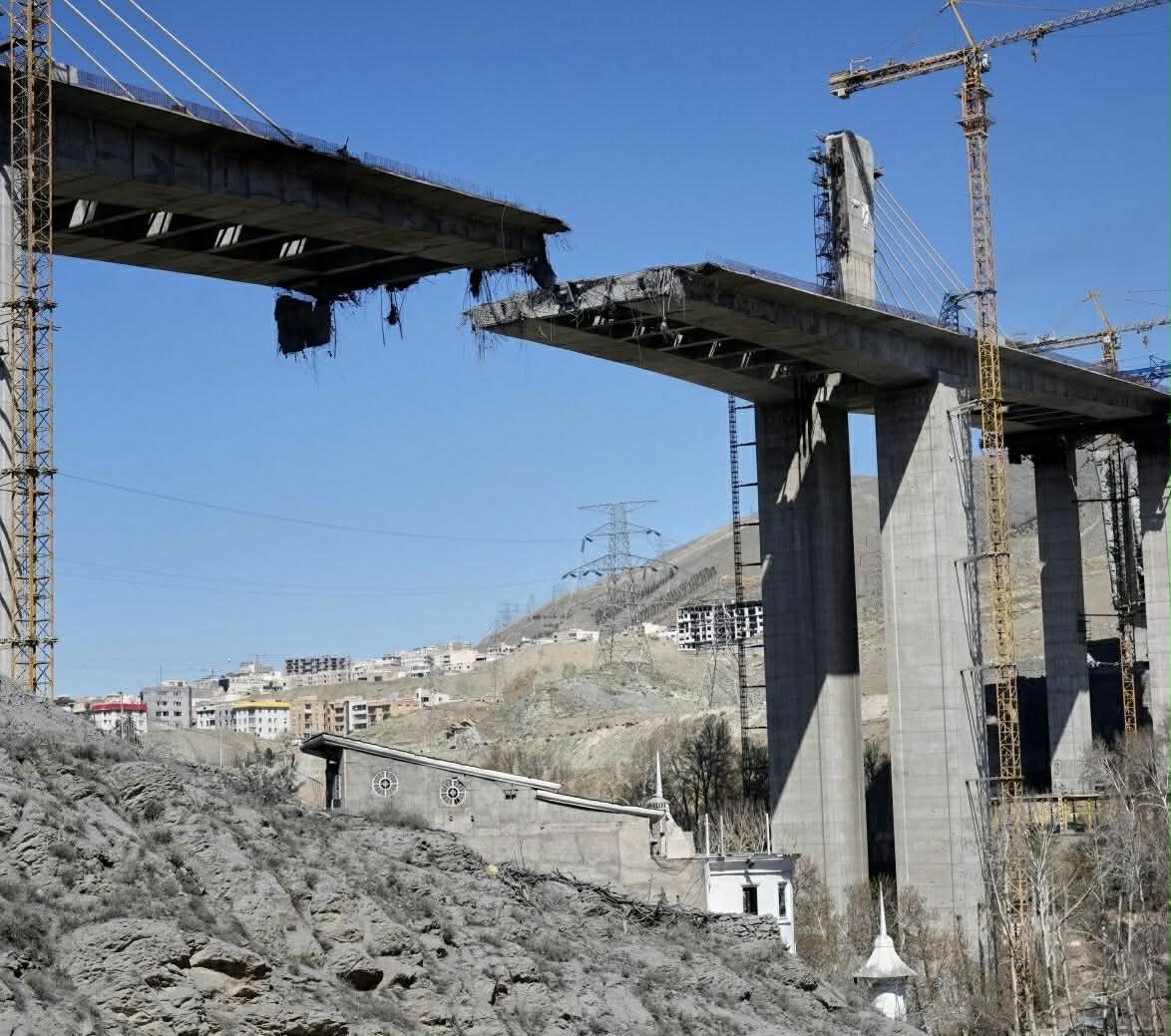
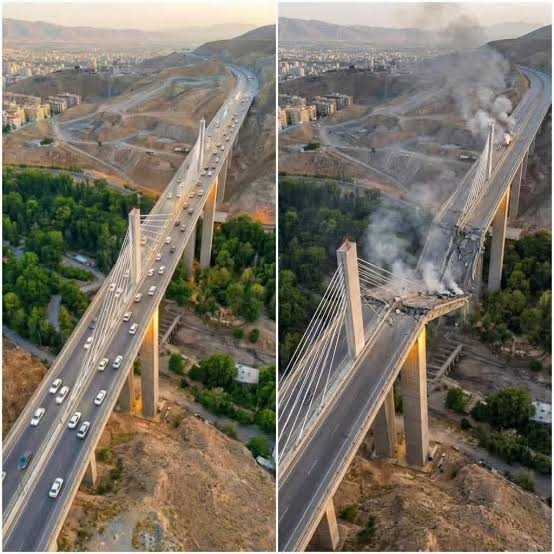
In a devastating attack that has sent shockwaves across Iran and the wider region, the United States carried out a targeted airstrike on the B1 Bridge in Karaj, a crowning achievement of Iranian civil engineering and a key component of the Northern Karaj Freeway. The strikes, which took place on 2 April 2026, caused severe structural damage and killed at least eight civilians while wounding 95 others, according to Iranian authorities.
The B1 Bridge, part of the Northern Karaj Freeway (also called the Karaj Northern Bypass), spans 1,050 metres and rises approximately 136–138 metres above the Karaj River, making it the tallest bridge in West Asia. Built entirely by Iranian engineers without foreign consultancy, it represented years of technical development, homegrown innovation, and a significant step toward easing traffic congestion between Tehran and Karaj.
Construction of the Shahid Soleimani Freeway, including the B1 Bridge, began in July 2016 but was delayed for several years. Work resumed in 2023, with some 130 workers engaged daily in assembling the bridge using prefabricated concrete segments and high-strength concrete, capable of reaching 70 percent of required strength within three days to expedite installation of prestressing cables. The bridge’s design as an extradosed structure, a hybrid between a girder and cable-stayed bridge, was considered technically significant and unique in the region.
The bridge was intended to form part of an 18-kilometre corridor linking the Hemmat-Karaj Freeway to the Karaj-Qazvin Freeway through the Alborz mountains, alleviating congestion in the Karaj-Tehran corridor by roughly 30 percent, equivalent to diverting 60,000 vehicles daily away from urban roads. Its completion, scheduled for May 2026, would have reduced commute times, lowered fuel consumption, and improved air quality across the western provinces.
The airstrike coincided with Sizdah Bedar, a national holiday marking the end of Nowruz festivities, when families traditionally gather outdoors. Multiple civilians were killed or injured as they enjoyed the holiday beneath the bridge. Reports indicate that the second wave of the attack struck while first responders were assisting initial casualties, deepening outrage in Iran and internationally.
US President Donald Trump claimed responsibility for the strike, boasting on social media that the bridge “comes tumbling down, never to be used again,” following earlier threats to send Iran “back to the Stone Age.” Despite American claims that the bridge was being used for military purposes, no evidence supports this, and independent assessments confirm that the structure was purely civilian.
The B1 Bridge was not only a traffic artery but a symbol of Iranian self-reliance and technical achievement. Its destruction represents a direct blow to national pride and infrastructure strategy. Analysts note that the bridge, along with the wider Northern Karaj Freeway, including 21 bridges and 63 drainage structures, was a central part of Iran’s effort to modernize its transport network and demonstrate domestic engineering capability.
Iran has since listed seven strategic Gulf bridges, Sheikh Jaber Al-Ahmad Al-Sabah Sea Bridge, King Fahd Causeway, Sheikh Zayed Bridge, Sheikh Khalifa Bridge, King Hussein Bridge, Damia Bridge, and Abdoun Bridge as potential targets for retaliation, signaling the risk of escalation across the region.
Historical Context
Iran’s engineering tradition stretches back millennia. From the qanat irrigation systems that transformed arid regions to the Shushtar Hydraulic System, a UNESCO World Heritage Site, Iranian engineers have a long history of technical innovation. In the modern era, post-1979 industrialization and infrastructure programs, including national railways, hydroelectric dams, and road networks, have further underscored Iran’s domestic capability. The B1 Bridge represented the latest chapter in this continuum of civil engineering excellence.
Experts have warned that the strike may violate the Geneva Conventions, which prohibit attacks on civilian infrastructure essential to survival. With civilians killed during a public holiday and no military targets present, the airstrike has raised questions of potential war crimes under international law.
Beyond the engineering loss, the attack has a profound human cost. Residents in the Karaj region, commuters, and holiday-goers were directly affected. Reports indicate that the attack disrupted traffic for thousands of people, damaged local property, and has left families mourning. Analysts suggest that the destruction of a civilian landmark will further inflame public sentiment and national resolve.
While the attack constitutes a serious setback, experts believe it will not halt Iran’s infrastructure ambitions. Engineers are reportedly assessing options for reconstruction, with plans to rebuild stronger and more resilient structures. Observers suggest that the strike may reinforce domestic investment in technical training, civil engineering, and infrastructure security.
With additional information from Press tv
SPONSORED
SPONSORED

SPONSORED

SPONSORED
