
Iran warns Hormuz “new phase”, demands war reparations
Iran signals tighter control over global oil chokepoint as Supreme Leader’s message blends grief, deterrence and diplomacy ahead of US talks in Pakistan
By Abdullahi Yusuf
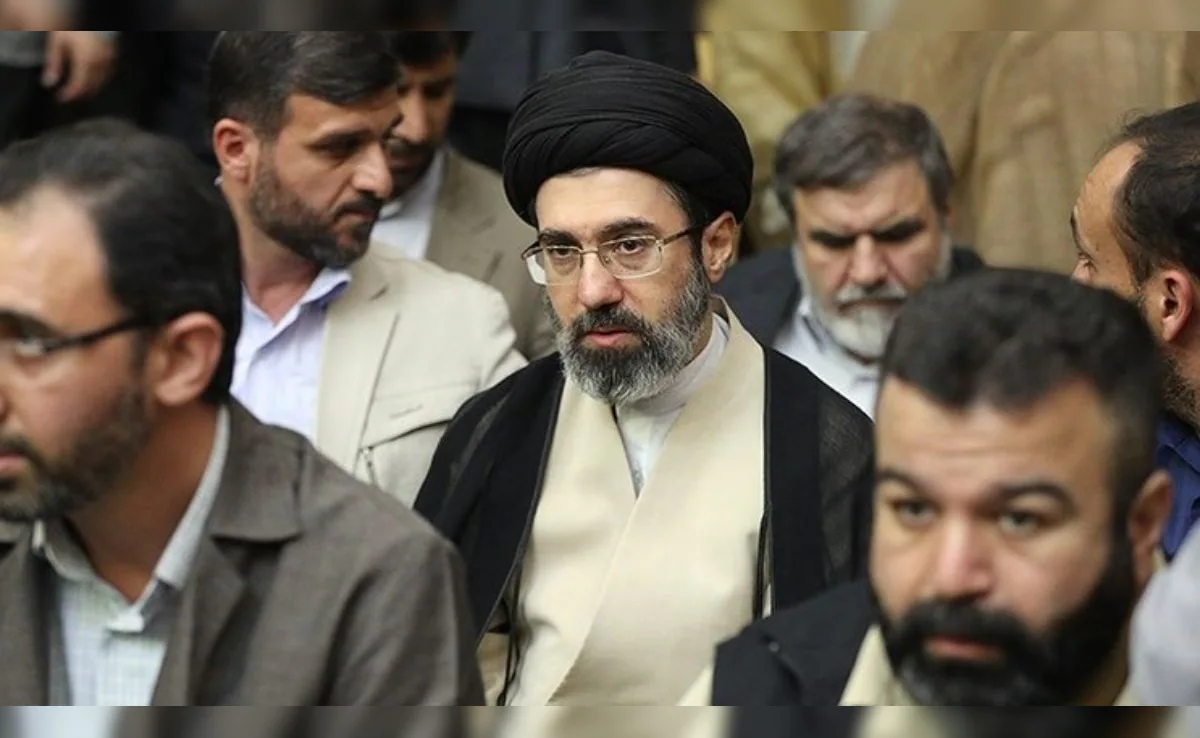
Iran’s Supreme Leader, Mojtaba Hosseini Khamenei, has declared that the Strait of Hormuz will enter a “new phase” of management, signalling a potential shift in Tehran’s approach to one of the world’s most strategically sensitive maritime corridors.
In a message marking 40 days since the death of his father, the former Supreme Leader Ali Khamenei, he described the moment as both a personal and national turning point, framing it within what he called a broader legacy of resistance.
While no operational details were provided, the remarks were widely interpreted as a warning that Iran intends to tighten its posture over the Strait of Hormuz, through which a significant proportion of global oil shipments pass.
He also made clear that Iran would pursue accountability for wartime destruction, including financial reparations, following what Tehran describes as a coordinated US-Israeli military campaign.
“We will not leave the criminal aggressors unpunished,” he said, adding that those responsible for the conflict would be held to account for deaths, injuries, and widespread damage.
The statement comes as preparations continue for high-level negotiations between Iran and the United States in Islamabad, expected to begin this weekend under Pakistani mediation and last up to two weeks.
Iranian officials have stressed that while the talks are aimed at shaping a potential agreement, they do not amount to a cessation of hostilities. They point in particular to continued Israeli military activity across the region, which Tehran says undermines any prospect of a durable ceasefire.
The Supreme Leader’s message also carried a warning of further escalation if Iran comes under renewed attack. “Our hands are on the trigger,” he said, underscoring what he described as continued military readiness.
The wider conflict has remained volatile since late February, when large-scale US and Israeli operations triggered a regional war that has left thousands dead, including senior Iranian leadership figures, according to Iranian sources.
In response, Tehran has launched waves of drone and missile strikes targeting Israel and US-linked military positions across Iraq, Jordan, and Gulf states hosting American forces. Those attacks have disrupted infrastructure and contributed to rising regional and economic instability.
Iran, however, continues to frame its actions as defensive, arguing that it is responding to what it describes as an unprovoked campaign backed by Washington and coordinated with Israel.
US President Donald Trump has announced a temporary ceasefire arrangement, saying Iran had put forward a proposal that could form the basis of a longer-term settlement. However, ongoing hostilities and competing interpretations of the truce have raised doubts about its durability.
Analysts say Iran’s latest message reflects a dual-track strategy: maintaining diplomatic engagement while simultaneously signalling readiness for further escalation if negotiations collapse.
As talks approach, the tension between diplomacy and deterrence appears to define the current phase of the conflict, with the Strait of Hormuz once again emerging as a potential flashpoint in a rapidly shifting regional order.
SPONSORED

SPONSORED

SONSORED
