
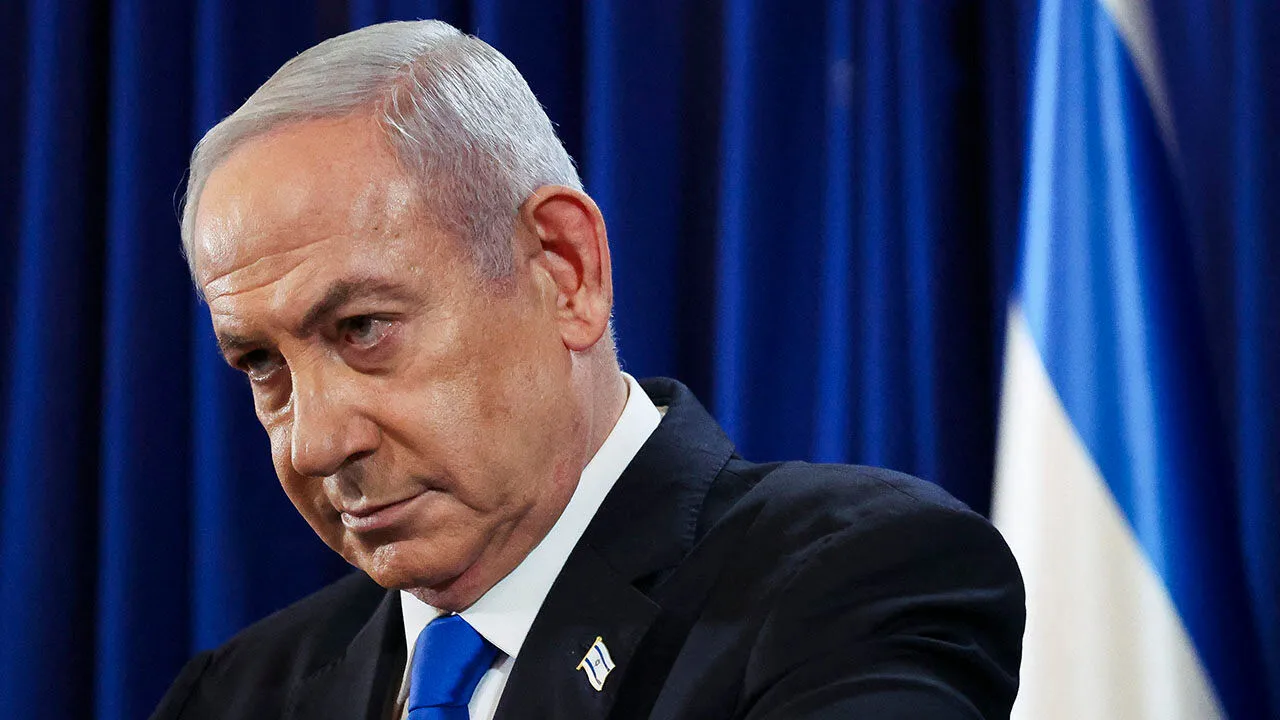
300 killed in a day as Netanyahu seeks talks amid Israeli escalation in Lebanon
Hundreds reported killed in a day of bombardment, as Beirut rejects negotiations under fire and international concern grows over risks to the wider US–Iran truce.
By Abdullahi Yusuf
Israel’s Prime Minister Benjamin Netanyahu has ordered the launch of direct negotiations with Lebanon “as soon as possible,” even as Israeli forces continue a devastating bombardment that has killed at least 300 people and wounded more than 1,000, deepening fears that the already fragile US-Iran ceasefire could collapse.
The announcement came as rescue teams combed through the rubble of destroyed neighborhoods across Beirut and other parts of Lebanon following one of the most intense waves of Israeli attacks since the war expanded regionally.
According to Lebanon’s health ministry, the strikes carried out on Wednesday alone caused mass casualties, with entire residential areas flattened. Despite the scale of destruction, Netanyahu made clear that military operations would continue, offering no immediate halt to the assault.
His office said the proposed talks would focus on disarming Hezbollah and establishing so-called “peace relations,” a demand widely viewed in Lebanon as coercive diplomacy carried out under bombardment.
A Lebanese government official said Beirut would not enter negotiations under fire, stressing that a ceasefire must be declared first.
“Lebanon wants a ceasefire before starting negotiations,” the official said, underscoring the deep mistrust surrounding Israel’s intentions.
Even as diplomatic overtures were floated, Israel issued fresh evacuation orders for Beirut’s southern suburbs, signaling further attacks on densely populated civilian areas.
Global condemnations
The escalation has drawn widespread international condemnation, with global powers warning that Israel’s actions risk derailing the broader ceasefire between the United States and Iran.
Leaders in Brussels, Moscow, and Ankara called for the truce to be extended to Lebanon, while Germany’s Chancellor Friedrich Merz warned that Israel’s conduct could “cause the peace process as a whole to fail.”
Iranian officials echoed those concerns, insisting Lebanon must be included in any ceasefire framework. Parliamentary Speaker Mohammad Bagher Ghalibaf described Lebanon as an “inseparable part” of the agreement, while President Masoud Pezeshkian said Israel’s continued attacks had rendered upcoming talks with US envoys in Islamabad effectively meaningless.
On the ground, Hezbollah reported engaging Israeli forces in close-quarters combat in southern Lebanon, particularly in the town of Bint Jbeil, while also launching rocket fire in response to what it described as blatant ceasefire violations.
Despite this, both Israel and the United States have insisted that Lebanon falls outside the scope of the truce, an interpretation widely criticized as a deliberate attempt to continue military operations under diplomatic cover.
US President Donald Trump acknowledged he had urged Netanyahu to scale back the intensity of the strikes, but his remarks suggested only a cosmetic adjustment rather than a substantive halt.
“I spoke with Bibi… he’s going to low-key it,” Trump said, even as attacks continued and civilian casualties mounted.
Scenes from Beirut illustrate the human cost of the assault. In one seafront neighborhood, an apartment building was split apart, exposing everyday life frozen in destruction, schoolbooks, personal belongings, and children’s toys scattered amid debris.
Rescue workers continued to search for survivors under collapsed structures, with several bodies still believed to be trapped beneath the rubble.
“We don’t know where my niece is,” said Taha Qarqamaz, whose family has been torn apart by the strike. Another relative died from injuries, while others remain in intensive care.
Local residents angrily rejected Israeli claims that the targeted areas were linked to Hezbollah.
“Look at these books, these homes, where is Hezbollah here?” said one resident, pointing to the ruins of a residential block. “There is no Hezbollah in this neighborhood.”
The ongoing assault has been described by the United Nations as “carnage,” with critics accusing Israel of systematically targeting civilian infrastructure in violation of international law, while Washington’s continued support has drawn sharp criticism for enabling the escalation.
Meanwhile, uncertainty surrounds the strategic Strait of Hormuz, a vital global shipping route through which roughly a fifth of the world’s oil passes. Iran has announced alternative maritime routes amid fears of escalation, while reports remain unclear on whether the strait is fully operational.
With high-stakes talks expected in Islamabad, the contradiction between calls for diplomacy and continued bombardment underscores the fragility of the current ceasefire, one that risks collapsing entirely as long as Israel’s campaign in Lebanon continues with US backing.
SPONSORED

SPONSORED

SONSORED
