
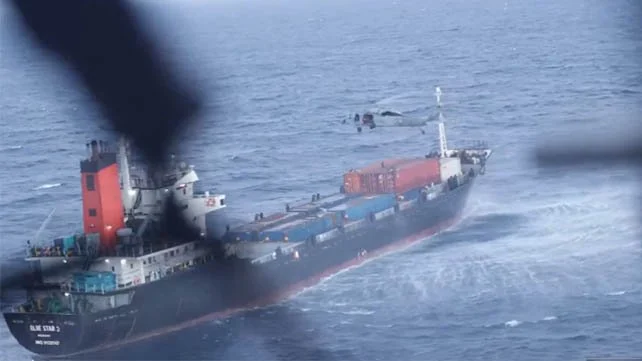
Iran strategy keeps US off balance as blockade intensifies
Tehran balances pressure and negotiation while Washington faces legal limits, economic risks and narrowing strategic options
By Abdullahi Yusuf
Iran’s strategy in its standoff with the United States is increasingly being defined not by military escalation, but by a calculated use of diplomacy aimed at preserving leverage under pressure.
According to Tehran-based analyst Muhammad John Hussain, Iran has managed to keep Washington and its allies off balance through what he describes as a disciplined and deliberate diplomatic approach, even as a US-led naval blockade continues to exert economic strain.
At the centre of the impasse is a fundamental dispute over the terms of engagement. Tehran maintains it cannot be expected to negotiate under conditions it views as coercive, particularly in light of past experiences where talks coincided with military pressure.
“Iran’s position is that negotiations under blockade amount to surrender,” Hussain said, arguing that Tehran has instead sought to preserve its bargaining position without closing the door to diplomacy.
That approach has been reflected in the actions of Foreign Minister Abbas Araghchi, who has signalled conditional openness to dialogue while avoiding direct engagement under threat. By positioning himself near proposed venues for talks without formally committing, Iran has sought to shift diplomatic pressure onto Washington.
Washington under pressure
For the United States, the situation appears increasingly constrained.
Under the War Powers Resolution of 1973, a president cannot sustain military engagement beyond 60 days without congressional approval. With the current conflict traced to late February, that threshold is now approaching, forcing a choice between escalation, withdrawal or seeking legislative backing.
Analysis cited by The New York Times suggests US policymakers face a dilemma: intensifying the conflict risks deeper entanglement, while scaling back could be seen as a strategic setback after significant military deployment.
Germany’s chancellor, Friedrich Merz, has suggested that Iran’s diplomatic positioning has been effective, describing it as a calculated effort that has complicated Washington’s response.
Regional diplomacy intensifies
Iran has simultaneously expanded its diplomatic outreach, engaging with a wide range of regional and international actors.
Contacts have included officials in Pakistan, Oman, Russia, as well as Saudi Arabia, Egypt, Türkiye and France.
The outreach appears aimed at broadening diplomatic support and maintaining economic channels at a time when sanctions and maritime restrictions are tightening.
Some countries previously cautious about engagement are now showing greater willingness to cooperate, particularly in maintaining energy flows.
Blockade impact and limits
US officials say the naval blockade is imposing significant economic costs on Iran, with estimates running into hundreds of millions of dollars in losses each month. But the effectiveness of the measure remains contested.
Hussain argues that while Iran faces clear economic pressure, the disruption is not one-sided, with global shipping and trade also affected. Crucially, he says, the blockade has not forced Tehran back to negotiations.
Iran has continued to sustain trade through alternative routes, including via the Caspian Sea and overland links with neighbouring states such as Pakistan and Türkiye.
Reports also indicate that Iranian oil shipments have continued despite restrictions, with tankers navigating coastal routes and territorial waters to bypass parts of the blockade. While this has not restored full commercial activity, it has mitigated some of the economic impact.
Movements of cargo and personnel across regional hubs, including the United Arab Emirates and Qatar, suggest that both diplomatic and operational preparations remain ongoing.
Global stakes and strategic chokepoints
The standoff carries wider implications for global energy and trade.
The Strait of Hormuz, a critical artery for global oil supplies has already seen reduced traffic and rising insurance costs. Further disruption could significantly impact energy markets.
Another key route, the Bab el-Mandeb Strait, could also become a focal point if tensions escalate, with potential consequences for international shipping.
Oil prices have already risen amid uncertainty, and while the United States has reportedly drawn on strategic reserves, analysts say this may offer only temporary relief if disruptions persist.
Risk of escalation or stalemate
Despite the diplomatic activity, the risk of escalation remains.
Hussain warns that any renewed US military action could be large-scale, a concern echoed by officials in Russia. At the same time, the confrontation could harden into a prolonged stalemate resembling other long-running geopolitical stand-offs.
Iran’s leadership appears to be pursuing a dual-track approach, remaining open to negotiations while resisting pressure to concede.
On the nuclear issue, Hussain suggests limited compromises may be possible as part of a broader agreement, but any deal perceived domestically as capitulation is likely to face resistance.
Public sentiment, he says, plays a significant role, with many Iranians opposed to negotiating under pressure.
Economic ripple effects
Beyond the immediate conflict, the standoff is influencing economic behaviour across the region.
In Pakistan, speculation around the Iranian currency has increased, with some investors anticipating gains in the event of a diplomatic breakthrough.
Hussain cautions that such expectations may be misplaced, warning that rapid currency appreciation could destabilise Iran’s economy, potentially triggering inflation and industrial disruption.
A deadlock over terms
For now, the central issue remains unresolved.
Iran has not rejected negotiations outright but insists they must take place on what it considers equal terms, without coercion.
Whether diplomacy can break the deadlock will depend on both sides shifting their positions, a prospect that remains uncertain.
What is clear is that the current standoff is being shaped as much by diplomatic manoeuvring and economic resilience as by military pressure, with both escalation and de-escalation still firmly possible.
With additional information from MNTV
SPONSORED

SPONSORED

SONSORED
