
Iran says 40-day war ‘victory’ rooted in Khamenei doctrine
Vice President Mohammad Reza Aref hails strategic gains after US-Israel conflict and signals Iran’s preparedness for forthcoming diplomacy
By Abdullahi Yusuf
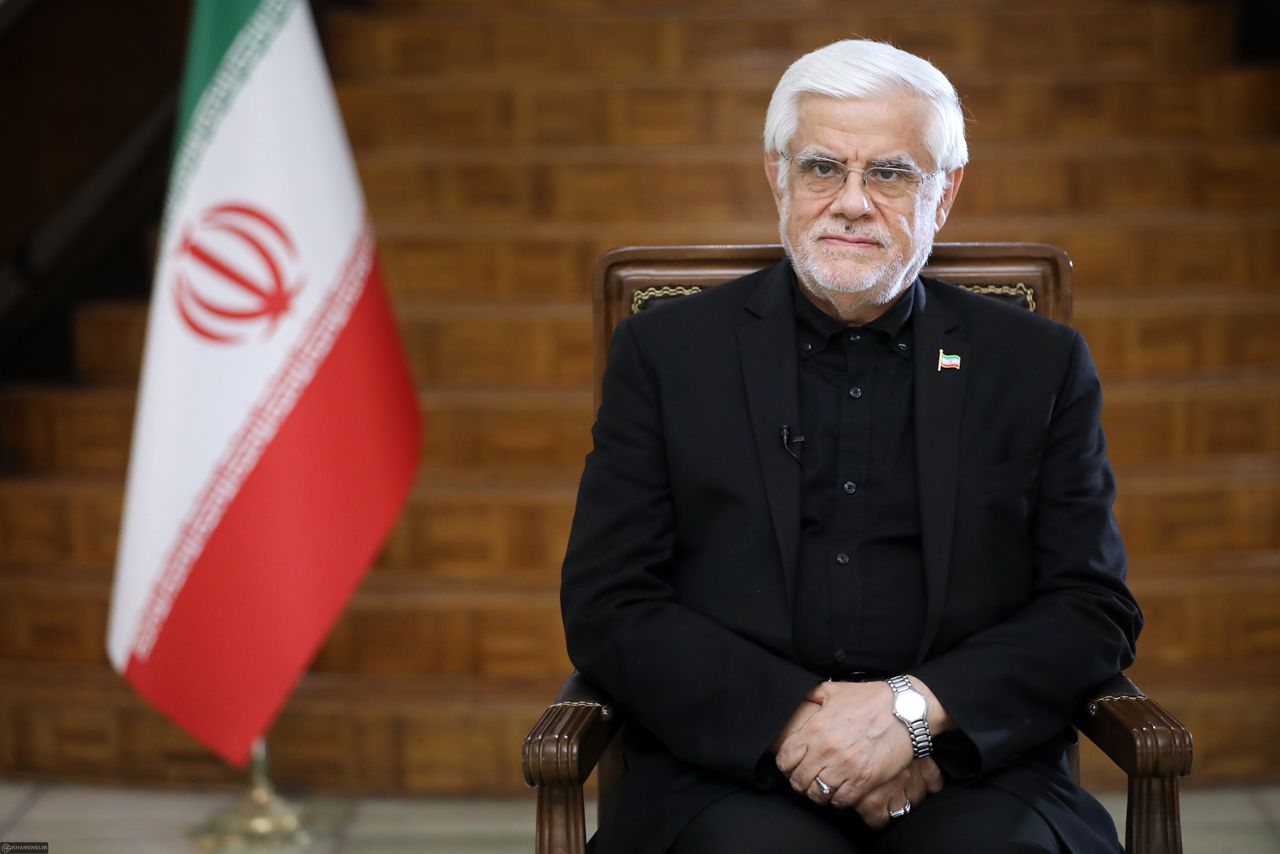
Iran’s Vice President Mohammad Reza Aref has described the country’s success in what he calls the “40-day war” against the United States and Israel as the product of the “Khamenei school of thought,” a framework he says ensures the nation’s stability and strategic coherence beyond the influence of any single leader.
In a statement released on Wednesday, Aref marked forty days since the assassination of Ayatollah Seyyed Ali Khamenei, the Leader of the Islamic Revolution, and several senior military commanders by US and Israeli forces on February 28. He said the martyrdom of the top Iranian commander had not weakened the system’s strategic calculations but, instead, strengthened national cohesion.
“This 40-day war was not merely a military victory, but a turning point in changing strategic equations in the region and the world,” Aref said, describing Iran’s response to the attacks as decisive and far-reaching.
According to Iranian officials, Tehran targeted US and Israeli assets across the region, including military bases and logistical hubs, inflicting losses and forcing Washington to agree to a temporary suspension of bombing and attacks, a move US President Donald Trump described as a “double-sided ceasefire” contingent on Tehran reopening the Strait of Hormuz.
Aref emphasized that the victory reflects the structural resilience of Iran’s political and military institutions. “What is observed today as Iran’s unshakeable stability and victorious authority is the fruit of the formation of the Khamenei school of thought – a school that embeds the authenticity of power not in individuals, but in the will of the nation and the divine structure of the system,” he said.
He also underscored the transition of leadership to Ayatollah Seyyed Mojtaba Khamenei, asserting that the continuity of authority ensures Iran remains “powerful, wise, and courageous at the apex of decision-making” and signals the persistence of the revolutionary doctrine internationally.
Regarding diplomacy, Aref confirmed Iran’s participation in talks in Islamabad, alongside Pakistan, while expressing cautious optimism about the intentions of the United States. “We will actively participate in the Islamabad talks with full authority, and of course with absolute pessimism regarding the deceptive nature of the US, in order to consolidate battlefield achievements on the diplomatic level,” he said.
The Vice President concluded by reaffirming Iran’s commitment to internal stability and development, promising economic reconstruction and the “jihadi rebuilding” of national infrastructure in tandem with defense forces. “The Husseini Iran of Khamenei is today more powerful than ever, ready to create great victories at the dawn of a new world order,” he added.
Analysts say Aref’s remarks signal a dual strategy: consolidating national unity and resilience domestically while asserting leverage in regional and international diplomacy. The 40-day conflict has highlighted Tehran’s ability to maintain operational capacity despite the targeted loss of senior leadership, and Tehran now appears to be moving toward a carefully managed political engagement with the West under the framework of ongoing ceasefire discussions.
SPONSORED

SPONSORED

SONSORED
