
Hamzat, Oshiomhole, Shekarau: Nigeria Must Rise Above Ethnic, Religious Politics
At The Companion’s 7th National Discourse, speakers demand a stronger national identity built on citizenship, competence and shared values
By Abdullahi Yusuf
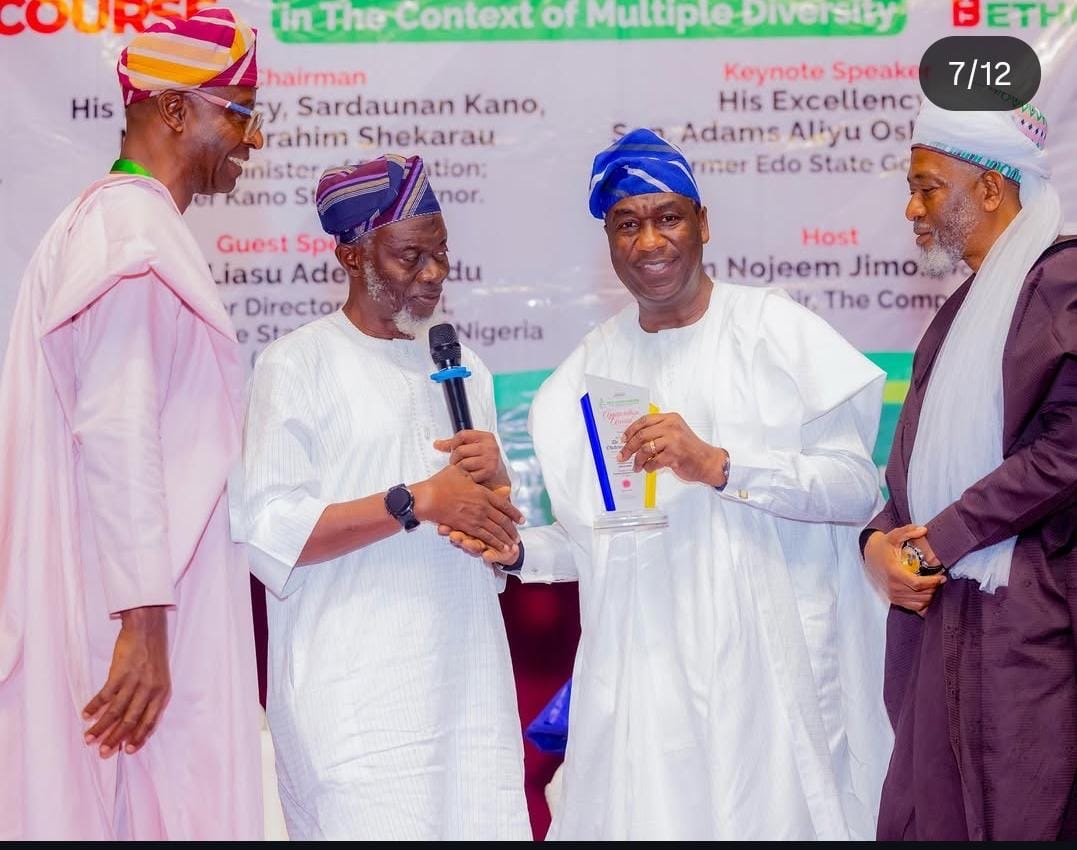
Lagos State Deputy Governor, Dr Kadir Obafemi Hamzat, former Edo State Governor, Senator Adams Oshiomhole and former Kano State Governor, Mallam Ibrahim Shekarau, have called on Nigerians to reject ethnic and religious divisions and build a stronger national identity based on citizenship, competence and shared values.
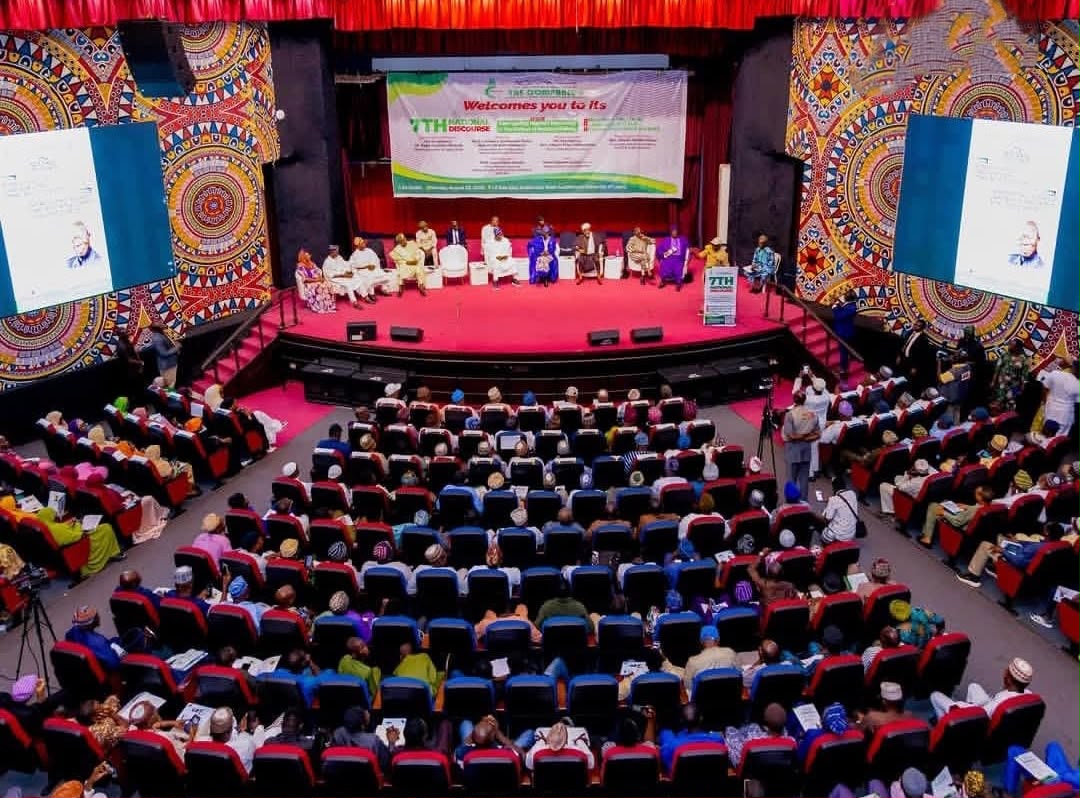
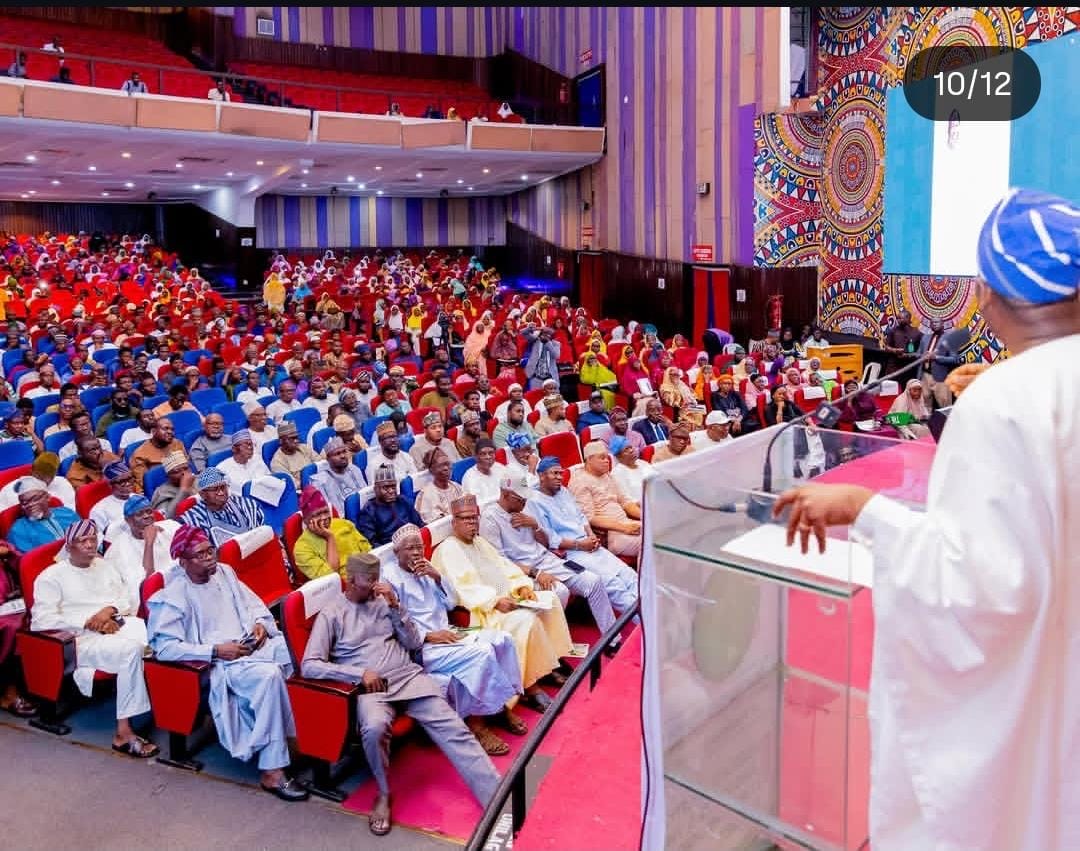
The call came at the 7th National Discourse of The Companion, an association of Muslim men in business and the professions, held at the University of Lagos Main Auditorium, where speakers examined the place of Nigeria’s multiple identities in its political system and the continuing challenge of ethnic and religious division.
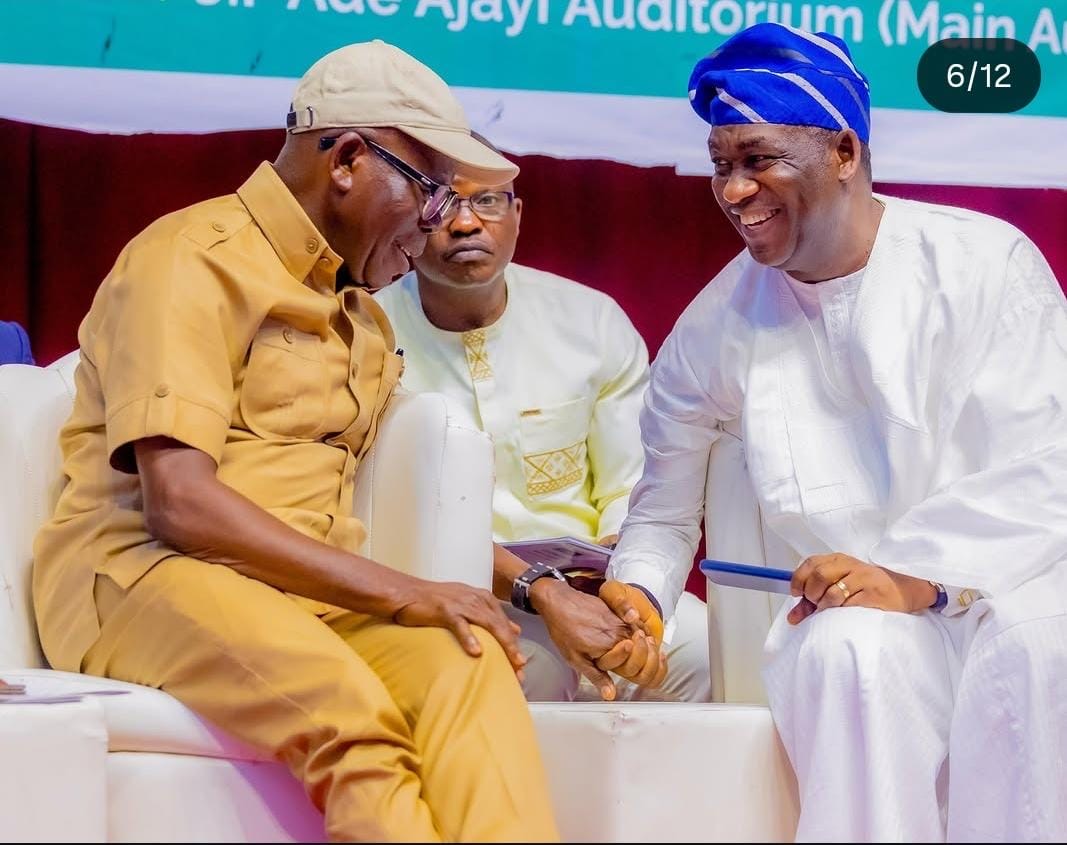
Speaking as the Special Guest of Honour, Hamzat said religious and ethnic identities should not be allowed to become instruments of discrimination or undermine national unity.
He said both Islam and Christianity promote values of tolerance, love and respect for others, arguing that religion should therefore not be used as a basis for discriminating against people of different faiths.
Hamzat said Nigeria needed to make deliberate efforts to develop a national identity capable of accommodating its diverse ethnic, religious and cultural identities.
Addressing the theme, “Nigeria’s Political Landscape and the Ethno-Religious Divides,” he said the challenge was not to eliminate those identities but to prevent them from becoming sources of division.
“The question that sociologists have not told us is how we marry our culture and democracy, without losing our identity and putting it into our democratic setting,” Hamzat said.
He urged Nigerians to learn to accommodate their differences while promoting a common national identity, warning that the experience of other multi-ethnic societies showed the dangers of allowing identity and class differences to fuel conflict.
Oshiomhole, who represents Edo North Senatorial District, similarly called on Nigerians, particularly young people, to place national identity above ethnic and religious differences.
He said leadership should be determined by competence, ideas and values rather than place of birth or religious affiliation, arguing that ethnicity and religion should not be used as tools of political mobilisation or shields against accountability.
“Our ethnicity shouldn’t be a source of challenge. It should give us all of the things that we need to be the greatest country, not only in Africa but in the world,” Oshiomhole said.
He argued that no Nigerian should be rewarded or punished because of an “accident of birth”, saying ethnicity had increasingly been exploited by sections of the political elite in place of ideas.
Oshiomhole said Nigeria’s human and natural resources could propel the country to greater heights if properly harnessed in a system where citizens were treated fairly regardless of their ethnicity, religion or place of birth.
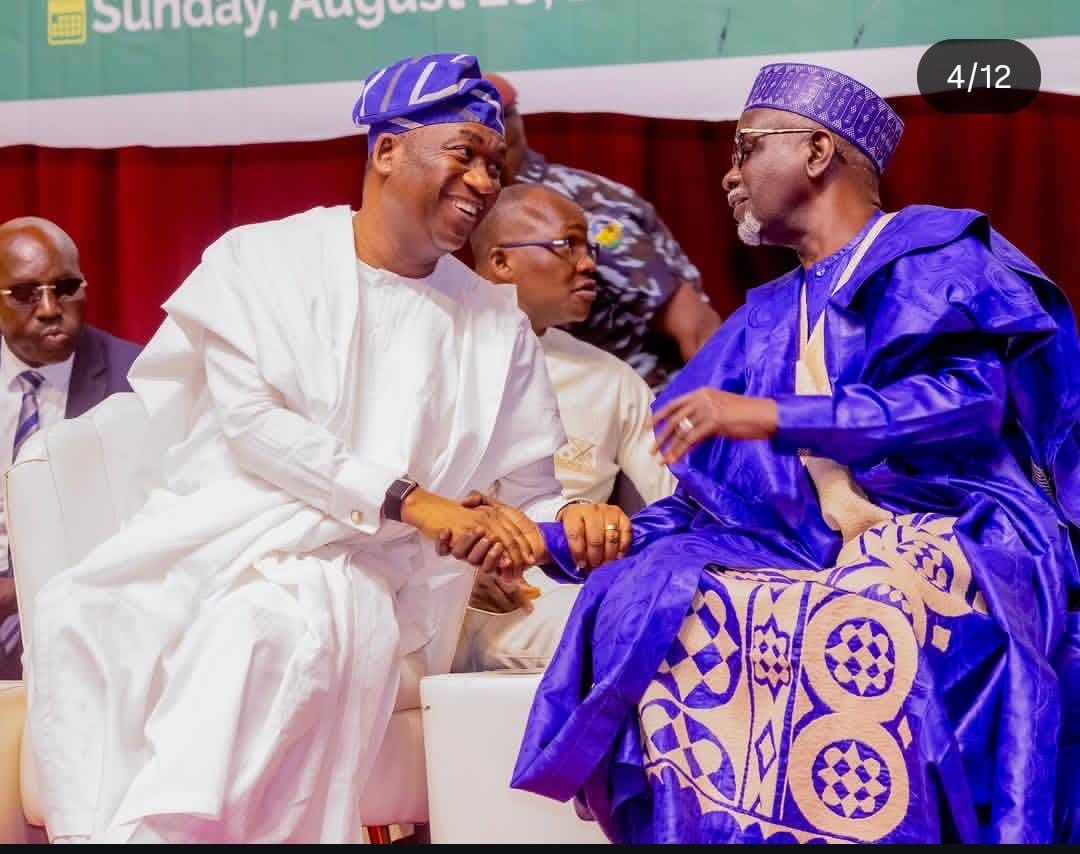
Shekarau, Chairman of the occasion and former Kano State governor and Minister of Education, also called for greater religious tolerance and understanding.
He said there was no justification for religious conflict in a country whose citizens, regardless of faith, are all creations of Allah.
Shekarau urged Nigerians to deepen their understanding of their respective religious teachings, noting that values including love, kindness, justice and respect for others were common to faith traditions.
He said genuine adherence to those principles would contribute to a more peaceful society and prevent religious differences from becoming sources of conflict.
The former governor also identified consultation, fairness and respect for divergent views as essential principles of politics and good governance, urging political leaders not to pursue personal interests at the expense of the people.
The broader political argument was developed by the guest lecturer, Prof. Liasu Adele Jinadu, former Director-General of the Administrative Staff College of Nigeria (ASCON), who identified ethnicity as one of the major forces shaping Nigeria’s political development since colonial rule.
Delivering a lecture titled “Interrogating Nigeria’s Democracy in the Context of Multi-Diversity,” Jinadu said Nigeria’s ethno-regional political structure and multi-party system had provided fertile ground for political elites to exploit ethnic identities for political support.
He said such practices had contributed to patron-client relationships, weakened state institutions and undermined the autonomy of government.
Jinadu argued that ethnicity had also been used to obscure issues including political impunity, corruption, patronage and abuse of political power.
He called for greater citizen participation in governance irrespective of ethnic or religious identity, saying citizens could not fully exercise their rights where economic and social opportunities, transparency, security and other basic freedoms were denied.
Jinadu advocated a political system that places citizenship, human security and human development above ethnic interests, in line with the principles of Nigeria’s 1999 Constitution.
For The Companion, the discussion was rooted in the need to confront a national question that has remained unresolved since the country’s early political history.
In his welcome address, the National Amir of The Companion, Imam Nojeem Jimoh, recalled that 2026 marks 60 years since Nigeria’s first military coup and the counter-coup that followed months later, both of which carried strong ethnic and regional dimensions.
He said the consequences of those events continued to shape the country’s political and social relationships, making it necessary to re-examine the divisions that have persisted across generations.
Jimoh said the organisation deliberately brought together speakers from different religious, regional and political backgrounds to demonstrate the kind of conversation it believes Nigeria needs.
He noted that the chairman of the occasion was a Muslim from the North, while the keynote speaker was a Christian from the Niger Delta and the guest speaker a Yoruba from the Southwest.
According to him, The Companion’s National Discourse is intended to provide a platform where difficult national questions can be examined intelligently and respectfully, without partisan rancour.
“We are not here merely to celebrate democracy. Neither are we here to condemn it. We are here to question it, examine it, challenge it, and hopefully understand how it can work better for all Nigerians,” Jimoh said.
He said Nigeria’s diversity; ethnic, linguistic, religious, cultural, regional, economic and social, could either become a source of strength or one of the country’s greatest challenges, depending on how effectively its democratic system manages it.
Jimoh said the ultimate goal should be a democracy in which citizenship is stronger than primordial identity.
He stressed that ethnicity, religion and culture would not disappear, but should exist under a broader Nigerian identity that allows different identities to coexist peacefully.
The Companion said its decision to convene the discourse reflected its responsibility as an organisation of Muslim professionals to create spaces where difficult national questions could be discussed constructively and solutions proposed.
The organisation, which was established to bring together Muslim men in business and the professions, said its National Discourse seeks to assemble experts and key stakeholders to examine issues of national concern and share ideas with government and the wider public.
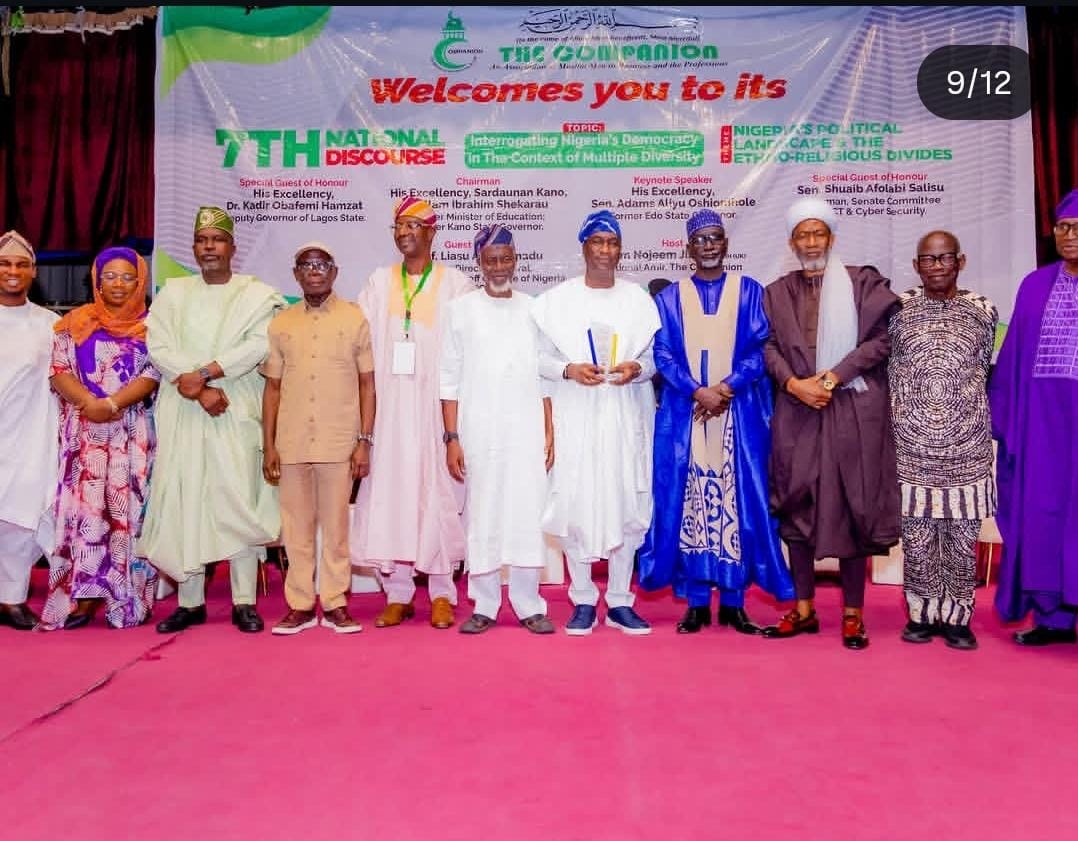
The event brought together leaders of The Companion, political figures, academics, Muslim organisations and other stakeholders.
Among those present were Senator Shuaib Afolabi Salisu; former National Amirs of The Companion, Dr Ahmed ‘Tunde Popoola, Engr Kamil Olalekan, Alhaji Thabit ‘Wale Sonaike and Barrister Musbau Oyefeso; Chairman of the Board of Trustees, Alhaji Waliyu Onibon; Alhaji Jum’ah Babatunde Alli-Oluwafuyi; and former NAHCON Chief Executive Officer, Ustadh Zhikurallah Hassan.
Also present were the Chairperson of the Board of Trustees of The Criterion, Alhaja Muibat Abass, representative of the National Amirah, Dr Khadijah Abdul Salam, and leaders of various Muslim organisations.
SPONSORED

SPONSORED

SONSORED
