

CREMATION: A Roasting Passage?
Daily in our lives, regardless of status, races, colour, religion, gender and knowledge, we detest heat of varying degrees. As useful as the sun is, many can not withstand the heat it emits, whereas it stands millions of miles away from us.
Similarly, as much as fires are sources of energy to us, when it snowballs into inferno, we all run for our dear lives; especially because getting burnt alive in such circumstance could be gory.
One can then imagine seeing our once beloved ones being set ablaze in the name of funerals. Can one imagine, how gory it could have been, if the likes of Sheikh Kamal-ud-deen, Sheikh Adam Al-llory, Sheikh ,Abubakar Gumi, Alhaji lyanda Folawiyo, Moshood Kashimawo Abiola and the indefatigable Dr AbdulLateef Adegbite, were set on fire, in the name of a rite of passage? This practice is described as cremation.
Evidence of cremation dated from antiquity. Pottery vessels from the Neolithic period, filled with the ashes of several individuals, have been found throughout Europe. Between 1400 BC and AD 200, cremation was the preferred burial custom, especially among the Roman aristocrats, notably, the famous Caesar family which was one of the first many to chose this burial method.
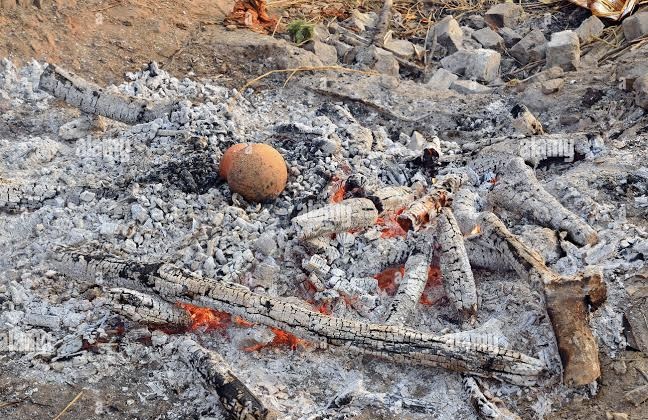
Ironically, the heat many run away from while alive is often used by some as a burial rite party for their loved ones, because when such dies, the box containing the body is placed in the retort and incinerated at a temperature of 760 to 1150 °C (1400 to 2100 °F). During the cremation process, the greater portion of the body (especially the organs and other soft tissues) is vaporized and oxidized by the intense heat; gases released are discharged. through the exhaust system. The process usually takes 90 minutes to two hours, with larger bodies taking longer time.
Man made religions, such as Hinduism, Sikhism and Buddhism, mandate cremation. In these religions, the body is seen as an instrument to carry the soul.
According to Hindu traditions, the reasons for preferring to destroy the corpse by fire, over burying it into ground, is to induce a feeling of detachment into the freshly disembodied spirit, which will be helpful to encourage it into passing to its next destination, lest it remains near its former body.
In Christian countries and cultures, cremation has historically been discouraged, ‘but now in many denominations it is accepted. The Roman Catholic Church’s objection to cremation stemmed from ideas that the body, as an instrument through which the sacraments are received, is itself a sacramental, holy object; and should be disposed of in a way that honors and reverences it. Most notably, the Eastern Orthodox and Oriental Orthodox Churches forbid cremation as it constituted a denial of the resurrection of the body and it might interfere with God’s ability to resurrect the body.
Similarly, the Bahá’i Faith forbids cremation, except when required by law. Some secular Jews may reject cremation perhaps in reaction to The Holocaust, in which the Jewish victims of Nazi genocide were disposed of by cremation at the death camps. In the middle Ages throughout parts of Europe, cremation was forbidden by law, and even punishable by death.
Sometimes used by authorities as part of punishment for heretics and this did not only include burning at the stake. For example, the body of one John Wycliff was exhumed years after his death and cremated, with the ashes thrown in a river, explicitly as a posthumous punishment for his denial of the Roman Catholic doctrine of transubstantiation.
On the other hand, mass cremation is often performed out of fear of contagious diseases, such as after a battle, pestilence, or famine. Retributory cremation continued into modern times. For example, after World War Il, the bodies of the 12 men convicted of crimes against humanity at the Nuremberg trials were not returned to their families, but were instead cremated, then disposed of at a secret location as a specific part of a legal process intended to deny their use as a location for any sort of memorial.
The Roman Catholic Church’s objection to cremation stemmed from ideas that the body, as an instrument through which the sacraments are received, is itself a sacramental, holy object; and should be disposed of in a way that honors and reverences it. Most notably, the Eastern Orthodox and Oriental Orthodox Churches forbid cremation…
In modern times, economic and sanitary considerations are the principal reasons for the increased number of cremations in recent years. Expanding populations have also created land shortages, causing space for burial to become scarce and expensive. Another factor adduced by the advocates of this culture is possible water contamination especially when death was caused by a highly contagious disease.

Today, there are memorial gardens and buildings called columbaria with niches where ash-filled urns can be stored and visited by relatives. Research pointed out that cremation had risen from 8.49 percent of deaths in 1978 to 15.31 percent in 1988 in the United States, which indicates that this culture is spreading around the world, including Nigeria. The Lagos state Government trails the blaze on this debate.
Giving reasons, such as rapid rural-urban development, which has resulted in shortage of land, congestion of morgues with unclaimed bodies as well as stiff opposition from the residents whenever the government officials go for mass burial, the State Government in 2012 sponsored a Bill to the State House of Assembly, to provide for law allowing “voluntary cremation of corpses and unclaimed corpses in the state mortuaries.
The Bill in addition, proposed establishment and maintenance of crematorium by the state. It also stated that as from the commencement of the Law, the mortuaries in the State shall obtain due approval to cremate all unclaimed corpses in excess of six (6) weeks. Also, it proposes that a family that wishes to cremate a dead relative may do so after obtaining due approval and the payment of prescribed fee by the appropriate authority (State Ministry of Health)!
Perhaps, with the interest of the Lagos state government in cremation, Nigeria might again be heading towards involving herself in an ungodly exercise, whose consequences are severe Nations were destroyed in the past because of disobedience to ALLAH. Cremation has no scriptural backing. There are prescribed divine funeral rites and practices in accordance with the dictates of Allah.
Accordingly, beginning from the time of Prophet Adam until the last Prophet, Muhammad, peace and blessing of Allah be upon them, burying the dead has been the prescribed method of conveying the deceased to the world beyond. There is no mention anywhere that cremation was acceptable in any of the previous dispensations from Allah.
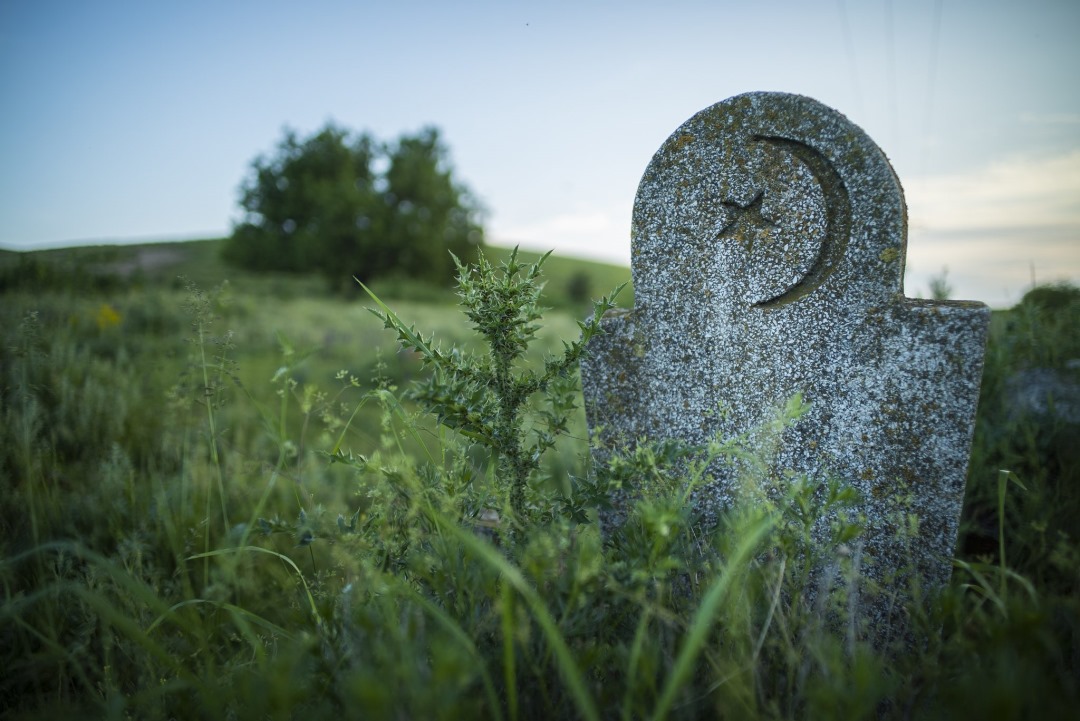
The history of mankind search for God and God’s relationship with man are premised on four books, He revealed to man; (TAURAH, SABURAH, INJIL and the glorious QUR’AN). In these books, there is no mentioning of cremation. The Bible, in book of Genesis 3vs19.
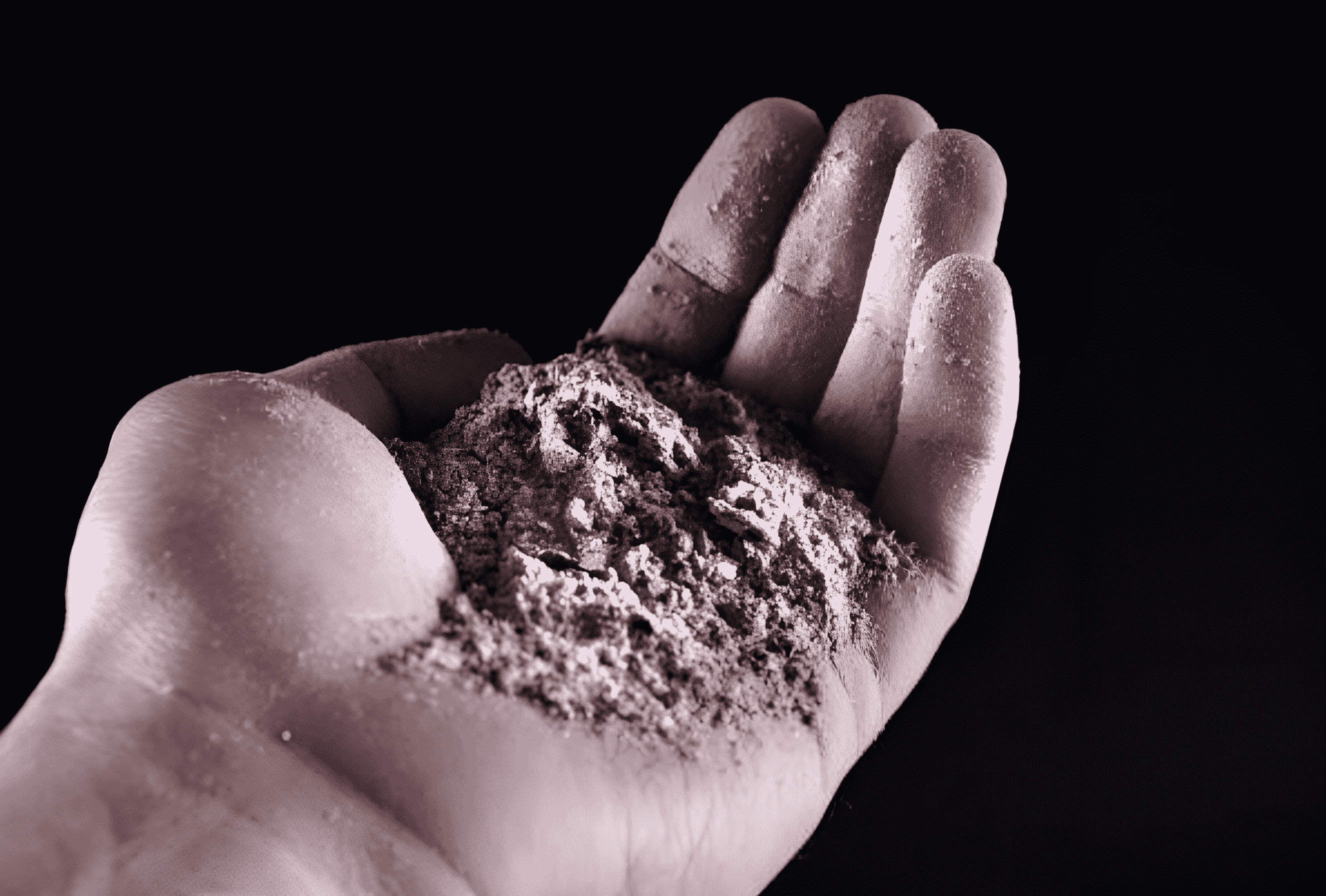
“says: in the sweat of thy face shalt thou eat bread, till thou return unto the ground; for out of it wast thou taken: for dust thou art, and unto dust shalt thou return.”
The fountains of guidance from which Islam and Muslims derive inspirations are Qur’an and Hadith. These two sources categorically do not mention cremation as a way to bury the dead. Therefore it is un-Islamic and unacceptable innovation, whether the corpses are claimed or unclaimed by the families. Islam views cremation as a total deviation from the natural course ordained by Allah, the All-Knowing.
He says: “Thereof (the earth) We created you, and into it We shall return you, and from it We shall bring you out once again” (Qur’an 20:55). “Then He causes him to die, and places him in his gravel”(Surah Abasa, 80:21).
Similarly, Allah pragmatically taught man how to bury the dead from the very first death in the time of Prophet Adam (Peace be upon him). Allah relates: “And recite to them the story of the two sons of Adam (Cain and Abel) in truth; when each offered a sacrifice, it was accepted from one (Abel) but not from the other (Cain). The latter said to the former: “I will surely, kill you… So the soul of the other encouraged him and made fair-seeming to him the murder of his brother; he murdered him and became one of the losers. Then Allah sent a crow who scratched the ground to show him how to hide the dead body of his brother. He said:
“Woe to me! Am I not even able to be as this crow and to hide the dead body of my brother” Then he became one of those who regretted. Q5:27-31
The Qur’an is not alone in its condemnation of cremation; the Hadith of the noble Prophet (Peace be upon him) also abhors it on the basis of the following narration ‘Ikrima reported that In ‘Abbas (May Allah be pleased with both of them) said: Allah’s Apostle said: ‘Do not punish anybody with Allah’s punishment of fire (Sahih Bukhari, Volume 9, Book 84, No. 57).
The Prophet has told us that a mayyit (a deceased person) knows who is bathing and shrouding him/her and who is lowering his body to the grave. Such knowledge is from Allah alone. What should be noted here is that we should treat the mayyit with the utmost of compassion, just as we would treat a person who is alive.
Again, cremation is contrary to Allah’s declaration with respect to the genesis and end of a man and like all other man-made institutions; it is based on human knowledge and culture. Allah warns: “And say not concerning that which your tongues put falsely: this is lawful and this is forbidden, so as to invent lies against Allah. Verily, those who invent lies against Allah will never prosper” (Surah 16, An-Nahl: 116)
In keeping with the spirit of this verse, according to scholars, it is necessary for Muslims to treat the human body with the utmost of respect, not only when a person is alive, but also when transited. Therefore, “burning the deceased or discarding bodies to be eaten by vultures, wild beasts, and others is considered sacrilege and abhorrent therefore, forbidden in Islam” Similarly, Prophet (SAW) was reported to have said, “The way of honoring the deceased is to bury him.”
Those who practice cremation are essentially devotes of Hinduism, humanists, atheists and rationalists who attach less importance to human corpses. Some other people prefer cremation to traditional burial option because the thought of a long, slow decomposition process of corpses is unappealing to them.
Furthermore, some others prefer cremation because it appears to be cost effective. All these reasons do not find place in Islam.
Islam views death, as continuity of human transition. On the strength of the account of the first burial in Islam as contained in the narration of the story of the two sons of Adam (Cain and Abel) Q5:27-31it is unanimously agreed that burial is the norm, while other methods of burial are aberrations designed by men based on insinuations of the devil and fancies of fellow men.
Rather, it has been proven that burying the dead is more environmentally friendly than cremation. Bathing the dead body; (except in extraordinary circumstances as in battle of Uhud) as soon as possible is an essential ritual of the Sunnah of the Islamic prophet Muhammad, and with that contaminated particles are removed.
Muslims and the rest of humanity evolve from the earth and must be returned to the earth by burial not burning. Islam instructs that burial should be conducted quickly after a person is certified clinically dead in compliance with Prophetic instruction.
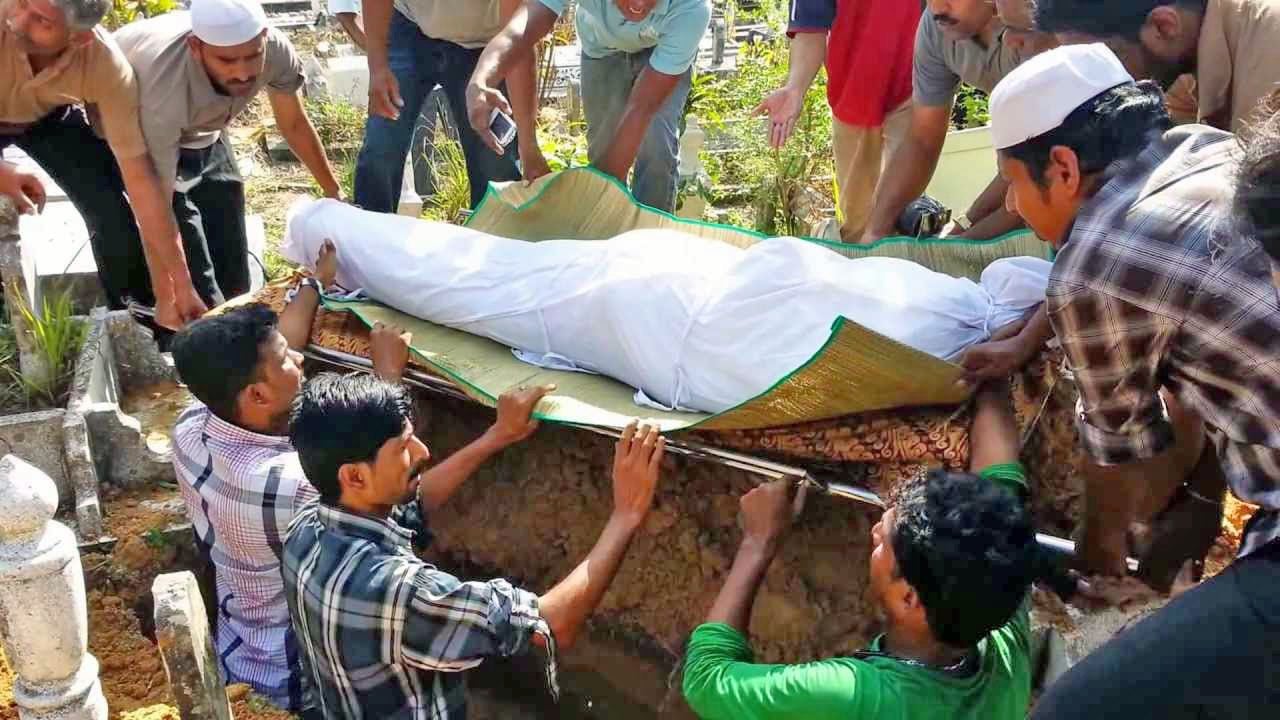
Funerals in Islam (called Janazah in Arabic) follows fairly specific rites, though it may be subjected to regional interpretation and variation in custom. In all cases, however, sharia (Islamic religious law) calls for of the body, preceded by a simple burial ritual involving bathing and shrouding the body, followed by salah (prayer).
The processes of body cremation, follow the process of roasting pattern, which are not befitting of human body, most especially, the Creator does not sanction such and practising it is surely a further step to hell fire. The Qur’an speaks of Hell in the past participles and states that it has already been created. “And fear the Fire which is prepared for the disbelievers.” (Q3:13). Hell is the ultimate humiliation and loss, and nothing is worse than it: “Know they not that whoever opposes God and His Messenger (Muhammed), certainly for him will be the Fire of Hell to abide therein? That is the extreme disgrace.” (Q9:63)
Hell exists forever. It is mentioned in various ways in the scriptures as; Jaheem fire – because of its blazing fire, Jahannam – Hell – because of the depth of its pit, Ladthaa – blazing fire – because its flames, Sa’eer – blazing flame- because it is kindled and ignited, Sagar – because of the intensity of its heat, Hatamah – broken pieces or debris – because it breaks and crushes everything that is thrown into it, Haawiyah – chasm or abyss – because the one who is thrown into it is thrown from top to bottom. It will never die down, and its inhabitants will remain in it forever. No one will come out of Hell except sinful believers who believed in the oneness of Allah in this life and believed in all of His Prophets.
Beyond religious sentiment, it is the social responsibility of all the living to honour the living and the dead according to their religious beliefs and traditions. Decent burial is also part of the fundamental human rights of man., Islam makes it an obligation on Muslims as a community to ensure that every Muslim who dies is properly washed, shrouded, and buried according to the teachings of Islam. The funeral prayer of the deceased should be performed on the body before it is taken to the grave. This is one of the rites an individual Muslim has on the Muslim community.
SPONSORED

SPONSORED

SONSORED
