
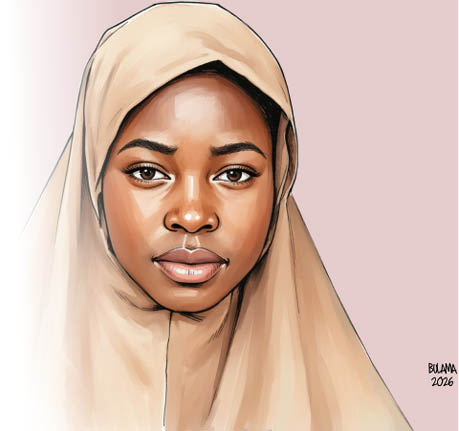
Court frees Walida, nullifies DSS actions
Federal High Court rules agency exceeded powers, orders victim’s release and police investigation of suspect
By Abdullahi Yusuf
A Federal High Court in Dutse has ruled that the Department of State Services acted outside its legal mandate in its handling of a high-profile abduction case involving a teenage girl.
Delivering judgment on an application for mandamus, the court held that the agency has no authority under the National Security Agencies Act to investigate offences such as rape, abduction or causing death.
The judge ruled that the matter, which involves one of the agency’s officials, falls outside the scope of the DSS, rendering its actions unlawful.
The court further restrained the agency from continuing any involvement in the case and declared all steps it had taken to be null and void. It ordered that the victim, identified as Walida Abdulhadi Ibrahim, be released and reunited unconditionally with her family.
The suspect, Ifeanyi Onyewuenyi, was ordered to be handed over to the police for proper investigation under the authority of the Commissioner of Police.
The ruling marks a significant legal intervention in a case that has drawn widespread public attention and raised questions about jurisdiction, due process and the role of security agencies in criminal investigations.
The case had intensified when the DSS handed over the teenager and her infant child to the Jigawa State government at its headquarters in Abuja.
Governor Umar Namadi, who received her, described the girl as “a daughter of Jigawa State” and said the government would ensure her protection while legal proceedings continued.
The Director-General of the DSS, Adeola Oluwatosin Ajayi, said the agency had kept her in protective custody since January 2026 after she was recovered from the suspect.
Walida was reported missing in November 2023 from Hadejia in Jigawa State at the age of 16. Her disappearance prompted a prolonged search by her family.
The case resurfaced in January 2026 when her father said he was contacted by the suspect, who claimed she was in Abuja and had given birth.
Subsequent allegations that she had been held at a DSS facility, along with claims of religious conversion, drew national attention and concern from civil society and religious organisations.
Legal petitions were filed to multiple authorities, including the police and the Office of the National Security Adviser, while a Jigawa court had earlier ordered her release to her family.
The DSS, however, had argued that investigations were ongoing. The case has since become a focal point in broader discussions about child protection, abuse of authority and the handling of sensitive legal and religious issues in Nigeria.
SPONSORED

SPONSORED

SONSORED
