
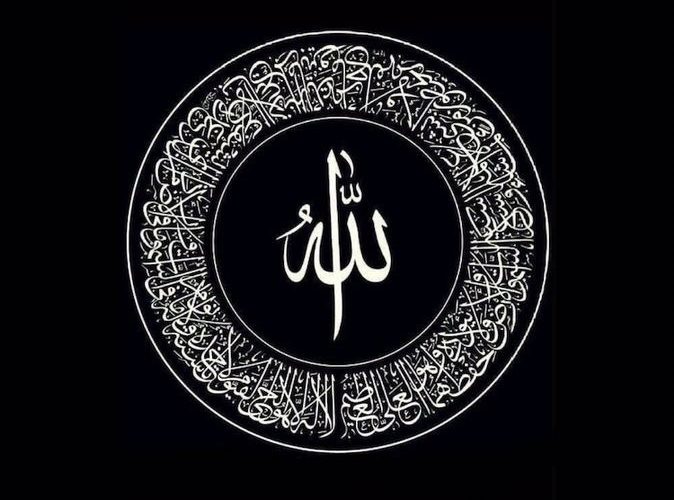
Ar-Rahman (Golden Words of Allah – Ep 97)
“So which of the favours of your Lord will you deny?”(Surah Ar-Rahman)
By Abdullahi Yusuf
In the name of Allah, the Beneficent, the Merciful. All perfect praise be to Allah, may He be glorified and exalted, the Lord of the Worlds. We testify that there is none worthy of worship except Allah and that Muhammad, (pbuh), is His slave and Messenger.
Among the most beautiful, powerful, and frequently recited chapters of the Qur’an is Surah Ar-Rahman. Known as the “Bride of the Qur’an” by some scholars due to its eloquence and beauty, this remarkable chapter is a profound reminder of Allah’s mercy, power, and countless blessings upon His creation.
“Ar-Rahman.” (The Most Merciful)
Before mentioning the creation of the heavens, the earth, mankind, or even the Qur’an itself, Allah introduces Himself through His mercy. It is a reminder that every blessing we enjoy begins with His mercy and every favour we possess is a manifestation of His generosity.
Allah says: “The Most Merciful. Taught the Qur’an. Created man. Taught him eloquence.”(Surah Ar-Rahman 55:1-4)
These opening verses establish a hierarchy of blessings. Allah mentions the Qur’an before the creation of man, indicating that divine guidance is among the greatest gifts ever bestowed upon humanity. Wealth, health, status, and worldly success all fade, but guidance leads to eternal success.
Throughout the Surah, Allah draws attention to His signs spread across creation. The sun and moon move according to precise calculation. The stars and trees submit to His command. The heavens are raised without pillars, and the earth is spread out with fruits, grains, and provisions for mankind.
Allah reminds us of the seas that meet yet do not overrun one another, from which emerge pearls and coral. He reminds us of the ships that sail like mountains upon the water and of every blessing that sustains human life. After mentioning each set of favours, Allah asks a question that echoes throughout the entire chapter: “So which of the favours of your Lord will you deny?”
This verse is repeated thirty-one times in Surah Ar-Rahman. It is not repetition without purpose; rather, it is a divine interrogation of the human conscience. Each repetition calls the believer to pause, reflect, and acknowledge the blessings that are often taken for granted.
When the Prophet (pbuh) recited Surah Ar-Rahman to the companions, they remained silent. He later said: “I recited it to the jinn on the night of the jinn, and they responded better than you. Whenever I recited: ‘So which of the favours of your Lord will you deny?’ they would say: ‘None of Your favours do we deny, our Lord; all praise belongs to You.’” (Jami’ at-Tirmidhi)
The Surah is unique because it addresses both mankind and jinn, repeatedly calling both to recognize Allah’s favours and acknowledge His mercy.
Yet Surah Ar-Rahman is not only about worldly blessings. It also reminds us of accountability. It speaks of the Day when every soul will stand before its Lord, when neither wealth nor status will avail anyone, and when the realities of Paradise and Hell will be unveiled.
For those who feared their Lord and lived in obedience to Him, Allah promises gardens beneath which rivers flow, abundant fruits, eternal comfort, and pleasures beyond imagination. After describing these rewards, the same question returns: “So which of the favours of your Lord will you deny?”
The message is clear. Every breath, every blessing, every opportunity, every moment of guidance, and every promise of Paradise is from Allah alone. Gratitude is not merely spoken by the tongue; it is demonstrated through faith, obedience, and remembrance.
Surah Ar-Rahman teaches that the believer should not focus on what he lacks, but on what Allah has already given him. The chapter transforms gratitude from an occasional act into a way of seeing the world. Wherever one looks, there are signs of Allah’s mercy.
“So which of the favours of your Lord will you deny?”
And Allah knows best.
SPONSORED

SPONSORED
