
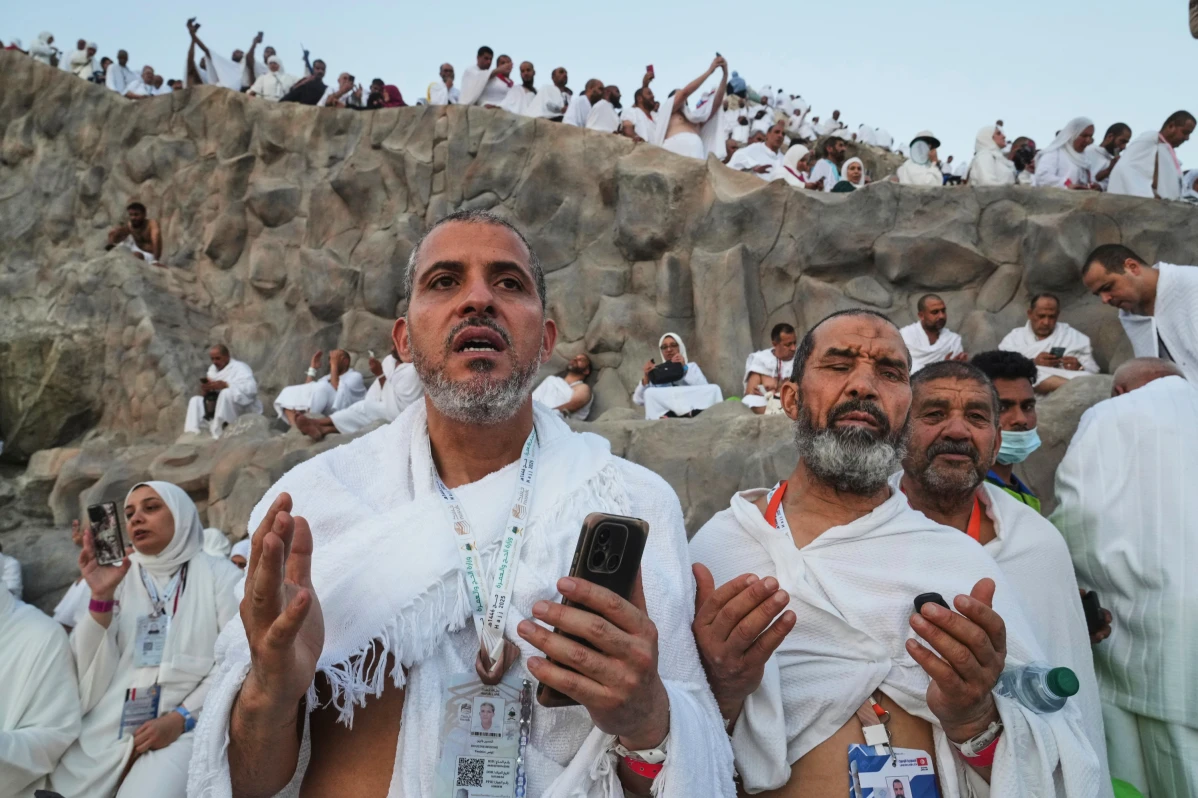
A look at the Hajj pilgrimage and Eid al-Adha and their significance to Muslims around the world
By Mariam Fam
Once a year, large numbers of Muslim pilgrims converge in Saudi Arabia, uniting in religious rituals and acts of worship as they perform the Hajj. While fulfilling a religious obligation, they immerse themselves in what can be a spiritual experience of a lifetime for them and a chance to seek God’s forgiveness and the erasure of past sins.
This year, the Hajj has been approaching against the backdrop of a tenuous ceasefire in the Iran war and related tensions and uncertainty in the Middle East.
Earlier in the year, travel chaos from the war ensnared some of the Muslims who were in Saudi Arabia performing “Umrah,” often referred to as the lesser or minor pilgrimage. Some were stranded and scrambled to find their way home.
Here’s a look at the annual Hajj pilgrimage and its significance to Muslims.
The Hajj is one of the pillars of Islam
The Hajj is the annual Islamic pilgrimage to Mecca in Saudi Arabia and involves a series of religious rituals. It’s required once in a lifetime of every Muslim who can afford it and is physically able to make it. Some Muslims make the journey more than once.
It is one of the Five Pillars of Islam, in addition to the profession of faith, prayer, almsgiving and fasting.
The annual Islamic pilgrimage cycles through the seasons
The Hajj occurs once a year during the lunar month of Dhul-Hijja, the 12th and final month of the Islamic calendar year. This year, the Hajj will officially start on Monday.
When the Hajj falls during the summer months, the intense heat can be especially challenging. Amid extreme high temperatures in 2024, more than 1,300 people died during Hajj, according to Saudi authorities. The country’s health minister said at the time that the vast majority of the fatalities were unauthorized pilgrims who walked long distances under the sun.
A religious obligation and a spiritual experience
For pilgrims, performing the Hajj fulfills a religious obligation and is also a deeply spiritual experience. It’s seen as a chance to seek God’s forgiveness, to grow closer to God and to walk in the footsteps of prophets.
Communally, the Hajj unites Muslims of diverse races, ethnicities, languages and economic classes from around the world. It leaves many feeling unity, connection and humility. Pilgrims also show up with their own personal appeals, wishes and experiences.
Many pilgrims bring with them prayer requests from family and friends that they would like to be said on their behalf.
Source: Associate Press
SPONSORED

SPONSORED

SONSORED
