
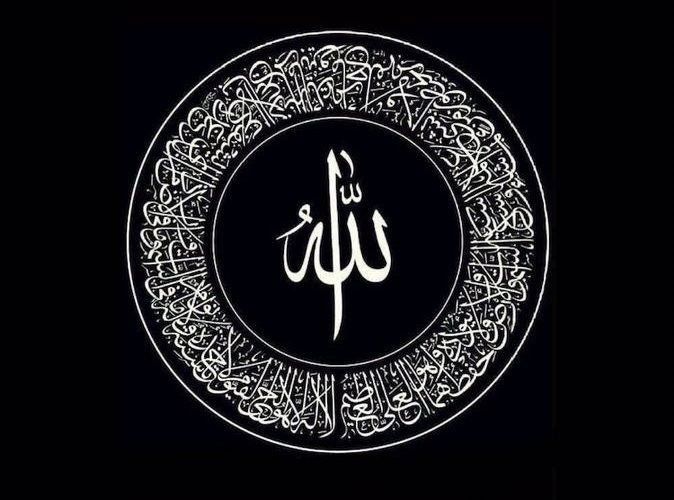
Why Do We Fear the Dead? (Golden Words of Allah Ep109)
“Every soul will taste death.” Surah Aal-Imran 3:185
By Abdullahi Yusuf
In the name of Allah, the Beneficent, the Merciful. All perfect praise be to Allah, may He be glorified and exalted, the Lord of the Worlds. We testify that there is none worthy of worship except Allah and that Muhammad, (pbuh), is His slave and Messenger.
There is something deeply unsettling about the moment a familiar face becomes lifeless. Someone whose company we once sought, whose presence brought comfort and whose absence we could hardly bear suddenly becomes someone we are afraid to sit beside.
A husband dies, and the wife who shared his bed for years may hesitate to remain alone in the room with his body. A child loses a parent, yet finds the sight of the deceased frightening. Even among relatives who have spent a lifetime together, death can introduce a strange distance between the living and the person who has passed away.
Why does this happen? Is this fear a natural human response, a spiritual matter or a misconception shaped by what we have been taught about death?
The Qur’an presents death as an inevitable reality ordained by Allah. Every soul, regardless of age, status, wealth or strength, will taste it. Allah says: “Every soul will taste death. And you will only be given your full compensation on the Day of Resurrection.” (Surah Aal-Imran 3:185).
Yet witnessing death can be difficult for the living. The body that once moved, spoke and responded to affection is now still. Its familiar features may remain, but the signs of life that made the person recognisable are gone.
Part of the fear may come from this sudden confrontation with mortality. A dead body reminds the living that their own existence in this world is temporary. The sight may also be unfamiliar or distressing, particularly when death has occurred suddenly or the body has undergone visible changes.
This does not necessarily mean that the person fears the deceased. They may be frightened by the sight of death itself or the uncertainty of what comes after it.
But what does Islam say about the body of someone who has died?
The Prophet Muhammad (peace be upon him) made clear that death does not remove the dignity owed to a person’s body. He said: “Breaking the bone of a dead person is like breaking it when he is alive.” (Sunan Abi Dawud 3207).
Islam also instructs the living to attend promptly to the deceased. The Prophet (peace be upon him) instructed Muslims to hasten the funeral rites, as recorded in Sahih al-Bukhari 1315 and Sahih Muslim 944.
Yet, despite these teachings, fear and uncertainty surrounding death have given rise to beliefs that go beyond what Islamic revelation establishes.
In some communities, stories circulate about spirits remaining in houses, returning to visit relatives, wandering around familiar places or haunting those who remain near the corpse. Some attach particular significance to three, seven or 40 days after death.
Such beliefs deserve careful examination. Islam affirms the existence of the soul and the reality of life after death, but that does not mean every popular story about the deceased returning to their former homes is established by revelation.
Allah says: “Allah takes the souls at the time of their death, and those that do not die during their sleep. He keeps those for which He has decreed death and releases the others for a specified term.” (Surah Az-Zumar 39:42).
The Qur’an also speaks of Barzakh, the barrier between death and resurrection. In Surah Al-Mu’minun 23:99–100, Allah describes the plea of a person facing death to be returned to worldly life and the barrier that remains until resurrection. This is a matter of the unseen, and we must be careful not to fill what revelation has left unknown with frightening stories or assumptions.
The Prophet (peace be upon him) also offered a sobering reminder of what accompanies a person to the grave. He said that three things follow the deceased: their family, their wealth and their deeds. Two return, while one remains. Their family and wealth return, but their deeds remain with them. (Sahih al-Bukhari 6514).
Those who loved the deceased may accompany them to the grave, mourn their departure and remember their life, but they cannot take their place in what lies ahead.
Perhaps, then, the question is not simply why we fear the dead, but what death reveals about the living. We may fear sitting beside someone’s lifeless body while forgetting that the same fate awaits every one of us.
Fear at the sight of a corpse does not necessarily amount to a failure of faith. Nor should it become an excuse to deny the deceased the dignity Islam commands. The proper response is to recognise death, reject unsupported superstitions and fulfil the rights of those who have passed away.
The body may become still, but the responsibility of the living does not end there. We owe the deceased dignity, prayers and the fulfilment of their funeral rights. And we owe ourselves the reminder that one day, others will stand beside our own bodies.
And Allah knows best.
SPONSORED
SPONSORED

SPONSORED

SPONSORED
