
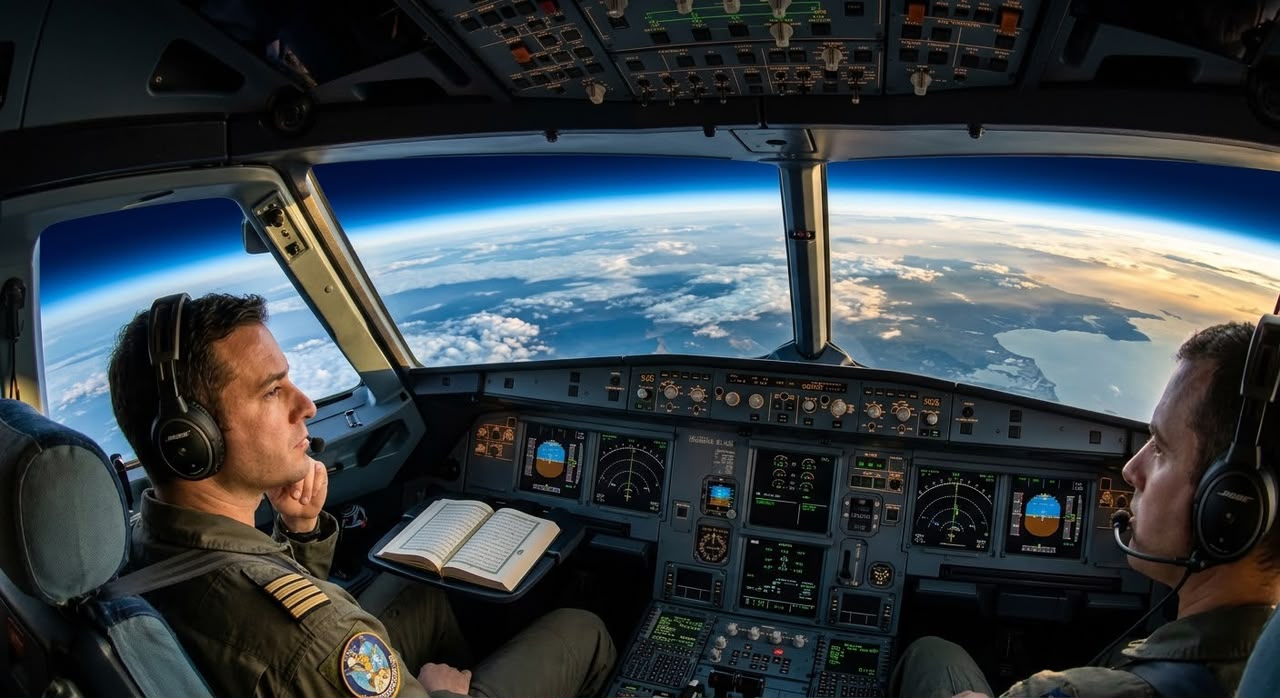
Science and Signs in the Qur’an
“And whoever Allah wills to guide – He expands his breast to Islam; and whoever He wills to misguide – He makes his breast tight and constricted as though he were climbing up into the sky.” (Al-Quran 6:125).
Chest Tightness in the Skies: The 1,400-Year-Old Quranic Marvel of High-Altitude Science
By A.S.M Razan
With modern technology and aviation, humanity has discovered that as we travel higher into the upper layers of the atmosphere, atmospheric pressure and oxygen levels drop significantly. Modern medicine records the physiological changes experienced by human bodies when ascending to the stratosphere in aircraft, where oxygen deprivation leads to chest constriction and severe breathing difficulties as an undeniable reality of high-altitude travel.
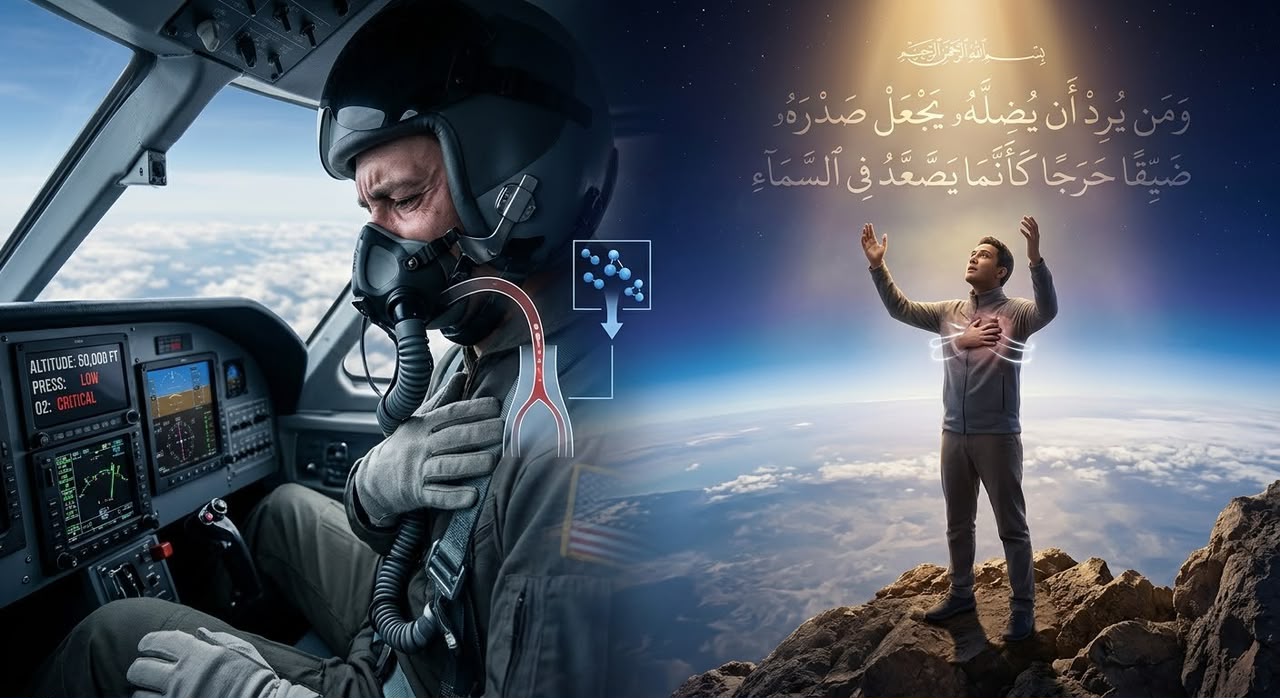
However, the Noble Quran revealed over 1,400 years ago, long before the advent of modern aviation, aerospace instruments, or barometric monitors proclaimed this exact cosmological and medical truth. Highlighting this profound physiological reality, the Almighty states in the Quran: “And whoever Allah wills to guide – He expands his breast to Islam; and whoever He wills to misguide – He makes his breast tight and constricted as though he were climbing up into the sky.” (Al-Quran 6:125).
The description of chest tightness and difficulty breathing when ascending high into the sky, matching precisely what modern science observes at high altitudes astonishes scholars worldwide. This profound alignment demonstrates that the Quran is a divine guide containing timeless truths far beyond the scientific means and understanding of its era.
Scientific literature thoroughly documents these high-altitude effects through established aviation and medical frameworks. Textbook resources such as Ernsting’s Aviation Medicine (5th Edition) provide detailed analyses of barometric pressure drops, hypoxia, and physiological responses during high-altitude and stratospheric ascents.
Additionally, regulatory documents like the Federal Aviation Administration (FAA) Pilot’s Handbook of Aeronautical Knowledge (specifically Chapter 1 7 on Aeromedical Factors) discuss altitude-induced hypoxia and hyperventilation, validating the physical constriction experienced at elevated heights. Complementary research and publications from organizations like the National Oceanic and Atmospheric Administration (NOAA) further detail atmospheric layers and pressure gradients.
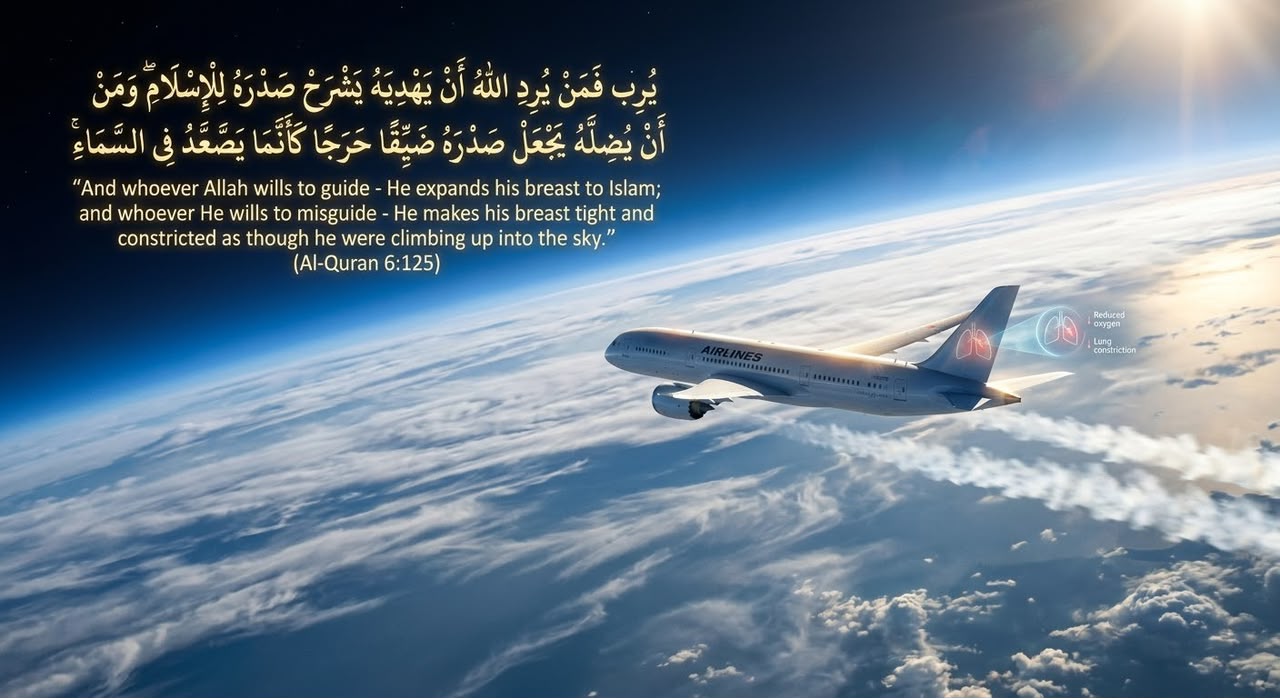
Ultimately, the seamless intersection between ancient scriptural text and contemporary aerospace science bridges faith and empirical discovery. This enduring harmony reinforces the divine authenticity of the Quran, offering an inspirational perspective on how modern scientific realizations were foreshadowed centuries prior.
Scientific References & Literature
Aviation Physiology and High-Altitude Medicine: Textbook: Ernsting’s Aviation Medicine (5th Edition) – Details barometric pressure drops, hypoxia, and physiological responses during high-altitude and stratospheric ascents.
Document/Manual: Federal Aviation Administration (FAA) – Pilot’s Handbook of Aeronautical Knowledge (Chapter 1 7: Aeromedical Factors), discussing altitude-induced hypoxia and hyperventilation.
Atmospheric Science: Document: National Oceanic and Atmospheric Administration (NOAA) publications on atmospheric layers (Stratosphere) and pressure gradients.
About the Author:
A.S.M. Razan (Abdul Salam Mohamed Razan) writes on Islam and science, with particular interest in the relationship between Qur’anic revelation and discoveries in biology, astronomy and cosmology. He is a physiotherapy student at the Faculty of Medicine, University of Colombo, Sri Lanka, and has a background in Biological Sciences. He is a guest writer for PEACE Magazine.

SPONSORED
SPONSORED

SPONSORED

SPONSORED
