
“We Were Wronged’: Egypt’s World Cup Dream Dies in Controversy
Disallowed goal, rejected penalty appeal and a dramatic late winner leave Pharaohs questioning whether their finest World Cup performance was undone by officiating rather than football
By Abdullahi Yusuf
For almost 90 minutes in Atlanta, Egypt appeared on course to produce one of the greatest upsets in FIFA World Cup history.
The Pharaohs, inspired by captain Mohamed Salah and buoyed by a fearless display against defending champions Argentina, held a two-goal advantage and looked set to eliminate one of the tournament favourites before a dramatic collapse saw Lionel Messi’s side fight back to claim a 3-2 victory.
Yet as celebrations erupted inside the Argentine camp, much of the post-match discussion shifted away from football itself and towards two contentious refereeing decisions that have dominated debate across the global game.
Former referees, television analysts, coaches and supporters have questioned whether key interventions by match officials altered the course of the contest, with Egypt insisting they were denied a fair opportunity to complete a famous victory.
The first major flashpoint arrived with Egypt leading 1-0.
A rapid Egyptian counterattack culminated in Mostafa Zico finding the net after being released by Salah, prompting jubilant celebrations among the Egyptian players.
However, following an extended Video Assistant Referee (VAR) review, officials ruled out the goal after identifying what they judged to be a foul by Marwan Attia on Argentina defender Lisandro Martínez during the early stages of the attacking move.
The challenge had occurred near Egypt’s own touchline several seconds before the ball eventually crossed the goal line.
The decision immediately divided opinion.
Former England goalkeeper Rob Green questioned whether VAR had been stretched beyond its intended purpose by reviewing an incident so far back in the attacking sequence.
Former FIFA referee Mark Clattenburg similarly argued that the challenge should neither have been judged a foul nor warranted intervention by VAR, suggesting the decision was inconsistent with the physical standard applied throughout the tournament.
Football writer Graham Scott also questioned whether the intervention represented an unusually broad interpretation of VAR protocol, noting that similar incidents in previous matches had not received the same level of scrutiny.
For Egypt, the disallowed goal represented a significant turning point in the contest.
If the first incident generated debate, the second produced even greater frustration within the Egyptian camp.
With the score level late in the match, Salah drove into Argentina’s penalty area before going to ground following a challenge from Julián Álvarez.
Egyptian players immediately appealed for a penalty, but referee François Letexier waved play on and VAR did not recommend an on-field review.
Within moments, Argentina launched a swift counterattack that ended with Enzo Fernández heading home what proved to be the winning goal.
The dramatic sequence transformed Egypt’s hopes of reaching the quarter-finals into elimination within seconds.
Television footage of the incident quickly spread across social media, fuelling widespread debate over whether Egypt had been denied a decisive spot-kick.
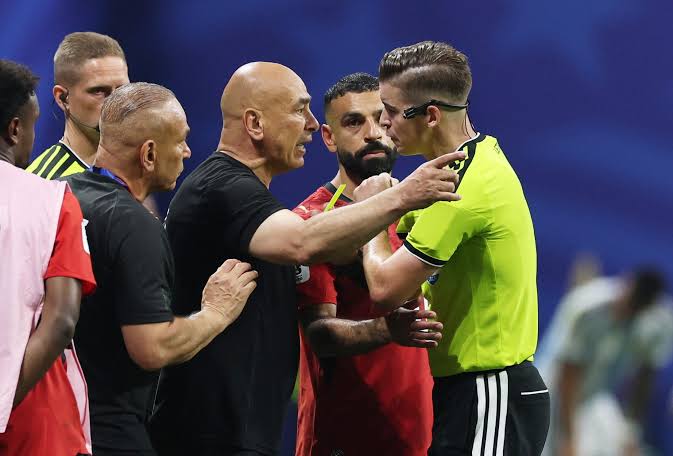
Egyptian players and coaching staff made little attempt to hide their disappointment after the final whistle.
Goalscorer Mostafa Zico described the defeat as deeply painful, saying his team believed crucial decisions consistently went against them after they established their two-goal advantage.
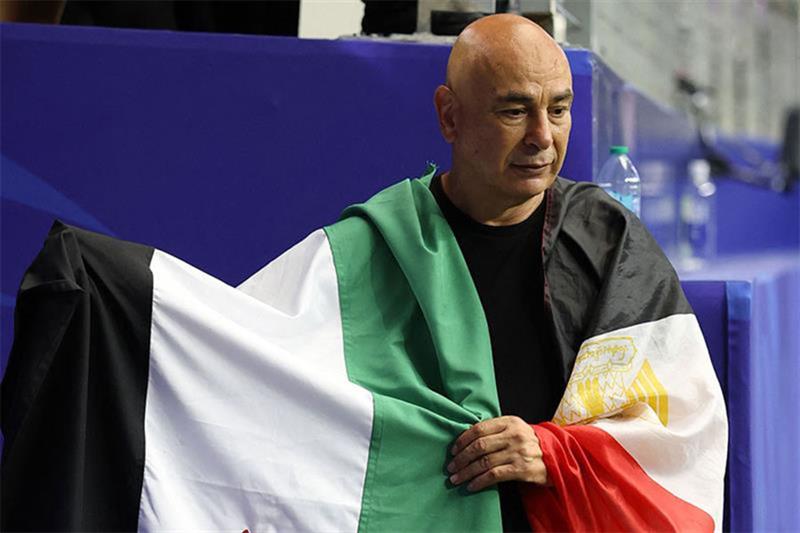
Head coach Hossam Hassan also criticised the officiating, arguing that Egypt had been denied both a legitimate goal and a penalty during decisive moments of the match.
The defeat was particularly emotional for Salah, whose post-match discussions with match officials reflected the frustration felt throughout the Egyptian camp after what may prove to be his final FIFA World Cup appearance.
While criticism of the officiating has been widespread, not every observer agreed with Egypt’s assessment.
Fox Sports officiating analyst Joe Machnik argued that additional camera angles supported the decision to disallow Egypt’s second goal, maintaining that the Laws of the Game permitted VAR to intervene once the foul had been identified.
Other analysts urged caution before concluding that Egypt had been unfairly treated, suggesting that several of the referee’s decisions were finely balanced rather than clearly incorrect.
Even among those who defended the officials’ application of the laws, however, there was acknowledgement that the match had become overshadowed by refereeing controversies instead of the football itself.
A performance worthy of history
Amid the debate, Egypt’s display itself earned widespread admiration.
The seven-time African champions produced arguably the finest World Cup performance in their history, frustrating the reigning champions for long periods through disciplined defending, intelligent pressing and clinical finishing.
Goalkeeper Mostafa Shobeir delivered one of the tournament’s standout performances, including saving a Lionel Messi penalty before making a succession of outstanding stops that kept Argentina at bay.
For much of the evening, Egypt looked every inch the better side.
Their eventual exit therefore left many supporters feeling that an historic achievement had slipped away amid controversy rather than being decided solely by football.
SPONSORED

SPONSORED

SONSORED
