
The Hijri Calendar: The Decision That Changed Islamic History
Established during the caliphate of Umar ibn al-Khattab, the Islamic calendar became one of the foundations of Muslim governance, worship and civilisational identity.
By Dr. Huseyn Zakaria
The Hijri calendar stands as one of Islamic civilisation’s most enduring achievements, providing a unified temporal framework that supported the administrative, legal, and religious organisation of the expanding Muslim state. Named after the Hijrah; the migration of Prophet Muhammad ﷺ from Makkah to Madinah in 622 CE. It was not formally instituted until the caliphate of ʿUmar ibn al-Khaṭṭāb (r. 13–23 AH / 634–644 CE), around 17 AH (638 CE). In this article I intend to explore the pre-Islamic Arab chronological practices, the administrative imperatives that prompted calendar reform, the consultative process among the Companions, and the broader civilisational significance of adopting the Hijrah as the epoch.
Furthermore, I will examine the significance, modern applicability, jurisprudential rulings of the calendar across the four Sunni schools of law, and the specific rulings on exchanging greetings during the Islamic New Year, with a particular emphasis on the Mālikī perspective. I will also argue that the Hijri calendar was not merely a dating tool but a deliberate political and identity-building project that reinforced Islamic unity and independence until eternity.
The impetus for compiling this comprehensive study arose from a recent and unexpected engagement. I received a call from a staff member of the British Broadcasting Corporation (BBC), Nigeria, who expressed a keen interest in discussing with me the history, foundation, and significance of the Hijrah. I accepted the request immediately, and we reconvened shortly thereafter. The discussion was profoundly successful, and the text you are about to read is a scholarly expansion of the insights shared during that conversation. It is my sincere hope that this work will benefit us all in one way or another, serving as a reminder of our rich civilisational heritage and the enduring wisdom of our pious predecessors. May Allah forgive and bless them.
Introduction:
Human societies have for long developed calendars to structure their social, economic, political, and religious life. Ancient Egyptians, Babylonians, Persians, Romans, and others created sophisticated systems tied to solar or lunar cycles since time immemorial. Islamic civilisation contributed the Hijri (lunar) calendar, also anchored to the lunar months and the pivotal Hijrah of 622 CE. While the Hijrah occurred in 622 CE, the formal calendar emerged later under ʿUmar ibn al-Khaṭṭāb. This delay reflected the early community’s modest size and reliance on event-based dating, which became inadequate as the Islamic state expanded across the Arabian Peninsula, Iraq, Syria, and Egypt. The resulting system unified administration while symbolizing a new era of empowerment and identity for Muslims until the end of time.
Chronological Systems Among Pre-Islamic Arabs:
Pre-Islamic Arabs lacked a sequential numerical year-counting system. They marked time through memorable events, a practice scholars term “event-based chronology.” Key references included the Year of the Elephant (ʿĀm al-Fīl), the Fijār Wars, the Alliance of Virtue (Ḥilf al-Fuḍūl), the rebuilding of the Kaʿbah, and years of famine and so on. This oral-culture method effectively preserved collective memory but lacked precision for large-scale governance. The most prominent marker was the Year of the Elephant (c. 570–571 CE), when Abraha al-Ashram, the Abyssinian governor of Yemen, marched on Makkah with war elephants to destroy the Kaʿbah. The Qurʾān commemorates this in Sūrat al-Fīl (105:1): “Have you not considered, [O Muhammad], how your Lord dealt with the companions of the elephant?” This year coincided with the birth of Prophet Muhammad ﷺ, embedding it deeply in Arab historical consciousness (Ibn Hishām, 1990).
The Arabic Months and the Abolition of al-Nasi:
Islam retained the twelve lunar month names already in use among pre-Islamic Arabs: Muḥarram, Ṣafar, Rabīʿ al-Awwal, Rabīʿ al-Thānī, Jumādā al-Ūlā, Jumādā al-Ākhirah, Rajab, Shaʿbān, Ramaḍān, Shawwāl, Dhū al-Qaʿdah, and Dhū al-Ḥijjah. The Qurʾān affirms this structure: “Indeed, the number of months with Allah is twelve [lunar] months in the register of Allah [from] the day He created the heavens and the earth” (Qurʾān 9:36).
However, pre-Islamic Arabs practised al-nasīʾ, the intercalation or postponement of sacred months to align lunar cycles with seasons or to justify warfare and trade that was based on whims and caprices. This manipulation was condemned in the Qurʾān: “Indeed, the postponing [of restriction within sacred months] is an increase in disbelief…” (Qurʾān 9:37). The Prophet ﷺ’s Farewell Pilgrimage sermon in 10 AH abolished this practice, restoring the pure lunar calendar, a reform strictly upheld by the Salaf (Ibn Kathīr, 1997).
Chronology in the Prophetic and Early Caliphal Eras:
During the Prophet’s lifetime and Abū Bakr’s caliphate (11–13 AH), dating solely relied on major events (e.g., Year of Badr, Uhud, Trench), months, or simple references. As the community remained relatively compact, this sufficed. However, rapid conquests under ʿUmar exposed the limitations of this system. A vast bureaucracy emerged, handling correspondence, contracts, judiciary matters, military logistics, and treasury affairs.
The catalyzing incident for reform involved a letter from Governor of Egypt Abū Mūsā al-Ashʿarī to the Caliph Umar ibn al-Khaṭṭāb , which included documents dated only “Shaʿbān.” ʿUmar noted that officials could not distinguish which Shaʿbān was intended, as the correspondence had become ambiguous. Recognizing the administrative crisis, he convened all the senior Companions for consultation (al-Ṭabarī, 1967).
Deliberation and the Choice of the Hijrah:
When ʿUmar ibn al-Khaṭṭāb convened the consultative council (shūrā) of the senior Companions from the Muhājirūn and the Anṣār in 17 AH, the assembly included luminaries such as ʿUthmān ibn ʿAffān, ʿAlī ibn Abī Ṭālib, ʿAbd al-Raḥmān ibn ʿAwf, Saʿd ibn Abī Waqqāṣ, and Muʿādh ibn Jabal (may Allah be pleased with them all). They all deliberated deeply on the most fitting epoch. Some suggested the Prophet’s birth, but this lacked precise consensus on the exact date. Others proposed the start of Revelation, but this marked a private, gradual phase. A third suggestion was the Prophet’s death, but the Companions rightly rejected this, as it was a moment of profound grief and sorrow for the Ummah.
It was ʿUthmān ibn ʿAffān who profoundly articulated the pivotal nature of the migration, stating that the Hijrah was the very event that distinguished truth from falsehood (furqān), and thus it should be the era. ʿAlī ibn Abī Ṭālib strongly corroborated this, noting that the Prophet ﷺ migrated at a time when he was leaving behind the land of polytheism (shirk), making it the ultimate milestone for the establishment of Islam. Consequently, ʿAbd al-Raḥmān ibn ʿAwf, Saʿd ibn Abī Waqqāṣ, and the rest of the council unanimously selected the Hijrah (622 CE) as the epoch.
Furthermore, when discussing the starting month, ʿAlī ibn Abī Ṭālib specifically suggested Muḥarram. He reasoned that it is the month following the Ḥajj season, a time when people naturally conclude their major annual gathering and return to their homes, making it a logical administrative starting point for a new year. This profound juristic reasoning (ijtihād) of the Salaf was universally accepted and later reinforced under the Caliphate of ʿUthmān bin Affān (al-Bayhaqī, 1994; Ibn Ḥajar, 1960).
Characteristics and Civilisational Dimensions:
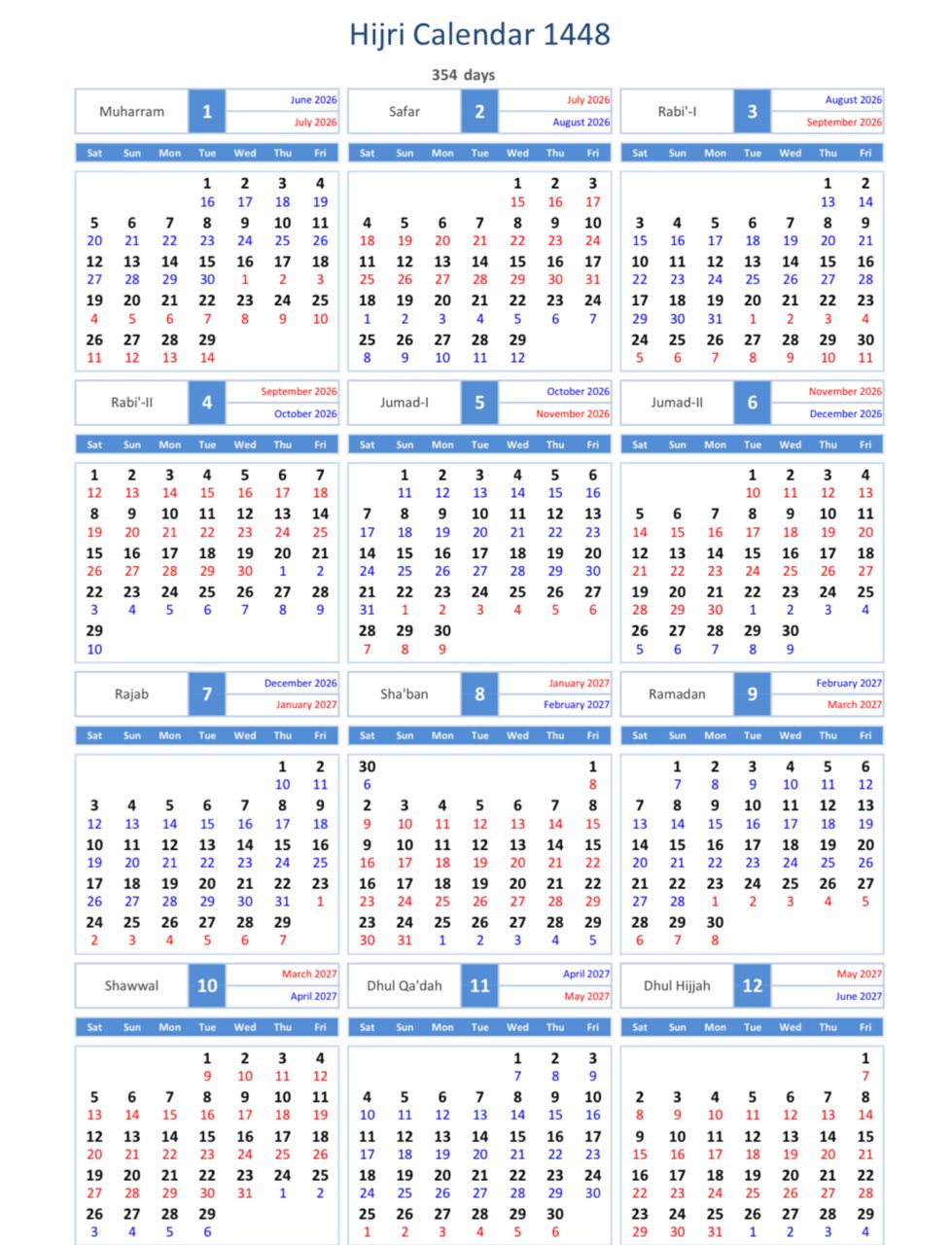
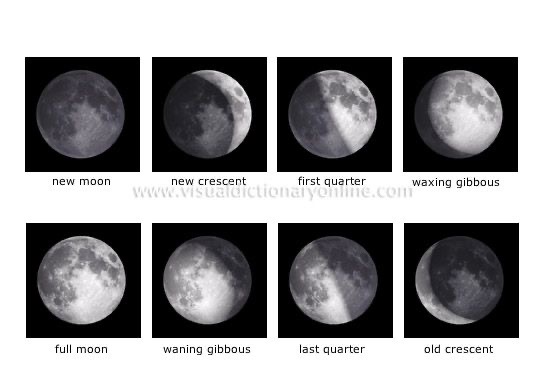
A purely lunar system, the Hijri year averages 354–355 days. It is 10–11 days shorter than the solar (Gregorian) year, causing religious observances to cycle through all seasons over a 33-year period. Months begin with the sighting of the new crescent moon (ruʾyah), preserving a connection to natural observation and collective participation of the Ummah all around the world.
The historical trajectory of this calendar is marked by foundational milestones: the Year of the Elephant and the Prophet’s birth (c. 570–571 CE); the beginning of Revelation (610 CE); the Hijrah itself (622 CE / 1 AH); the passing of the Prophet ﷺ (632 CE / 11 AH); and the official institutionalisation of the calendar by ʿUmar (c. 638 CE / 17 AH).
The Hijri calendar transcended mere chronology. Religiously, it regulates worship cycles. Administratively, it standardized records and governance. Economically, it governed contracts, debts, and fiscal years. Politically, it unified the ummah’s temporal framework, fostering a distinct Islamic consciousness independent of Gregorian, Indian, Byzantine or Persian systems (Zein, 2021).
The Significance and Modern Applicability of the Islamic Calendar:
The significance of the Hijri calendar extends far beyond timekeeping; it is a profound spiritual and civilisational anchor. Spiritually, it dictates the timing of obligatory acts of worship such as fasting in Ramaḍān, the pilgrimage of Ḥajj, and the calculation of Zakāt and ʿIddah (waiting periods). This lunar cycle ensures that these acts of worship rotate through all seasons, distributing the spiritual and physical equitably across different geographical latitudes. Civilisationally, by anchoring time to the Hijrah, it constantly reminds the Ummah of the transition from persecution to empowerment, standing as a testament to Islamic independence.
In the contemporary era, the applicability of the Hijri calendar remains deeply embedded in the religious and legal fabric of the Muslim world. Religiously, it is universally applied to determine the start and end of Ramaḍān and the days of Ḥajj. Legally and financially, it is the foundation of Islamic personal status law, governing marriage contracts, divorce, and inheritance. In Islamic finance, the calendar is crucial for calculating deferred payments, lease agreements (ijārah), and the maturity of Sukuk (Islamic bonds), ensuring compliance with Sharīʿah principles that tie financial obligations to specific lunar terms (Ilyas, 1984). While many Muslim-majority countries have adopted the Gregorian calendar for international trade, nations such as Saudi Arabia and Morocco continue to utilize the Hijri calendar and global standardisation of the Hijri Calendar as their primary official civil calendar. Modern astronomical calculations and digital applications have significantly enhanced the date, facilitating its applicability in an interconnected world (King, 2004; Odeh, 1999).
Jurisprudential Rulings on the Calendar Across the Four Schools of Law:
The jurisprudential ruling on the adoption and use of the Hijri calendar is a subject of detailed analysis across the four Sunni schools of law. There is a unanimous consensus among the Ḥanafī, Mālikī, Shāfiʿī, and Ḥanbalī schools that the use of the lunar calendar is strictly obligatory (wājib) for specific acts of worship (ʿibādāt) explicitly tied to time in the Qurʾān and Sunnah, such as fasting, Ḥajj, Zakāt, and ʿIddah.
Regarding its use for civil, administrative, and historical dating, the majority of jurists consider the official adoption of the Hijri calendar by the Muslim state to be a collective obligation (farḍ kifāyah) or highly recommended (mandūb) to preserve Islamic identity. The Salaf al-Ṣāliḥ (the pious predecessors) never used solar calendars for official state documents; their strict adherence to the lunar calendar makes it a binding Sunnah of the Rightly Guided Caliphs, in accordance with the Prophet’s ﷺ command: “You must follow my Sunnah and the Sunnah of the Rightly Guided Caliphs after me” (Abū Dāwūd, 2009).
The Mālikī Perspective:
The Mālikī school forinstance, with its profound emphasis on the objectives of Sharīʿah (maqāṣid al-sharīʿah) and public interest (maṣlaḥah), provides a particularly robust framework for understanding the necessity of the Hijri calendar. Classical Mālikī scholars, such as Abū Isḥāq al-Shāṭibī in Al-Muwāfaqāt, emphasise that the preservation of the Muslim community’s distinct identity is a fundamental objective of the Sharīʿah (al-Shāṭibī, 1997). Consequently, abandoning the Hijri calendar in favour of foreign systems without genuine necessity is viewed as a means to the erosion of Islamic identity, which must be blocked under the principle of Sadd al-Dharāʾiʿ (blocking the means to harm).
Furthermore, Imam Mālik’s foundational reliance on the ʿAmal Ahl al-Madīnah (the living practice of the people of Madinah) inherently validates the lunar dating system, as it was the uninterrupted practice of the Salaf in the Prophet’s city. Therefore, Mālikī jurists rule that while using other calendars for sheer convenience in isolated instances is permissible, the state’s exclusive reliance on them is strongly discouraged (makrūh) or prohibited if it leads to the marginalization of Islamic symbols (al-Dasūqī, 1996). The Mālikī tradition thus, views the calendar not merely as a tool, but as a vital symbol of the Ummah’s sovereignty.
Views of the Other Schools:
The other schools share this underlying concern for Islamic identity. The Ḥanafī school, as noted by Ibn ʿĀbidīn, permits the use of non-Arabic or non-Islamic calendars for administrative necessity but warns against imitating non-Muslims (tashabbuh) in their festivals and temporal systems (Ibn ʿĀbidīn, 1992). The Shāfiʿī and Ḥanbalī scholars similarly maintain that while there is no explicit textual prohibition against using the Gregorian calendar for practical, international administrative needs, prioritising the Hijri calendar remains a vital symbol of Islamic identity, and abandoning it entirely for state affairs is a departure from the honoured Sunnah of the Sahaba (al-Nawawī, 1995; al-Buhūtī, 1983). Thus, the fiqh perspective balances the strict obligation of the lunar calendar in worship with pragmatic flexibility in civil affairs, provided the Islamic calendar is never entirely abandoned in official state matters.
Jurisprudential Rulings on Exchanging Greetings, Organizing Feast Festival or Fasting to Mark the Occasion of the Hijrah:
A natural corollary to the establishment of the Islamic calendar is the social practice of exchanging greetings and pleasantries at the onset of the new year, specifically the first of Muḥarram. Before delving into the jurisprudential nuances, it is imperative to establish the historical precedent set by the Salaf al-Ṣāliḥ.
There is authentic historical evidence that the early generations congratulated one another on the arrival of the new year. The eminent Successor (Tābiʿī) Abū Maʿshar al-Sindī narrated: “I asked Muḥammad ibn Ziyād al-Alhānī about the people’s greeting each other on the first day of the year… He said: I met people who had accompanied Muʿāwiyah and Abū Bakr… and they used to congratulate each other on the day of the year” (Ibn ʿAsākir, 1995). This narration from the treasures of the Salaf demonstrates that exchanging greetings at the onset of Muḥarram is a recognized social custom with deep historical roots in the early Muslim community.
The Mālikī Perspective:
In the Mālikī school of jurisprudence, which places immense weight on the living practice of the people of Madīnah and the broader objectives of social harmony (maṣlaḥah), exchanging greetings at the onset of the Islamic year is viewed through the lens of customary social interactions (muʿāmalāt and ʿurf). According to the foundational Mālikī legal maxim, the default ruling in matters of worldly customs and social interactions is permissibility (al-aṣl fī al-ashyāʾ al-ibāḥah), provided there is no textual prohibition.
Because the Salaf engaged in this practice, Mālikī scholars view it as a permissible (mubāḥ) and commendable social courtesy that fosters love and brotherhood among Muslims. Classical Mālikī texts on social etiquette, such as those by Imam al-Ṭurṭūshī, encourage maintaining good relations and showing joy at the arrival of blessed times, as long as it does not devolve into extravagance. The Mālikī school strictly warns, however, against elevating this greeting to the status of a religious ritual (ʿibādah) or a fixed Sunnah that one feels sinful for omitting. It remains a beautiful custom (ʿurf ḥasan) that aligns with the Mālikī principle of accommodating beneficial societal practices (al-Zarqānī, 1990).
Views of the Other Schools:
The other three Sunni schools of jurisprudence share a remarkably similar consensus regarding the permissibility of these greetings:
The Ḥanafī school considers exchanging greetings on the first of Muḥarram to be entirely permissible. Scholars such as Ibn ʿĀbidīn clarify that while it is not a formal religious obligation or a ritual act of worship, it falls under the category of good social conduct (adab) and is therefore permissible and even praiseworthy as a means of strengthening communal bonds (Ibn ʿĀbidīn, 1992).
Within the Shāfiʿī tradition, scholars have historically affirmed the permissibility of congratulating one another on the arrival of new months and years. Imam al-Suyūṭī and other Shāfiʿī jurists noted that since the Salaf engaged in this practice, it cannot be classified as a blameworthy innovation (bidʿah sayyiʿah). Rather, it is a permissible social interaction that reflects joy at the continuation of life and the opportunity to worship Allah in the new year (al-Suyūṭī, 1983).
The Ḥanbalī perspective, echoed by classical jurists and contemporary scholars like Ibn ʿUthaymīn, maintains that exchanging greetings for the Islamic New Year is permissible (jāʾiz). The Ḥanbalī school distinguishes clearly between acts of worship (taʿabbudī) and social customs (muʿāmalah). Since greeting one another is a social custom and the Salaf practised it, it is allowed. However, they emphasise that it must not be accompanied by any specific religious rituals, special prayers, or the belief that it is a mandatory Sunnah, thereby preserving the purity of Islamic worship (Ibn ʿUthaymīn, 2001).
In summary, across all four Madhhabs, and deeply rooted in the practice of the Salaf, exchanging pleasantries and greetings during the occasion of the Hijrah is unanimously regarded as a permissible and socially beneficial custom, provided it is kept within the boundaries of social etiquette and not elevated to a formal religious obligation.
However, initiating such greetings under the assumption that they constitute an established Sunnah is groundless, as warned by the prophetic narration stating that any innovated matter introduced into the religion will be rejected (Sahih al-Bukhari, 2697).
Fasting the New Year Day:
Dedicating the specific opening day of the New Year for fasting is considered reprehensible (Makruh) or an innovation if done under the belief that this particular date holds distinct ritual virtue. The authentic Sunnah contains no evidence of the Prophet ﷺ fasting to mark the Hijrah. Similarly, the Sahabas who founded the calendar did not mark it with any act of established ibadah such as prayers or azkar or Fasting. However, while fasting on the first of Muharram is highly virtuous if it occurs naturally within a person’s regular habit of voluntary fasting such as the Mondays, Thursdays or white days, or as part of the generally praised practice of fasting throughout the sacred month of Muharram (Sahih Muslim, 1163). But, singling out the day as an isolated New Year ritual lacks textual authority and is bid’ah.
Organizing Special Feast:
Organizing feasts, gatherings, or commemorative celebrations to mark the beginning of Hijrah as a recurring annual festival is unlegislated and unfounded in Islam. The Shari’ah strictly defines the periodic festivals of the Muslim community. Upon his arrival in Madinah, the Prophet ﷺ explicitly restricted religious festivities, stating that Allah had replaced all former days of celebrations with two specific occasions: Eid al-Fitr and Eid al-Adha (Sunan An-Nasa’i, 1556).
So, introducing a third recurring festival, even to honour a major historical milestone, runs counter to this prophetic guidance. Academic lectures or educational forums designed to analyze the historical lessons of the Hijrah remain entirely permissible, provided they do not transform into ritualized holiday practices. Though this an isolated opinion.
Conclusion:
The Hijri calendar emerged as a pragmatic response to state needs and a profound civilizational statement. By anchoring time to the Hijrah, the Companions, through the profound insights of ʿUthmān, ʿAlī, and the rest of the consultative council, underscored themes of migration from oppression to justice, community-customs like the exchange of greetings, affirm thatbuilding, and divine guidance. The consensus of the Salaf and the jurisprudential rulings of the four schools, emphasis on preserving Islamic identity and accommodating beneficial social customs like the exchange, affirm that the calendar is an indispensable pillar of Islamic civilization.
In an era of globalization and Gregorian dominance, many Muslim societies have marginalized the Hijri system for civil purposes. Renewing its prominence in education, administration, and culture is not merely a nostalgic endeavour, but a jurisprudential and civilisational imperative that strengthens Islamic identity while accommodating modern realities through technology and international cooperation.
Alhamdu lillah, this is what Allah has granted me to share with you, hoping that such occasions will repeat severally during our lifetime and in good health and high spirit of Iman!
Amin thumma amin!
SPONSORED

SPONSORED

SONSORED
