
The End of an Era at JAMB: What Oloyede’s 10 Years Says About Public Service in Nigeria
By Comrade Kunle Sodipo
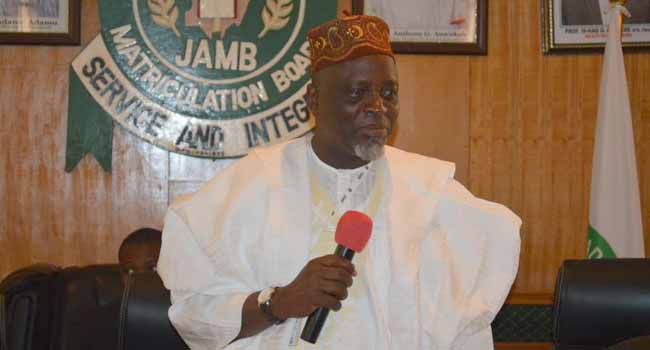
After a decade at the helm, Prof. Is-haq Olanrewaju Oloyede is set to step down as Registrar of the Joint Admissions and Matriculation Board. The announcement came on Monday at the 2026 Policy Meeting on Admissions in Abuja, with the Minister of State for Education, Prof. Suwaiba Said Ahmad, confirming it will be his last.
Ten years. One institution. A complete rewiring of how Nigeria handles university admissions and public finance.
From ₦50m in 38 Years to ₦7.8bn in One Year
When Oloyede assumed office on 9th August 2016, JAMB was known for two things: annual UTME chaos, and embarrassingly low remittances to government coffers. Between 1978 and 2016, the board sent less than ₦50 million to the Federal Government—total.
Within three years of his arrival, that changed. In 2017 alone, JAMB remitted ₦7.8 billion. From 2016 to 2026, the board posted a ₦20.7 billion operating surplus and funded physical and human development projects from its internally generated revenue.
The knock-on effect was immediate and rare in Nigerian public service: the Federal Government cut tertiary institution application fees by 30%. For millions of families, that was real money back in their pockets.
This wasn’t magic. It was systems, transparency, and an unwillingness to accept “that’s how we’ve always done it” as an answer.
Fixing the Machine, Not Just the Message
Oloyede didn’t stop at finance. He overhauled JAMB’s operations, tightened exam integrity, and dragged the board into the digital age. The yearly policy meeting became more than a ritual—it became a space where admission standards, cut-off marks, and institutional accountability were debated openly.
That matters because JAMB sits at the choke point of Nigeria’s education pipeline. If it’s broken, the entire tertiary system feels it. If it works, the ripple effect reaches secondary schools, universities, and the labor market.
His track record didn’t start at JAMB. As Vice-Chancellor of the University of Ilorin from 2007 to 2012, he chaired both the Association of Vice-Chancellors of Nigerian Universities and the Committee of Vice-Chancellors. He came in with academic credibility, and he used it to force administrative discipline.
A Scholar in Public Service
At 71, Oloyede is a professor of Islamic Studies with close to 100 academic papers and decades of conference participation worldwide. The state recognized that blend of scholarship and administration: Officer of the Federal Republic in 2014, Commander of the Order of the Niger in 2022, National Productivity Order of Merit Award in 2019, and the Nigeria Excellence Award in Public Service in 2022.
But honours don’t run institutions. Culture does. And the culture at JAMB shifted from one of opacity and waste to one of measurable output.
Why This Matters Beyond JAMB
Nigeria’s public service problem isn’t a lack of talent. It’s a lack of tenure and accountability. We rotate people too fast to build systems, and too slow to hold them responsible when they don’t.
Oloyede’s 10-year run shows what happens when you give a capable hand both time and space. He inherited a leaky institution and left it with a surplus, credibility, and a playbook. The phrase “we will just give you a resting period to relax a bit and then we will just call you back” from the Minister of State tells you everything: this isn’t a dismissal. It’s a pause before the next assignment.
That’s how it should work. Reward competence, don’t exile it.
The Challenge for Whoever Comes Next
The bar is now set. The next JAMB Registrar inherits an institution that Nigerians expect to be efficient, transparent, and financially accountable. Any slide back to the pre-2016 era will be noticed immediately.
And for the rest of us, Oloyede’s tenure is a reminder: public institutions are not doomed to fail. They fail when leadership lacks will. They work when leadership chooses to treat public money and public trust as sacred.
Final Word
Prof. Is-haq Oloyede is married, a father of four adult children and grandfather. He leaves office not as a politician, but as a technocrat who proved that even the most maligned government agency can be turned around.
In a country where public service is often synonymous with waste, his 10 years at JAMB stand out as an exception—and a challenge.
The question now is simple: will Nigeria build more institutions like the JAMB he’s leaving behind, or will we let it slide back to what it was?
SPONSORED

SPONSORED

SONSORED
