
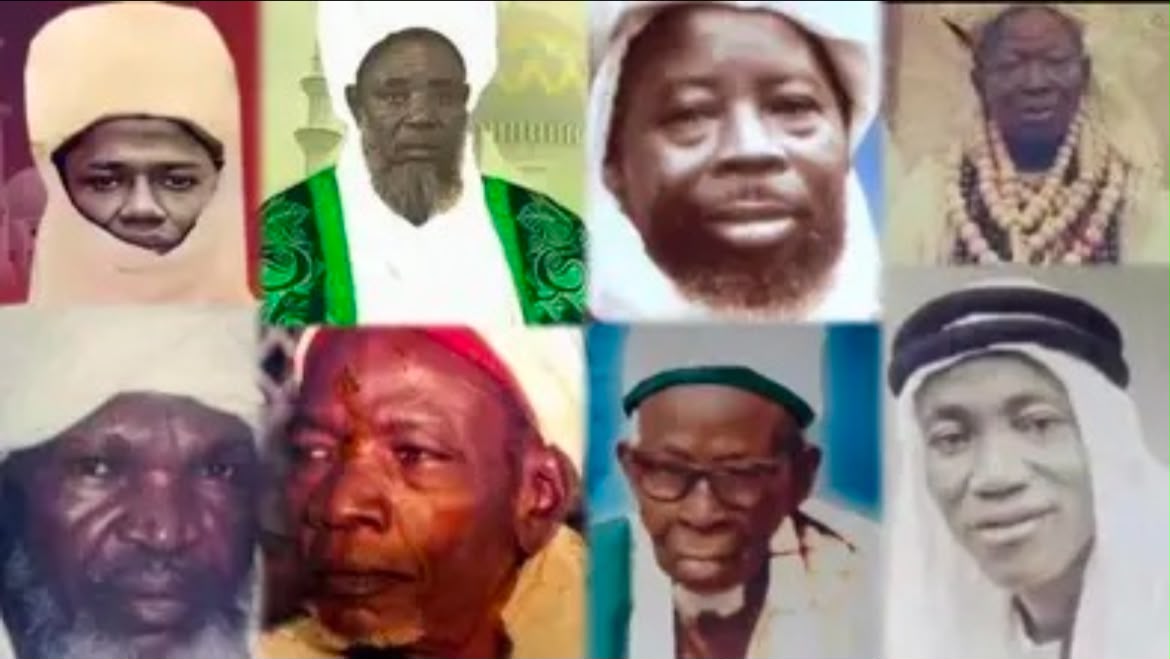
Social Media and the Escalation of Discord among Muslims in Yorubaland
By Sheikh Yuusuf Adam El-llory
Social media, particularly through monetisation, the pursuit of attention and the desire for instant fame, has contributed to the escalation of disputes and divisions among Muslims in Yorubaland. Rather than serving solely as a platform for Islamic propagation, education and constructive engagement, social media has, in some instances, become a medium through which old wounds are reopened, settled disputes are resurrected and verbal confrontations are intensified.
Issues that had previously been resolved are sometimes brought back into the public domain, while disagreements that could have been addressed privately are transformed into prolonged online controversies. Cyberbullying, intimidation, personal attacks, inflammatory exchanges and public accusations have increasingly featured in some of these disputes. Such developments not only undermine Muslim unity but also impede the collective development of Islam, Arabic education and Islamic scholarship in Yorubaland.
Of particular concern is the involvement of prominent Islamic scholars, their students and students of various madāris in these social-media controversies. At one point or another, some have become deeply involved in defending their Shaykh, madrasa, scholarly tradition or the allies of their Shaykh. In the process, the focus of Islamic daʿwah and Arabic-Islamic education can shift from teaching, spiritual development, intellectual engagement and moral reform to cyberbullying, intimidation, verbal attacks and struggles for supremacy.
This raises fundamental questions:
Where is the piety?
Where is the morality?
Where are integrity and dignity?
Where is the conscience?
Islamic scholars occupy a position of enormous moral responsibility. They are expected to contribute to the purification of the soul, reconciliation between disputing parties, preservation of brotherhood, promotion of peace and maintenance of social order. Yet it is deeply troubling when those who are expected to serve as agents of reconciliation become, even inadvertently, participants in the escalation of conflict.
There is an irony that should not be overlooked. At times, individuals popularly regarded as the “big boys” of the streets have been able to reconcile their differences and settle disputes amicably. If people outside the scholarly establishment can put aside their differences for the sake of peace, why should it be so difficult for the ʿulamāʾ, who possess religious knowledge and moral authority, to undertake the same responsibility?
The purpose of Islamic scholarship should not be to produce permanent factions, competing camps or endless online confrontations. The dignity of the ʿālim lies not merely in the knowledge he possesses, but also in how that knowledge is translated into character, restraint, wisdom, reconciliation and service to the community.
Social media itself is not inherently harmful. It can be a powerful instrument for daʿwah, education, intellectual exchange and the dissemination of beneficial knowledge. The problem arises when the pursuit of visibility, monetisation, popularity and instant recognition takes precedence over sincerity, wisdom and the ethical principles of Islamic communication.
The Muslim community in Yorubaland needs scholars who can rise above factional interests, restrain their followers from unnecessary confrontations and use their influence to heal rather than deepen divisions. Students of knowledge, likewise, should understand that defending a Shaykh does not require insulting another scholar, attacking another madrasa or humiliating fellow Muslims.
Every generation leaves behind a record of its actions. History is recording what we are doing today. The words we publish, the conflicts we amplify, the people we attack and the disputes we either resolve or perpetuate will become part of the history of our religious community.
The question, therefore, is not simply what we can say on social media, but what kind of legacy we want to leave behind.
May our knowledge produce wisdom, our scholarship produce reconciliation and our influence contribute to the unity, dignity and development of Islam in Yorubaland.
SPONSORED

SPONSORED

SONSORED
