
Pentagon purge or a warning of a wider war with Iran?
Dismissal of General Randy George raises questions over whether dissenting military voices are being sidelined as US weighs the risks of a ground invasion
By Abdullahi Yusuf
The abrupt dismissal of a senior United States military commander has raised fresh questions about whether Washington is quietly shifting towards a far more dangerous phase of confrontation with Iran, one that some within its own ranks are said to have warned against.
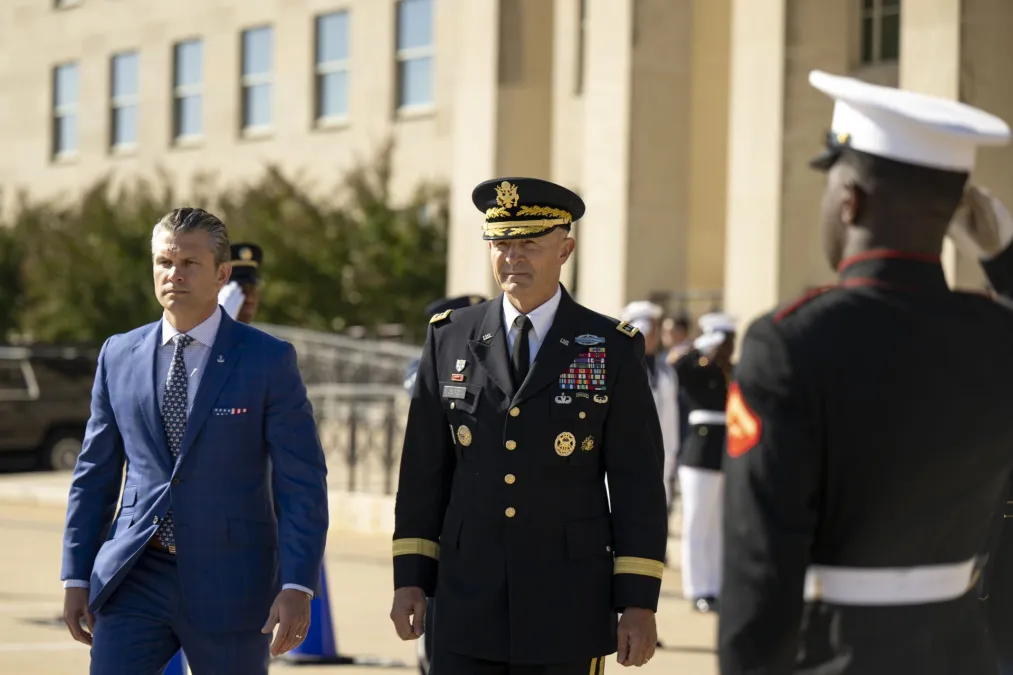
At the centre of the controversy is the removal of Randy George, the US Army’s Chief of Staff, whose departure has been officially framed as part of routine leadership changes. But analysts suggest a more consequential story may lie beneath the surface.
According to US-based geopolitical analyst Shaiel Ben-Ephraim, the general’s exit may have been driven by internal opposition to an increasingly aggressive posture towards Iran, including concerns about the feasibility of a ground war.
In comments published on the social platform X, Ben-Ephraim claimed that George had expressed strong reservations about the prospect of a land invasion, describing it as both prohibitively costly and strategically unsustainable.
Drawing on his experience in Iraq and Afghanistan, the general is said to have warned that Iran’s geography vast, mountainous, and heavily fortified, would present formidable logistical challenges for any occupying force.
Such concerns are not new. Military planners have long regarded Iran as one of the most difficult environments in which to conduct large-scale ground operations, raising the risk of prolonged conflict with uncertain outcomes.
The reported disagreement appears to reflect a broader shift within the US defence establishment under Defence Secretary Peter Hegseth, who has publicly criticised senior officers for what he describes as excessive caution.
He has called instead for a more “lethal mindset” a phrase that critics say signals a preference for rapid escalation over measured deterrence.
George, appointed during the administration of Joe Biden, was increasingly viewed, according to analysts, as misaligned with that approach. His removal comes amid reports of growing troop deployments to the region, including units from the 82nd Airborne Division, a move widely interpreted as preparation for potential ground operations, despite the absence of any formal announcement.
For some observers, the episode carries uncomfortable historical parallels. Ben-Ephraim pointed to the sidelining of Eric Shinseki in the run-up to the Iraq War, after he publicly challenged assumptions about troop requirements, warnings that were later seen as prescient. The comparison raises a familiar question: what happens when military caution collides with political ambition?
George’s dismissal is not an isolated case. Reports indicate that Peter Hegseth has overseen the removal of more than a dozen senior officials during the current administration of Donald Trump.
Among them are high-ranking officers across multiple branches, including intelligence and naval leadership, a pattern that critics argue may signal an effort to reshape the military hierarchy in line with a more confrontational doctrine.
According to NBC News, additional dismissals in recent days have included senior army figures and top defence officials, further fuelling concerns about internal dissent being sidelined.
Despite the speculation, it remains unclear whether the White House is fully aligned with any push towards a ground invasion.
Ben-Ephraim suggests that President Trump may be more cautious than some of his advisers, citing both political risks and the weight of military analysis warning against such a move.
Yet the broader trajectory, troop movements, leadership changes, and increasingly forceful rhetoric points to a strategic crossroads.
For now, the question is not simply whether war will expand, but whether decisions are being shaped by open debate, or by the quiet removal of dissenting voices. And if the latter proves true, history suggests the consequences can be profound.
With additional information from Press tv
SPONSORED
SPONSORED

SPONSORED

SPONSORED
