
Iran’s Retaliatory Strikes Paralyze Gulf Aviation as Dubai, Doha Airports Fall Silent
Missile and drone attacks disrupt major regional travel hubs, forcing airspace closures and exposing vulnerability of US-aligned Gulf states
By Abdullahi Yusuf
Iran’s retaliatory military campaign against US–Israeli aggression has extended to key aviation and logistical corridors across the Persian Gulf, disrupting air traffic at major transit hubs in the United Arab Emirates, Qatar and Bahrain.
Iranian strikes, described as part of the continuing phases of Operation True Promise, coincided with widespread airspace closures and temporary shutdowns at some of the region’s busiest airports, infrastructure long viewed as secure gateways linking Asia, Europe and Africa.
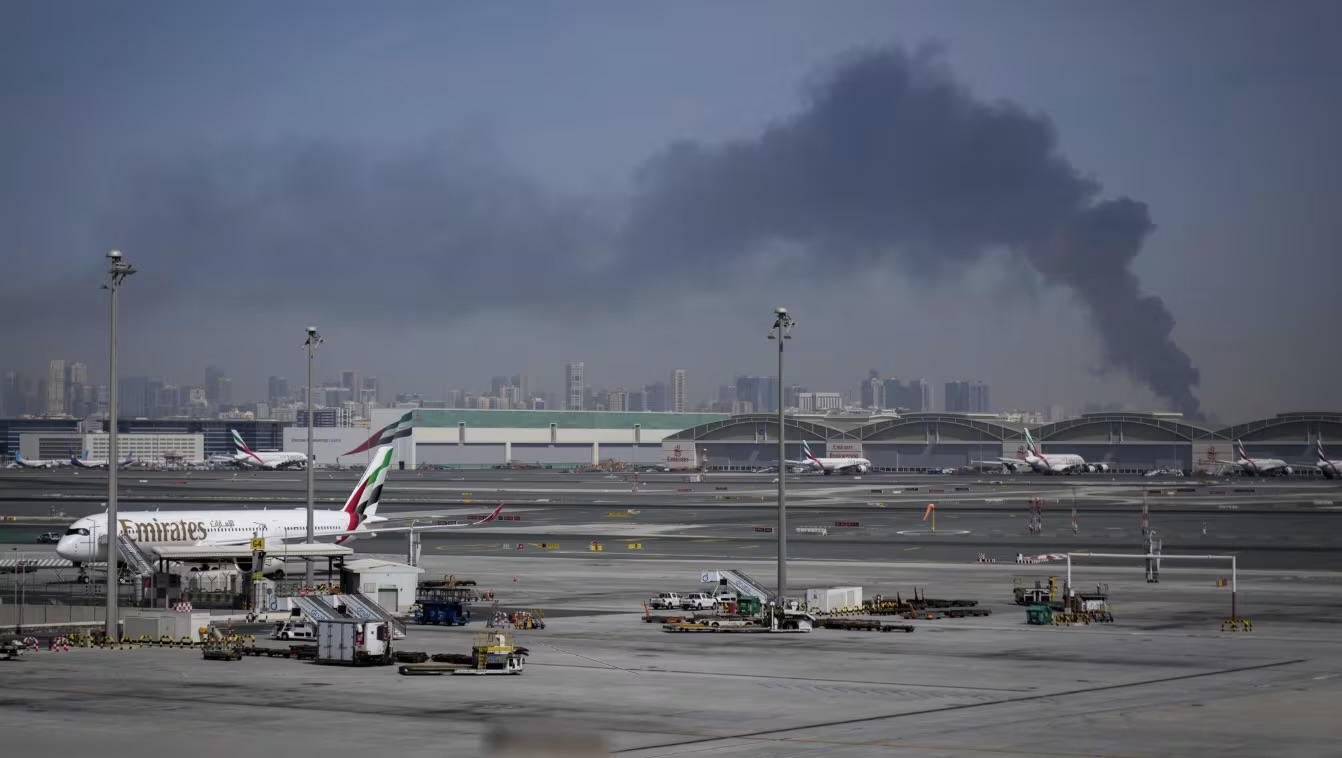
Dubai International Airport, one of the world’s most heavily trafficked transit centers, suspended operations after smoke was reported in a concourse area. Authorities confirmed minor structural damage and injuries to several airport staff. Emirates and other international carriers halted or delayed flights as precautionary measures amid escalating regional tensions.
In Abu Dhabi, operations at Zayed International Airport were also affected following reported drone activity. Qatar temporarily closed portions of its airspace, while Bahrain acknowledged damage to facilities near its international airport.
The developments mark a dramatic shift for Gulf states that host US military installations and have long marketed themselves as insulated, stable and secure destinations despite regional volatility. Iran has repeatedly warned that countries facilitating American military operations would not remain untouched if aggression against Iranian territory continued.
Regional airspace restrictions created a ripple effect across global aviation networks. Major international carriers, including airlines operating from Europe and Asia, diverted routes or canceled services through the Gulf corridor, a critical artery for intercontinental travel.
The disruption follows US and Israeli airstrikes on multiple Iranian cities, including Tehran and Isfahan, which Iranian officials say resulted in significant civilian casualties and damage to infrastructure. Tehran has framed its subsequent military response as a legitimate act of self-defense under international law.
Images circulating from Gulf cities showed emergency response teams deployed at affected sites, while residents described unusually quiet streets and suspended commercial activity as authorities urged caution.
Iranian officials have reiterated that operations will continue as long as what they describe as foreign aggression persists. They have also warned that strategic economic and logistical centers connected to hostile military presence remain within reach.
The unfolding situation underscores the vulnerability of regional infrastructure deeply intertwined with Western military and security frameworks, challenging long-standing perceptions of the Gulf as a conflict-proof zone.
As international airlines reassess routes and governments call for de-escalation, the confrontation threatens to reshape not only regional security dynamics but also global travel and trade patterns anchored in Gulf transit hubs.
SPONSORED

SPONSORED

SONSORED
