
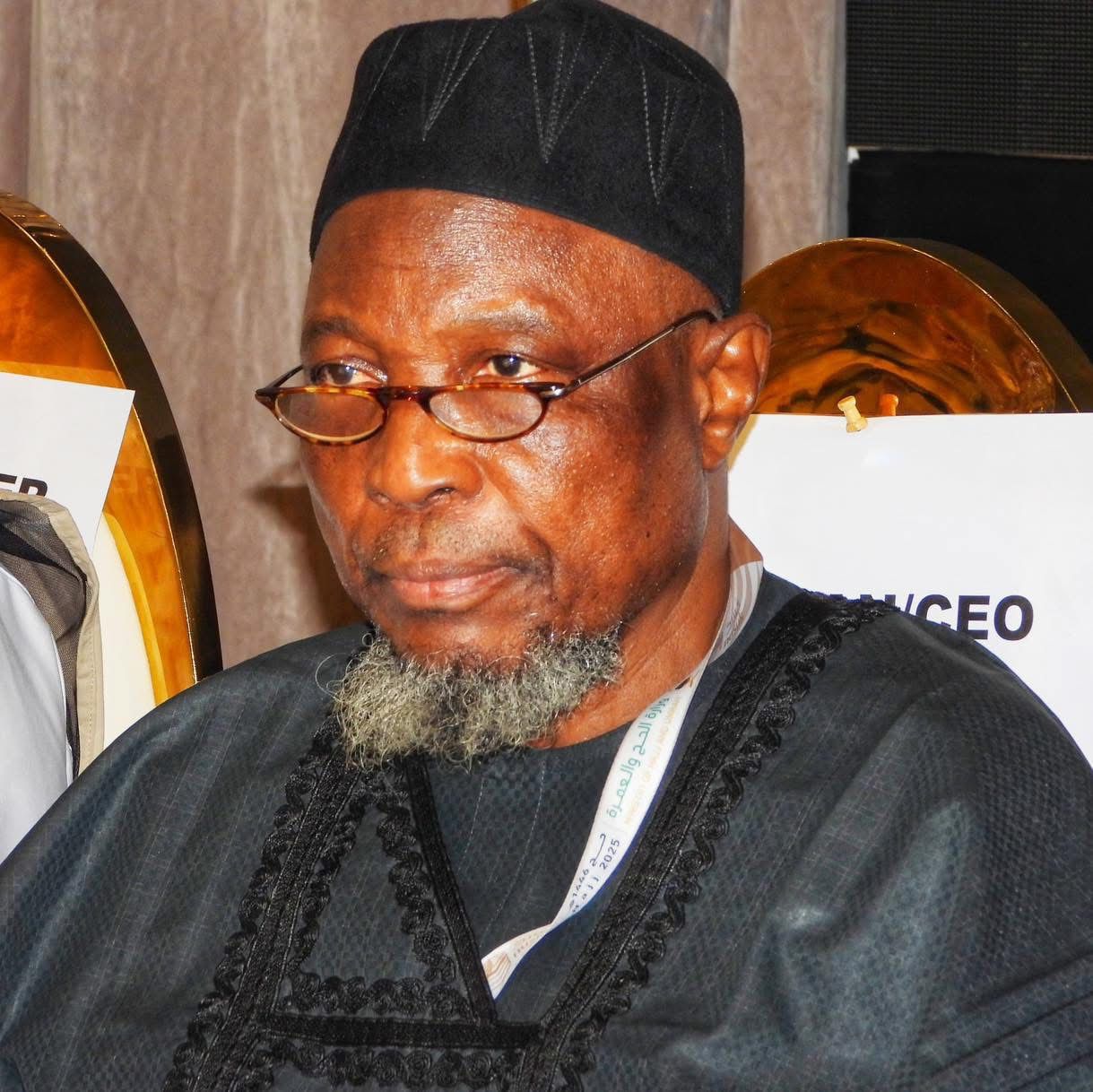
Inside NAHCON’s Triumph at Hajj 2025
Despite misinformation, and logistical hurdles, NAHCON’s faith-driven leadership delivered one of Nigeria’s most seamless Hajj operations in recent history setting a new standard for pilgrimage management.
By Abdullahi Yusuf
Amid sabotage, media smear campaigns, and entrenched systemic hurdles, the National Hajj Commission of Nigeria (NAHCON) has emerged from the 2025 Hajj season not just intact but celebrated. At the centre of this quiet revolution stands Professor Abdullahi Saleh Usman, a man whose leadership, tested on many fronts, has come to define the success of Nigeria’s Hajj operations this year.
Since assuming office, Professor Usman’s tenure has been marked by unrelenting attacks. From baseless petitions to coordinated misinformation efforts, critics worked to undermine the credibility of NAHCON’s leadership. Yet rather than respond with retaliation or rhetoric, Professor Usman leaned into a principle rarely embraced in public office submission to divine will. “Whoever entrusts his affairs to Allah, Allah will take care of them,” he often echoed.

That trust, grounded in deep faith, paid off in results. This year’s Hajj operations were widely hailed as one of the most seamless in Nigeria’s recent history. From airlifting to accommodation, Mashā’ir coordination to feeding arrangements, pilgrims reported smooth logistics, minimal disruptions, and above all, a dignified spiritual experience. Even with infrastructural challenges in Saudi Arabia, Nigeria’s efforts stood out for discipline, transparency, and organisation.
Still, success did not insulate the Commission from controversy. In a sharp response to a wave of unfounded allegations, Professor Usman decried what he called “a campaign of calumny” orchestrated by those who “fabricate lies and half-truths just to hang the dog.” He emphasised that those wrongly accused will not only seek justice in the court of public opinion, but ultimately in the court of Allah.
While celebrating success, NAHCON also faced logistical hurdles during the return phase of the pilgrimage. Despite all systems being ready on the Nigerian side, outbound airlifts lagged due to delayed flight slot allocations at King Abdulaziz International Airport. The Commission has since secured assurances from Saudi authorities to increase flight frequency to eight daily rotations, a move expected to ease congestion and enable a timely conclusion of return operations.
Beyond immediate logistics, NAHCON is also casting its gaze forward. Professor Usman is championing a major policy shift through full adoption of the Hajj Saving Scheme, a long-term solution designed to overhaul planning and service delivery. With early deposits and structured savings, he argues, Nigeria can secure timely payments to service providers, improve pilgrims’ welfare, and eliminate the last-minute rush that has long plagued the system. Countries like Indonesia and Malaysia already model this system to great effect.
Another major area of concern remains the Hadaya (sacrificial animal) crisis, a recurring issue that has seen some pilgrims defrauded by unscrupulous agents offering unrealistically cheap rites. Professor Usman described this as “a hydra-headed monster” and signaled NAHCON’s intention to engage stakeholders in possibly embedding Hadaya charges directly into Hajj fares, ensuring full compliance and oversight through vetted financial institutions.
“Unfortunately, those we’re trying to protect are sometimes their own problem,” he remarked, calling for more robust education and awareness campaigns to curb the tide of exploitation.
Through all of this, what remains clear is that NAHCON’s achievements this year are not just technical wins, they are moral victories. The Commission’s ability to uphold the sanctity and structure of Hajj operations despite immense pressure is a testament to leadership rooted in integrity, patience, and faith.
As Nigeria’s pilgrims return home, and NAHCON looks ahead to a new era of reform, the message is clear: faith is not fragility—it is force. And in the sacred trust of serving pilgrims, there is no greater compass than submission to the One who sees all.
SPONSORED
SPONSORED

SPONSORED

SPONSORED
